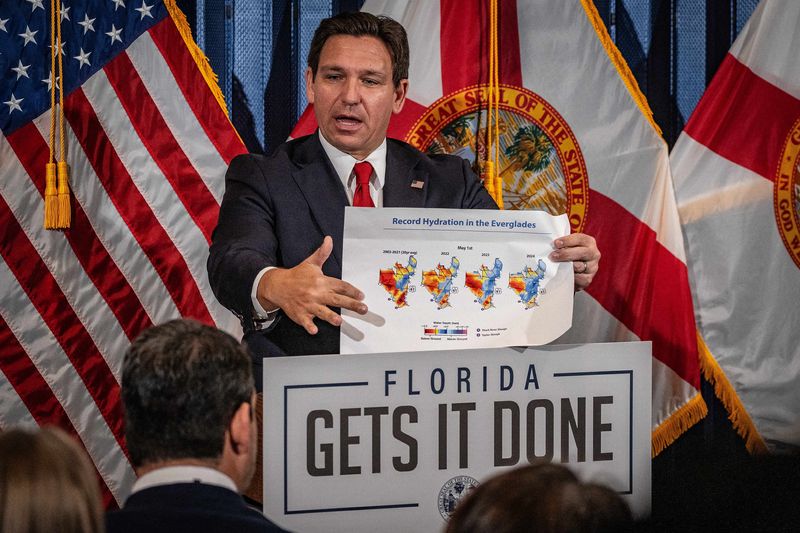
If there was any doubt why Gov. Ron DeSantis once wanted U.S. Rep.-elect Randy Fine, R-Melbourne, to become president of Florida Atlantic University, he cleared the air during a recent press conference turned tirade in Ocala.
Most political observers believed DeSantis had backed Fine for the job because he was a fellow Republican lawmaker and political ally. The governor has a habit of pushing former state lawmakers into academia. Richard Corcoran, Tommy Gregory, Adam Hasner, Fred Hawkins, Jeanette Nunez and Mel Ponder — all are former state lawmakers who succeeded in becoming highly paid state college and university presidents in a process Florida House Speaker Danny Perez called a “spoils system.”

On the job training at FAU: FAU presidential candidate gets an earful from students, faculty during on-campus forum
Connections, though, wasn’t the reason DeSantis gave recently when describing Fine. While that seemed to make sense during the tumultuous FAU presidential search, the governor’s new rationale is both bewildering and disturbing.
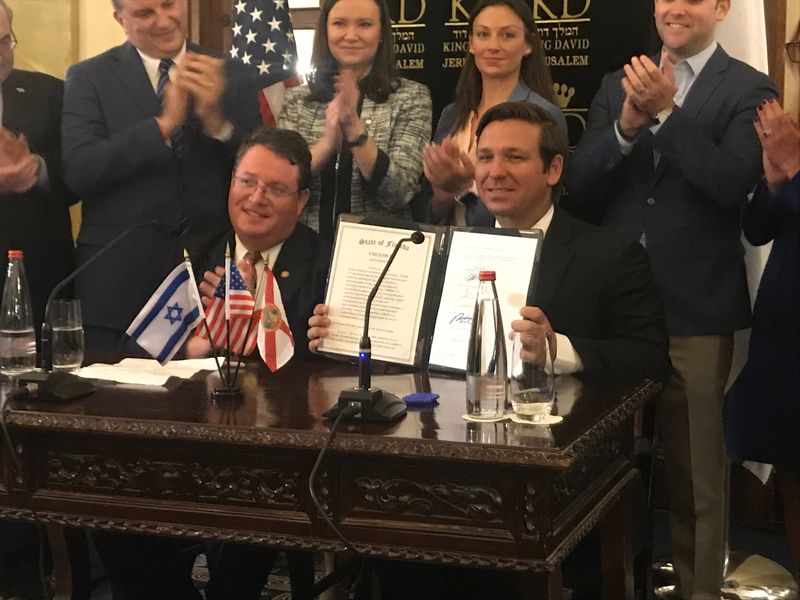
“He repels people,” DeSantis said of Fine last week in Ocala. “He’s repelled people in the legislature. They wanted to get him out of the legislature, so they asked me to put him up for Florida Atlantic University president, and I did.”
Is that any way to pick a college or university president? While the governor’s rationale is ludicrous at best, it also is bizarre enough for the public to back proposed legislation that would make the selection of a president for a Florida public college and university much more than the backroom, behind-closed-doors, out-of-the-public-eye procedure that it is now.
Florida needs to fix the way it selects university presidents
House Bill 1321 and Senate Bill 1726 would open up the process. It repeals the current public records exemption for state university and state college presidential applicants, which keeps any personal identifying information of non-finalist applicants confidential. The move may have helped some applicants shield their aspirations from their current employers, but it left the public in the dark.
The legislation would free the selection process of any last-minute surprises, like the selection of former U.S. Sen. Ben Sasse as the new University of Florida president. His tenure ended in costly scandal, and it may not have even occurred if his name had been made public earlier in the search process and his candidacy received a more thorough vetting.
The legislation would also use term limits to rein in the power of the state Board of Governors, the State Board of Education, and state college and university boards of trustees, most of whom are appointees of the governor. State lawmakers are big fans of term limits when it comes to state and locally elected officials. It shouldn’t be a problem of imposing similar term limits on those who are so influential in the way our public colleges and universities operate.
People here in Palm Beach County remember the two-year debacle to replace John Kelly, FAU’s former president who stepped down in 2023. The initial search came to a halt after it became clear when Fine didn’t make the cut as a finalist: He had the governor’s support, and it didn’t take long before the chancellor of the state university system, citing concerns about whether the search committee had adhered to government-transparency rules, ordered a new search. Ultimately, the search renewed and concluded with the naming of Hasner as the university’s new president.
State lawmakers should pass the legislation as a reform measure, and the governor should be quick to sign it into law. It might reassure Floridians that there are higher standards for a university president than “repelling people.”
This article originally appeared on Palm Beach Post: Florida can change how it picks university presidents. There’s a bill for that. | Opinion
Reporting by Douglas C. Lyons, Palm Beach Post / Palm Beach Post
USA TODAY Network via Reuters Connect