Pensacola’s controversial Flock Safety contract has led to more scrutiny over the city’s future opioid settlements.
The extra attention on opioid settlements was evident at the June 18 City Council meeting as the city is set to participate in a $1.5 million settlement, and council members wanted to ensure there couldn’t be a repeat of the Flock contract without their vote.

The City Council voted unanimously to approve entering into a settlement with opioid manufacturer Lupin Pharmaceuticals and associated companies, but not before getting assurances that the money can’t be spent without their approval.
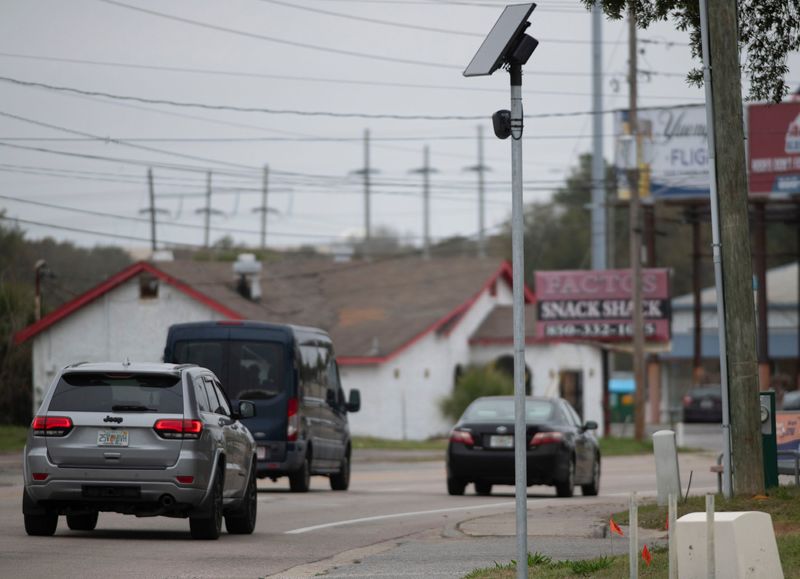
Pensacola’s two-year contract with Flock has been the focus of sustained calls for it to be canceled from members of the public at City Council meetings since January.
In July 2025, Pensacola Mayor D.C. Reeves approved a two-year, $108,000 contract for 18 cameras from Flock Safety. The funds were from the settlement money from the national Opioid litigation.
The city had reported to the Florida Statewide Opioid Abatement Council that it would use its share of settlement funds to buy hand-held narcotics detectors as well as training criminal investigative teams on overdose deaths and “investigative technology support for overdose and overdose death investigations,” and possibly vehicle purchases.
City Attorney Adam Cobb told the News Journal in a written statement in March that the Police Department considered the Flock cameras to qualify as “investigative technology support for overdose and overdose death investigations.”
Because of the structure of the contract and the fact that the settlement funds had already been appropriated to the Police Department, the contract with Flock wasn’t required to go before City Council for a separate vote.
It’s not yet clear how much of the $1.5 million the city of Pensacola will receive in the settlement, as there are “multiple plaintiffs” in the case, but unlike the previous opioid settlements the city has participated in, there are technically no restrictions or reporting requirements on how the money can be used in the agreement itself.
“That’s absolutely wild,” said Pensacola resident Alex Hatley with Denfensa Gulf Coast.
Denfensa Gulf Coast is one of the primary local organizing groups behind the outcry at council meetings over the city’s contract with Flock.
“This actually leaves the door completely open to spend this money, not what it was intended for,” Hatley said. “Yet again, the same issue we’ve been coming here and speaking out against for months. All of these funds need to go toward what they are intended for: opioid recovery and treatment.”
Council members agreed with the public and wanted assurance that the council would have a say in where the money was spent before approving the settlement. Under the council’s typical budget policy, the council did not require the specific outlay of funds in the earlier round of spending beyond the broad “investigative technology support.” That will change in this round of funding.
“I do believe that all opioid money should be protected and have to come back to council,” Councilwoman Jennifer Brahier said.
Council members Jared Moore, Charles Bare and Casey Jones all made similar comments to clarify that the council will have a say over how the funds are spent.
“I don’t want to give the mayor just carte blanche to use this for whatever he wants it to,” Bare said. “I think it needs to come back to council. I think we need to have a say in that.”
Yvette McLellan, the council’s budget advisor, told the council members that they would be able to attach requirements to how the money is spent when it is appropriated, which would happen after the city gets the settlement check.
“We can get a check for it, and it’ll be in the revenue, but (the city) just can’t spend it until it’s appropriated,” McLellan said.
The appropriation would come either as a stand-alone budget resolution or as part of the overall annual city budget, which is voted on every September.
Jim Little is the City Government Accountability Reporter for the Pensacola News Journal. If you have a news tip, please send it to jwlittle@pnj.com.
This article originally appeared on Pensacola News Journal: Flock opponents get a win. No more opioid money going to cameras
Reporting by Jim Little, Pensacola News Journal / Pensacola News Journal
USA TODAY Network via Reuters Connect
By Jim Little, Pensacola News Journal | USA TODAY Network