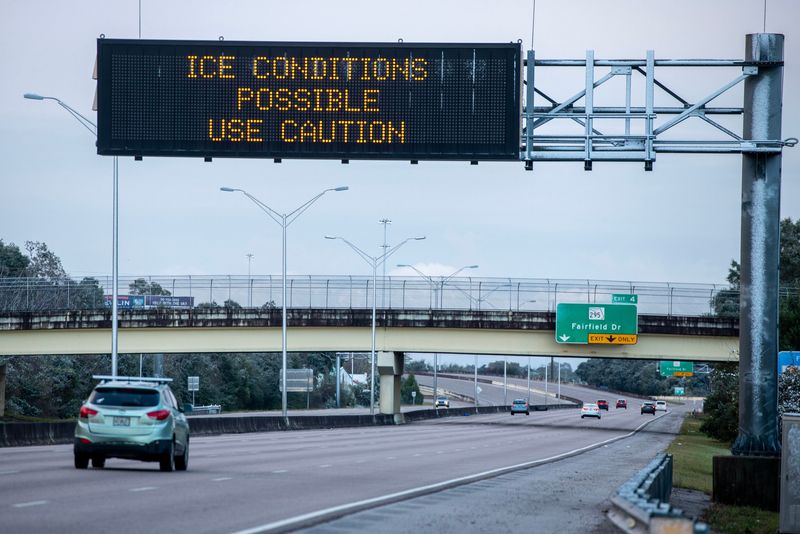
The Florida Panhandle will be under an extreme cold watch from late Sunday night through Monday morning, when inland areas could see single-digit wind chill from a rare winter storm moving into the area.
Overnight low temperatures on Sunday will drop to the mid-20s. With expected wind chill factors well below freezing, unprotected skin and prolonged exposure to the extreme cold can lead to frostbite and hypothermia, according to the National Weather Service.

Floridians living in the Panhandle should expect more extreme cold weather alerts as lower temperatures are expected overnight on Monday.
Not sure what a cold weather watch or warning is? Here are all of the cold weather terms Floridians should know heading into the winter storm.
What is an extreme cold weather watch?
The National Weather Service issues extreme cold watches when dangerously cold conditions or wind chill values are possible. It’s usually a good idea to reevaluate any outdoor plans.
What is an extreme cold weather warning?
An extreme cold warning is a step above a watch. Dangerously cold conditions are now expected and people should avoid going outside unless they have to. Anyone who does go outside should make sure they are dressed in layers and cover exposed skin.
What is wind chill?
Wind chill is often referred to as the “feels like” temperature on weather forecasts. Wind chill is factored based on how much heat is lost from exposed skin caused by the combined effects of wind and cold, according to the NWS. As you probably expect, the stronger the wind, the colder it feels.
Extremely cold wind chill can lead to serious injuries like frostbite and hypothermia.
What is frostbite?
Frostbite happens when skin and underlying tissue are frozen. Extremities like fingers, toes, ear lobes and the tips of the nose are most susceptible to frostbite, according to the NWS.
The first signs of frostbite include tingling, numbness, patches of skin in shades of red, white, blue, gray, purple or brown, according to the Mayo Clinic.
Extremely mild cases of frostbite can get better with gradual warming, but anything beyond that should be treated by a medical professional.
What is hypothermia?
Hypothermia occurs when the body’s temperature drops below 95 degrees. Warning signs include uncontrollable shivering, memory loss, incoherence, disorientation, slurred speech, drowsiness and apparent exhaustion.
People with hypothermia are typically unaware of their condition, according to the Mayo Clinic. Hypothermia should be treated by a medical professional.
What’s the difference between a freeze and a hard freeze?
A freeze is characterized by surface air that reaches 32 degrees or slightly below. Prolonged exposure to freezing temperatures can lead to frostbite and hypothermia. It can also damage pipes and sensitive plants.
Hard freezes occur when surface temperatures fall below 28 degrees. Most plants not adapted to cold temperatures are likely to die, and pipes have an even greater chance of bursting.
What are freezing rain and sleet? Is there a difference?
Freezing rain and sleet are two types of wintry precipitation that form under the same process.
Both freezing rain and sleet start out as frozen precipitation. As it falls, it hits a layer of warm air, still high above the surface, which causes the precipitation to melt back into regular rain. That rain then falls through one last layer of freezing air before it reaches the surface.
Whether the result is freezing rain or sleet depends on how thick that layer of freezing air is.
A thinner layer of freezing air doesn’t give the rain enough time to refreeze, so it falls to the ground as rain that then freezes on cold surfaces. A thicker layer allows the rain to refreeze into sleet before it hits the ground.
What is black ice?
Black ice is essentially slang used to describe thin patches of ice that are effectively invisible. The ice itself is clear, but because it’s often associated with dangerous driving conditions, it is called black ice because it blends in seamlessly with the dark road surface underneath.
Is ice more dangerous than snow?
When it comes to driving, ice generally tends to be more dangerous to traverse than snow.
Black ice can create extremely dangerous road hazards for unsuspecting drivers. However, stepping onto a slippery patch of ice can be just as dangerous for pedestrians.
Snow can be equally slippery but also tends to compact into itself, which can provide enough structure to produce a bit of traction.
This article originally appeared on Pensacola News Journal: Extreme cold watch, freezing rain and other terms Florida should know
Reporting by Brandon Girod, Pensacola News Journal / Pensacola News Journal
USA TODAY Network via Reuters Connect