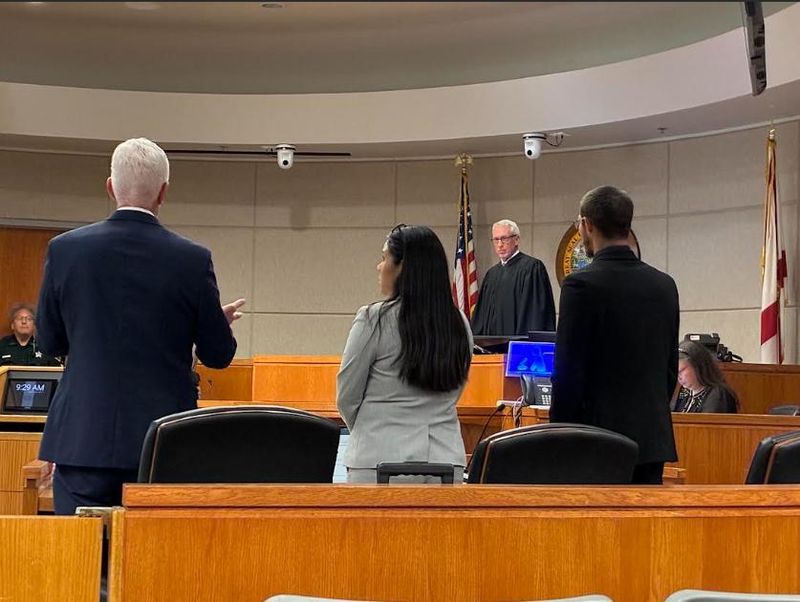
A majority of the testimony provided on April 1 in the trial of Justin Jacob Cobb concerned the defendant’s drug intake.
Prosecutors contend Cobb was under the influence of methamphetamine and amphetamine when the Chevy Tahoe he was driving in late June 2022 struck and killed 75-year-old Elfriede Meyer of The Villages.

Authorities said Meyer’s Ford Edge was westbound on County Road 42 when the Chevy, which was in the opposite lane, crossed the double yellow line.
Two of Meyer’s friends, Karin Meier and Kimberly Crothamel, were seriously injured in the wreck, which occurred near Southeast 203rd Avenue.
The defense argued that drugs given to Cobb at the hospital after the crash could have affected his medical diagnosis.
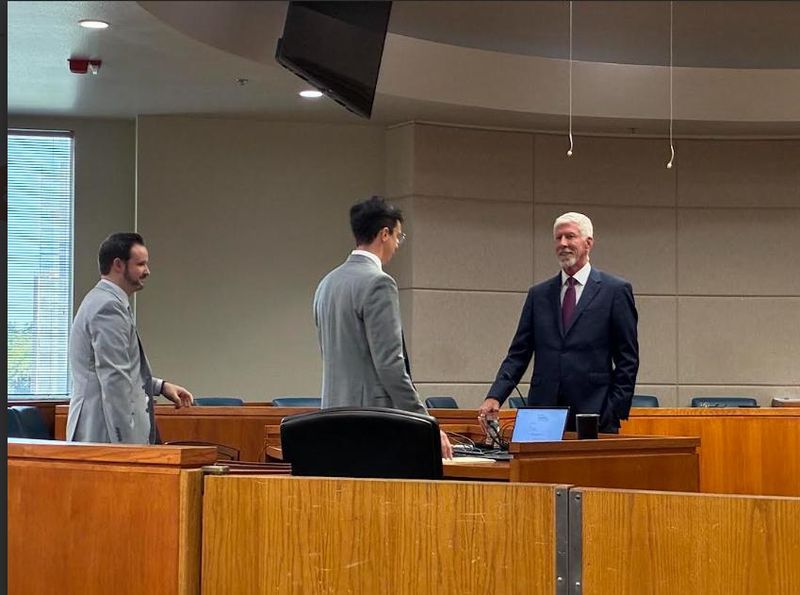
Prosecuting the case are Assistant State Attorneys Adam Smith and Robert Bullara. Defending Cobb are Mark O’Mara and Brittany Staggs.
Cobb is charged with DUI manslaughter and two counts of DUI with serious bodily injuries.
Cobb’s interview
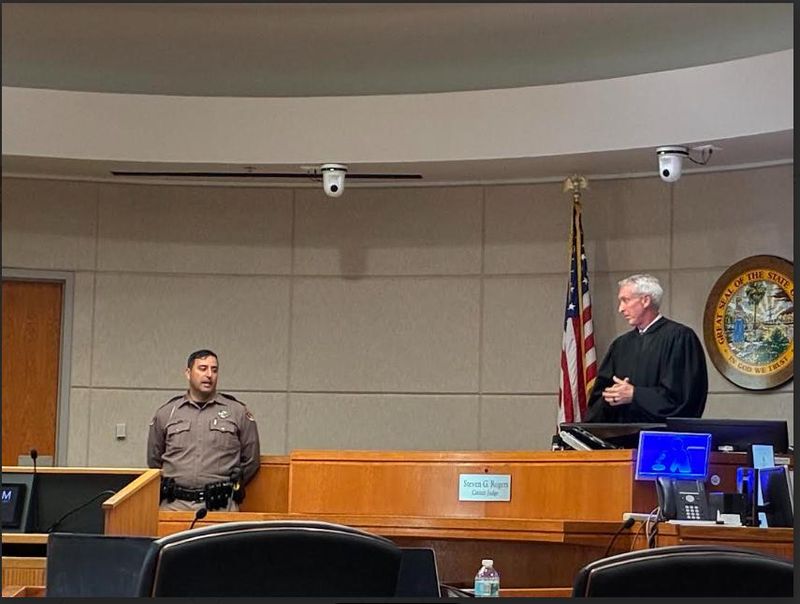
Cpl. Mark Baker, a traffic homicide investigator with the Florida Highway Patrol, returned to the witness stand April 1. Baker, questioned by Smith, said Cobb was talkative, jittery and his speech was somewhat slurred after the crash.
Prosecutors played a recorded interview with Cobb done by Baker at the hospital. It lasted about 20 minutes.
In that interview, Cobb told the investigator he had left work and made a few stops before heading home. He said he doesn’t text or talk on his phone while driving.
He doesn’t remember much about the crash other than drinking a milkshake and reaching down to get a cigarette. He said he felt like he was hit by a freight train.
The defendant said he was in pain and his ankle was broken. He admitted to smoking crystal methamphetamine the night before the crash.
Baker told him about Meyer’s death and her friends’ injuries. Cobb appeared concerned and at times was silent.
Baker told Cobb that a blood sample was taken and will be tested. The trooper said if drugs were detected in his system then he would be charged. If he was clean and at fault in the crash, then he would receive a citation.
More testimony
Cross-examined by defense attorney O’Mara, Baker was asked if he knew whether Cobb had been given any medication at the hospital. Baker said he was aware because he wanted to know if any such medicine would affect the interview. Baker said he didn’t know the amount of drugs given to Cobb.
A Florida Department of Law Enforcement toxicologist testified that tests conducted on Cobb’s blood showed the presence of methamphetamine and amphetamine. The toxicologist said both are controlled substances.
Cross-examined by O’Mara, the FDLE official said the test was conducted twice because the first test did not have enough blood. The blood was also tested at a UF laboratory.
A University of Florida employee who also tested the blood confirmed the stimulants detected in Cobb’s body. The employee said someone under the influence of the controlled substance would get tired and have a lack of focus and reaction time.
Cross-examined by the defense, the employee said it isn’t unusual for someone to have a normal blood pressure or pulse when there’s methamphetamine in the body. The defense asked if the defendant was treated with other drugs at the hospital and the employee said yes, according to records.
A medical examiner testified that Meyer suffered massive injuries that led to her death. The doctor said some of her injuries include head, neck and chest. The medical examiner said the cause of death was multiple injuries from the crash.
Not testifying
After prosecutors rested their case the defense asked for a judgment of acquittal, which is a typical move in criminal cases. The motion was denied by the judge.
An expert testifying for the defense said she reviewed hundreds of records pertaining to the case. She concluded it didn’t appear methamphetamine affected Cobb’s judgment at the time of the crash. She said the defendant’s eyes were normal, his blood pressure was within range, and people didn’t detect any unusual behavior.
The expert explained Cobb’s slurred speech possibly came from him receiving what she termed a cocktail of medications at the hospital, where he was treated for pain after the crash.
Under cross-examination, she told prosecutor Smith that methamphetamine affects everyone differently. She said the facts don’t support methamphetamine affecting Cobb’s actions in such a way that they would lead to a crash.
Cobb told the court he wasn’t testifying in his own defense.
Jurors were dismissed for the day and told to report at 9 a.m. on April 2 for closing arguments followed by deliberations.
Contact Austin L. Miller at austin.miller@starbanner.com
This article originally appeared on Ocala Star-Banner: DUI manslaughter trial continues. Did methamphetamine affect man’s judgment?
Reporting by Austin L. Miller, Ocala Star-Banner / Ocala Star-Banner
USA TODAY Network via Reuters Connect