The controversy over the city of Tallahassee’s handling of a HUD grant to remove lead paint from low-income housing took center stage during the City Commission’s May 13 meeting — and culminated with Mayor John Dailey verbally skewering City Commissioner Jeremy Matlow over accusations he made on social media that later proved false.
The meeting was the commission’s first since the city received notice May 8 from the U.S. Department of Housing and Urban Development that its $4.4 million grant with the city was designated “high risk” and the city’s program was under audit.

It also followed reporting by the Tallahassee Democrat that a former city employee filed whistleblower retaliation complaints with the inspector general offices at the city and HUD. The former worker claims she was fired after notifying higher-ups about problems with grant costs and compliance issues.
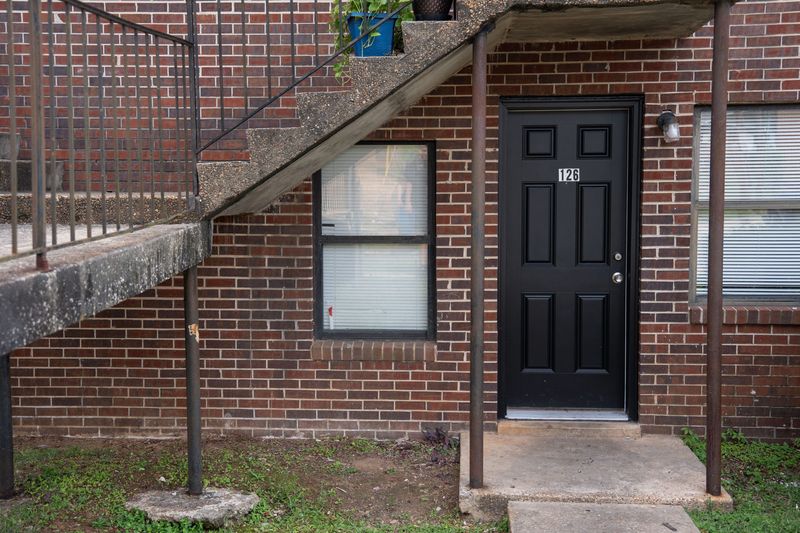
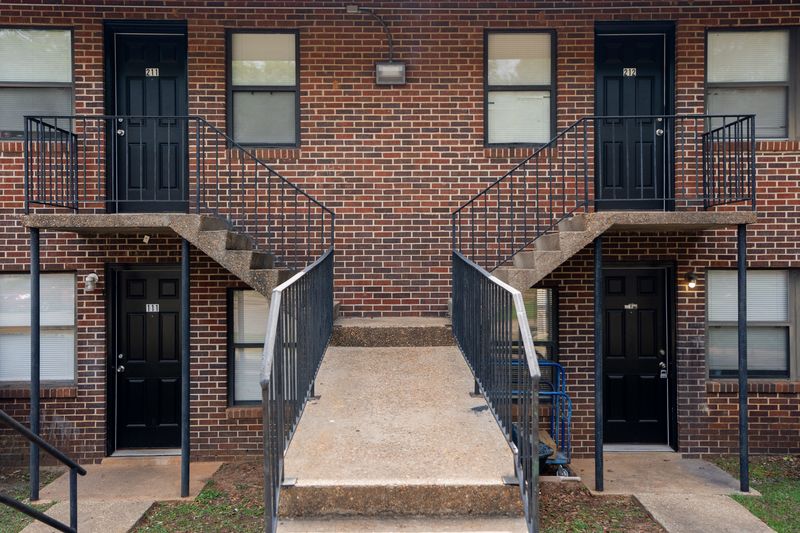
HUD expressed a number of concerns with the city’s management of the grant program, noting it failed to meet benchmarks for the past four quarters. The agency questioned city outreach efforts, its general performance and expenses, including replacement doors that cost $8,400 apiece, including frames, fixtures and lead remediation.
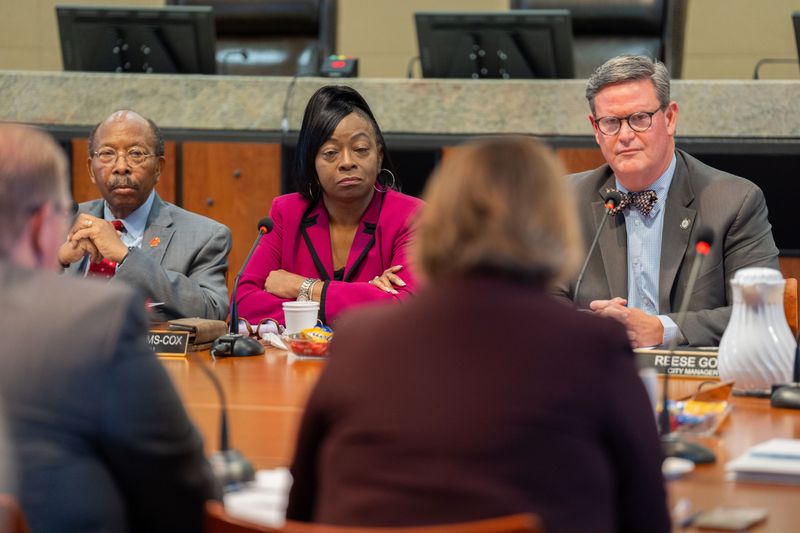
City Manager Reese Goad told commissioners that HUD placed the grant in high-risk status and laid out “things they were interested in and being more comfortable with it.” The city has been working with the agency in hopes of getting the grant back on track.
“This is the case when a grant is put into that status that if HUD is not satisfied, we could lose the grant, which might even involve repayment of funds we’ve received,” Goad said.
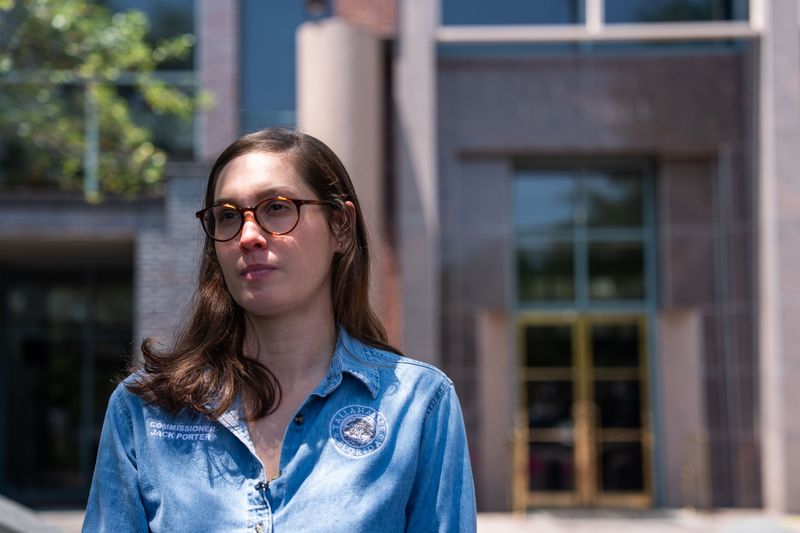
Assistant City Manager Christian Doolin fielded numerous questions from Matlow and Commissioner Jack Porter about EPA compliance — something the whistleblower complained about — and other issues with the grant.
But all of that was overshadowed by a side drama that unfolded at the dais over Matlow’s comments in a Facebook post the previous day that Goad and a city employee he mistook for the city manager’s brother-in-law were to blame for mismanagement of the grant.
Matlow confused two city employees with similar names, one who worked in the city’s housing department with no relation to Goad and another who is Goad’s brother-in-law but works elsewhere in city government.
And while Matlow, who’s running for mayor, offered a quick apology to Goad at the outset, Dailey blasted him. Matlow said the mayor’s comments were “out of order,” but when Dailey continued on, Matlow left the dais and walked out of chambers.
“Your actions were disgusting, quite honestly,” Dailey said. “The fact that you thought you were doing a political target hit on the city manager — and look, he’s the manager, he’s used to it, we know your opinion on it — and you confused another employee who has a similar name, accused him of a felony on social media on your official website is unbelievable and unacceptable.”
It’s too soon to tell whether Matlow’s misstep will come back to haunt him on the campaign trail. Dailey didn’t hesitate to make the connection.
“I know that you don’t care for me Jeremy, and that’s fine,” he said. “But if you want to be the next mayor of Tallahassee, as the current mayor of Tallahassee, I expect more.”
Matlow: ‘We all make mistakes’
Discussion on the HUD grant came up during commissioner time at the end of the meeting. Matlow started by expressing his regrets about his Facebook post.
“I think in a message I mentioned your brother-in-law,” he said. “I think that was based on bad information. And I do want to retract that and apologize.”
Goad thanked Matlow for his words but said his words “really kind of shook” the employee in question. He said he wanted to be “clear” about what happened “and not drive past that so fast.”
“He is not related to me,” Goad said. “And it was asserted that he and I worked together in some nefarious way in your social media post. And that’s not the case.”
Matlow said he had retracted the statement and wanted to move on to “questions on the issue.” He said he understood the employee wasn’t Goad’s brother-in-law, adding, “I understand he was the person who approved these transactions, correct?”
“No,” Goad said.
Later, during Dailey’s time, the mayor said he was “calling Commissioner Matlow out” and blamed him for the 3-2 voting divide that has been a hallmark of the current commission.
He told Inspector General Dennis Sutton he was “extremely concerned” about a toxic work environment and violation of a non-interference clause that prohibits commissioners from involvement in rank-and-file personnel issues. He said the employee Matlow mentioned “woke up this morning to a nightmare situation.”
“I think Commissioner Matlow has set himself up for one of the greatest libel lawsuits against him,” Dailey said. “Quite frankly, and personally, I’m concerned about the liability and the exposure of the city of Tallahassee.”
The day after the commission meeting, Matlow posted on Facebook that he sent apologies to Goad and the two city employees he confused.
“We all make mistakes and it’s important we recognize them and take accountability for the betterment of our city,” he wrote.
‘It’s a cost’
During Matlow’s time, he peppered Doolin with questions about the grant, the whistleblower letter and the employee who was dismissed. He called the whistleblower allegations “highly concerning.”
“We’ll let that process play out,” he said. “But it would seem to be on face value, if those allegations are true, there was some awareness raised within the office that the guidelines weren’t being met, that the contractor wasn’t EPA certified when this work began and was being issued payments under a HUD grant that they wouldn’t be eligible for, which I assume is why we may be on the hook to pay it back.”
Doolin replied that he didn’t have the whistleblower letter, a confidential document that’s closely held by the Inspector General’s Office. The Democrat received a copy from elsewhere.
He also said the vendor, Chief Cornerstone Construction Company, provided a copy of its EPA certification as part of its bid response in 2024. The firm won the city contract to replace lead-contaminated doors at Holton Apartments and Palm Beach Pointe Apartments, both located on the south side.
Doolin said that after work began in September 2025, work was “temporarily suspended” because the vendor needed to complete another 40-hour lead abatement certification. Work resumed once the contractor got certified.
“Do you think $8,400 is a reasonable price for a door?” Matlow asked.
Doolin said the cost was below a quote from another company that wanted $9,475 per door, including lead remediation. He also said it was lower than quotes the city got from an online EPA tool.
“It is a cost,” he said. “And it’s a cost that has the context of a quote and a competitively run solicitation. And … this has all been provided to HUD, and we will continue to talk to them about this.”
‘Upstanding individuals and business people in the community’
Matlow asked whether there was a criminal investigation into the grant, prompting City Attorney Amy Toman to interject.
“If there is a criminal investigation or other investigation related to whistleblowing, those both would be considered confidential and not to be discussed,” she said. “I don’t think it’s appropriate to acknowledge or not acknowledge whether there is a criminal investigation.”
Commissioner Dianne Williams-Cox criticized the media for its reporting on the grant, saying HUD was conducting an audit, not an investigation, and Matlow for his comments on Facebook.
She and Commissioner Curtis Richardson also defended the vendor, Chief Cornerstone Construction, a residential and commercial builder owned by David and Lillie Thomas with projects that include homes, churches and restaurants. The owners of the company, which have not returned calls from the Democrat, have received millions in contracts with the city over the years.
“I know this contractor,” she said. “and I know the family, this small business. I know them personally. And they are not doing any criminal activity. They’re trying to make a living. If you look at what they’ve done, they’ve done a lot of work in this community, not just with us but with the Urban League and other folks all over the place.”
Richardson said his children and the vendors’ children went to school together and that he’s known them a long time.
“They are upstanding individuals and business people in this community,” he said. “And we have to recognize that and appreciate that before we go out casting unfounded accusations against them and their work or their intentions.”
Porter, who suggested commissioners should be notified when grant programs fail to hit benchmarks, said that for her, “none of this is personal.”
“The issue of certification had nothing to do with the business,” she said. “That had to do with the city. And I do think that we have an accountability problem in our city. We have to own up to our mistakes, account when we make them, and we will make them, because none of us is perfect.”
Contact Jeff Burlew at jburlew@tallahassee.com or 850-599-2180.
This article originally appeared on Tallahassee Democrat: City commission HUD grant drama eclipsed by Matlow’s false accusation
Reporting by Jeff Burlew, Tallahassee Democrat / Tallahassee Democrat
USA TODAY Network via Reuters Connect