MIAMI — With boxing becoming more of a niche sport, a new documentary, “On The Line”, reminds you of the sport’s compelling draw – and sweaty, ugly, tragic side.
The film follows three New York boxers on their journey from their highly successful amateur days in the Golden Gloves to wildly divergent paths as professionals.

The filming started in 2013 and the training footage and interviews become sadly ironic considering the twist the documentary takes at the end. It’s the sobering stories and realities of “The Sweet Science.’’
The film saw its premiere screening at Miami’s Perez Art Museum on March 19 as part of a weekend festival called “Get in the Game’’ – billed as an intersection between art and sports. The legendary Leroy Neiman was a featured artist. A second screening was held in New York at the Bronx Museum on April 27. The “On The Line’’ film will go on streaming services, Apple TV, Amazon and You Tube, in May.
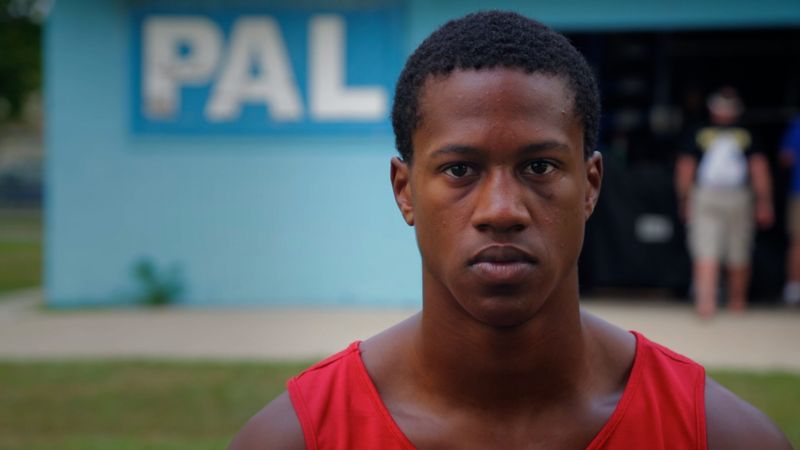
The three boxers depicted are Freeport, Long Island’s Will Rosinsky, a New York City firefighter who takes great pride in repping the NYFD; and Brooklyn’s Patrick Day and Danny Jacobs.
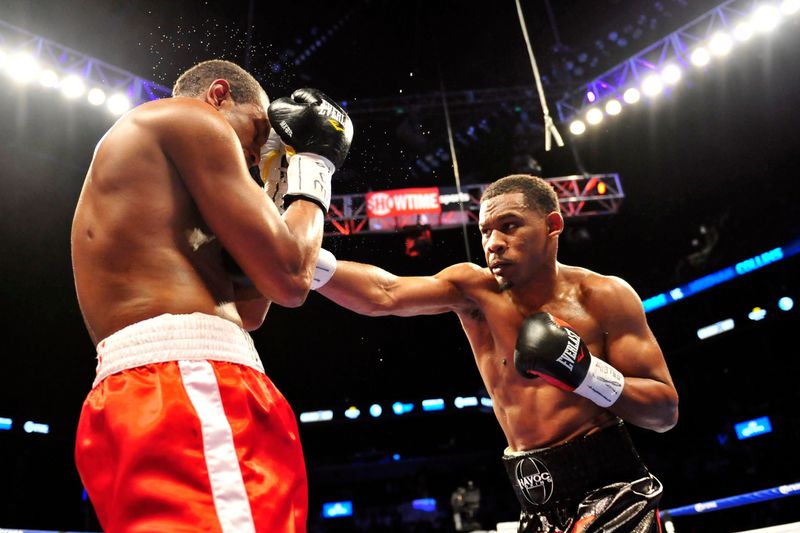
Jacobs battled back from bone cancer to reach the greatest pro success of the trio – a two-time middleweight champion (WBA and IBF).
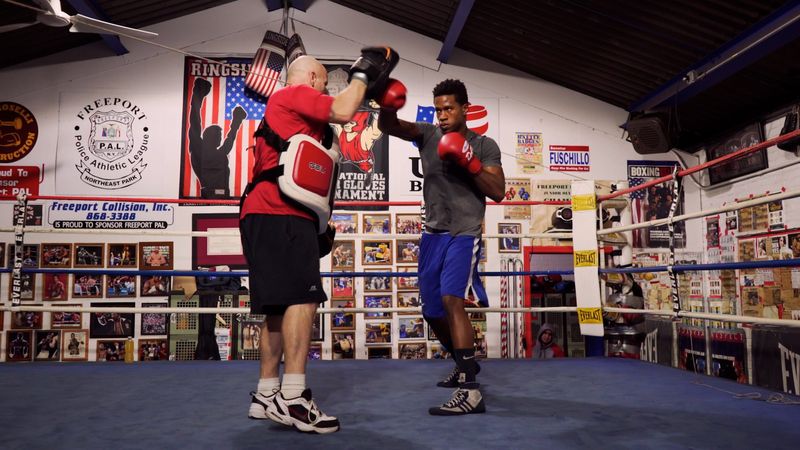
The three fighters are all connected through grizzled Freeport trainer Joe Higgins, a firefighter himself whose brother died on 9/11 and who came off duty that morning and rushed to the World Trade Center.
“The uniqueness of boxing,’’ says Higgins in the film, “is even when you’re getting better, you’re getting punched in the face. I boxed 10 rounds. I can handle anything.’’
A former USA boxing coach, Higgins runs the dingy Freeport PAL – the type of boxing dungeon rampant in New York.
“If you want to be the best fighter in the world, you have to come to New York – the mecca of boxing,’’ says Ring Magazine’s Ryan Songalia.
The director, Fransesco Saviano, began filming in 2013 but didn’t show the footage to a producer, Vincent Piazza, until 2021. “It was a mosaic at that point,’’ Piazza said. “I said this is incredible. I can’t believe what happened. And we partnered up.’’
“They all had promising amateur and early-pro careers,’’ Piazza added. “Hey, they’re starting from a similar place and had wildly different outcomes.’’
The tragic story of Patrick Day
Day, nicknamed “All Day’’, was the most promising of the three fighters. In the movie’s final segment, Day’s 2019 death in Chicago of a traumatic brain injury hits like a sledgehammer.
At age 27, Day got knocked out in the 10th and final round by Charles Conwell, hitting his head on the canvas at Wintrust Arena.
Earlier in the film, Day’s sparring partner, Sean Monaghan, said, “If you asked Day, ‘If I gave you 1 million dollars, would you stop boxing?’ He said, ‘I wouldn’t take 10 million dollars to stop boxing.’ ’’
Day’s brother laments how the fight should’ve been stopped much sooner.
“Patrick is the kid brother we all wish we had, who had so many opportunities outside of boxing,’’ Piazza said. “Lovely family, hardworking, middle class. The inexplicable nature of it had people looking inward.’’
In the film, Higgins says, “I go through a lot of what ifs. Head coach, colonel, whoever you are, it’s on you. I live with a certain amount of regret, but I honestly don’t think I’m at fault for his death.’’
Says Piazza, “That was the natural gravity of the tragedy of Patrick. It created a lot of questions among people in the community about the sport, their involvement in it as they grappled with grief. But that’s why we wanted to focus the story on the three of them. I didn’t want to move it in that direction. We didn’t want to litigate the tragedy.’’
Rosinsky had his own trials and tribulations. In a key fight against Edwin Rodriquez, a battle of two 14-0 boxers, Rosinsky was robbed. The ring announcer bellowed before the bout: “Someone’s ‘O’ has got to go.’’
The gritty Rosinsky, a middleweight, battled Rodriquez to the distance in what appeared to be a close encounter. “He’s the guy that comes forward and fights,’’ famed promoter Lou Dibella said in the film. “He’s not a scientist.’’
The final scorecards were stunning with Rosinsky losing 100-90 on all three. That meant Rodriquez was awarded all 10 rounds. Rodriquez went on to fight for a $1 million purse in his next bout while Rosinsky was left with a bitter taste in his mouth that wasn’t blood.
“If it’s all political and I’m not politically hooked up, what’s the point of doing this for?” Rosinsky says in the documentary.
During the film, Dibella says, “It’s a shitty, horrible business. I should get out of it for my soul. It’s nasty, ignoble, mean-spirited. People are getting their brains beaten in.’’
Danny Jacobs has cancer scare before winning titles
Jacobs’ tale takes a lot of twists – a glorious amateur career, an undefeated start as a pro and then a diagnosis of a rare bone cancer.
It came after Jacobs’ first loss in July 2010 by KO. Soon; he couldn’t walk due to a tumor around the spine. “Came back from the biggest boogeyman there is – cancer,’’ Jacobs says.
He managed to bounce back and win the WBA and IBF middleweight titles. The filmmakers waited until his retirement in 2024 with a 37-5 record before deciding to piece the film together.
“Boxing a young man’s sport,’’ Jacobs said. “You have to give it up when it’s your time.’’
It is not quite boxing’s biggest time now with sensationalistic celebrity bouts (Jake Paul) gaining headlines. This film echoes old-school boxing ethos, depicted in “Rocky” and when the sport reigned on ABC’s “Wide World of Sports,” HBO and Showtime.
“The hope is this movie is the antidote to (the current climate) and highlights the sanctity of people in search of the craft and its meaning,’’ Piazza said. “The purists. The journeyman. It reminds people what it’s like.’’
This article originally appeared on Palm Beach Post: Boxing documentary shows sweaty, ugly, tragic side of the sport
Reporting by Marc Berman, Special to The Post / Palm Beach Post
USA TODAY Network via Reuters Connect