

On July 2, 1978, the day I turned 17 years old, I left my childhood home in Bogotá, Colombia, and boarded a plane bound for New York. I was carrying little more than a suitcase, a dream, and a willingness to embrace whatever opportunities awaited me in a country I knew mostly after a few vacations in South Florida, through books, movies, and the stories of others. I could not have imagined where that journey would lead.
As America approaches its 250th anniversary, I find myself reflecting not on politics or public policy, but on gratitude. The story of my life, like the story of millions of immigrants before me, is inseparable from the opportunities this nation made possible.

One of my earliest memories of America remains vivid nearly 50 years later. It was Thanksgiving. A snowstorm had blanketed New York City in white. Having grown up near the equator, I had never seen snow before. While everyone else remained indoors, I bundled myself in a heavy coat and ventured outside. I scooped up handfuls of snow, laughed, wandered through the neighborhood, and marveled at what others regarded as little more than a nuisance. To me, it was wonder itself. That moment became a metaphor for my American experience: discovering beauty and possibility in things many others took for granted.
As a student at the Jewish Theological Seminary and Columbia University, I learned far more than theology and history. I learned the language, customs, and rhythms of a diverse society that welcomed people from every corner of the globe. Living in New York exposed me to an extraordinary tapestry of cultures and perspectives. It taught me that America is not defined by uniformity but by the ability of people from different backgrounds to contribute to a shared civic life.
My desire to give something back began early. As a volunteer in local hospitals, I often assisted Spanish-speaking patients who struggled to communicate with doctors and nurses. In their confusion and vulnerability, I recognized something of my own immigrant experience. Being admitted to a hospital can feel like entering a foreign country. The language is unfamiliar. The rules are unclear. One’s sense of control disappears. If I could provide understanding and reassurance, even in a small way, I felt I was serving both the patient and the nation that had welcomed me. That same desire to serve led me to the United States Army Chaplain Candidate Program. As a permanent resident holding a green card, the Army was the branch in which I could serve.
I will never forget receiving my commission and purchasing my first uniform. The uniform represented more than military service. It represented a commitment to something larger than myself. Over the years, I served soldiers in hospitals, military installations, and eventually during Operation Desert Storm. I ministered to Americans of every race, religion, and background. In uniform, distinctions that often divide people seemed less important than the shared commitment to service and sacrifice. The Army taught me profound lessons about citizenship, responsibility, and community.
Years later, while temporarily living in Colombia, I returned to Miami to complete my naturalization process. I still remember the emotion of standing among hundreds of immigrants from every imaginable background as we raised our hands and pledged allegiance to our adopted nation. Each of us arrived carrying a different history, language, culture, and faith. Yet in that moment we became part of a shared American story. The certificate of naturalization I received that day remains one of my most cherished possessions.
As a rabbi, I often reflect on the remarkable fact that America never asked me to choose between being fully Jewish and fully American. The freedom to live openly as a Jew, to serve congregations across the country, to wear the uniform of the United States Army as a Jewish chaplain, to teach Torah, raise a Jewish family, and contribute to the civic life of the communities I served was never something I took for granted.
Having grown up among the children and grandchildren of refugees who knew all too well what happens when societies deny such freedoms, I came to see religious liberty not as an abstract constitutional principle, but as one of America’s greatest gifts. My journey did not require me to leave my Jewish identity behind. It allowed me to bring it fully into the public square and share it in service to others.
My wife and I raised our three children in America. They attended public schools, pursued higher education, and became productive citizens in their own right. Today they are raising children of their own. Watching my grandchildren grow up as second-generation Americans fills me with the same sense of hope that inspired so many immigrants before me.
I still remember America’s Bicentennial celebration in 1976. From Colombia, many of us looked northward not only toward a powerful nation, but toward the ideals it represented: freedom, opportunity, pluralism, and the belief that one’s future need not be determined by one’s origins. Today, as a naturalized citizen approaching 30 years of American citizenship and nearing the later chapters of my professional life, I remain deeply grateful. Grateful for the opportunities I was given. Grateful for the communities I have served. Grateful for the freedoms that allowed me to build a life of purpose, faith, and family.
Anniversaries invite reflection, but they also invite renewal. The American story has never been perfect. It has always been a work in progress. Its greatness lies not in flawless execution but in its enduring aspiration to create a society where people from vastly different backgrounds can live together in liberty and dignity.
As America prepares to celebrate its 250th birthday, I find myself thinking not only about the blessings I have received, but about the responsibilities we now pass on to future generations. My hope is that my grandchildren will inherit a nation that continues to welcome dreamers, reward hard work, protect freedom, and encourage service to others.
For nearly half a century, America has been my home. For that gift, and for the opportunities it has afforded me as an immigrant, a Jew, a soldier, a rabbi, a husband, a father, and now a grandfather, I remain profoundly thankful.
Rabbi Ammos Chorny serves as the spiritual leader of Beth Tikvah of Naples.
This article originally appeared on Naples Daily News: An immigrant’s gratitude as America approaches 250th year | Opinion
Reporting by Rabbi Ammos Chorny / Naples Daily News
USA TODAY Network via Reuters Connect
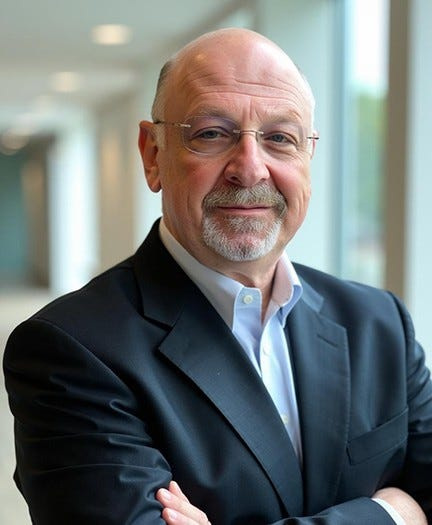
By Rabbi Ammos Chorny | USA TODAY Network
