The School District of Lee County released new data Wednesday, May 20, as it faces a contentious budget season, framing a wave of teacher cuts as part of a broader effort to stabilize staffing and align spending with declining enrollment.
Since the district began its “strategic budget realignment,” The News-Press & Naples Daily News has repeatedly requested specific data on school-level cuts and teacher non-renewals.

Here’s what the district shared.
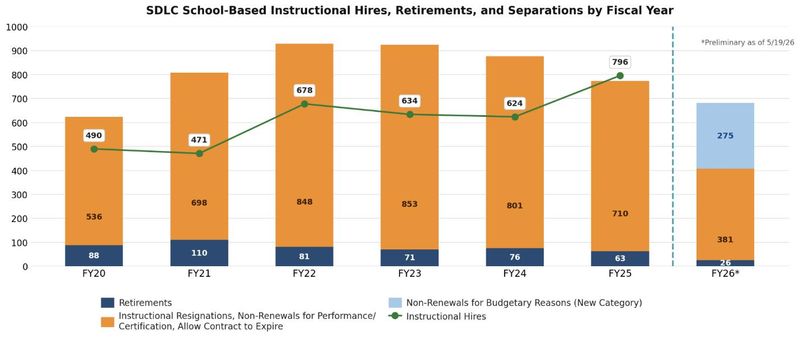
As the district navigates a projected $92.4 million structural operating deficit, the total number of non-renewals for budgetary reasons across all employee groups reached 457 after the contract window closed on May 11.
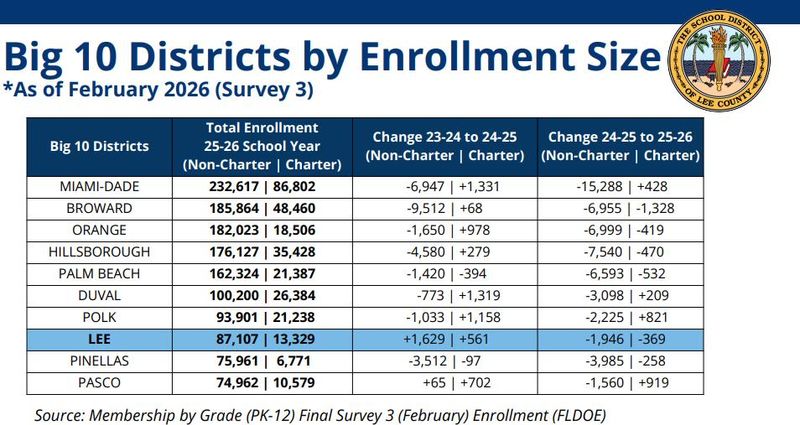
The district connected the cuts to a net loss of nearly 2,000 students compared to February 2025, arguing that staffing must align with actual enrollment.
“The School District is navigating what many school systems across the country are facing: declining enrollment in some areas within our county,” the district said in its release. “As the table below illustrates, the School District of Lee County is not alone in this challenge to reduce staffing. With a net loss of nearly 2,000 students from a year ago in February, that would be the equivalent of two 1,000-student schools that are no longer needed from a staffing perspective.”
Despite the 457 budgetary non-renewals, the district said 96% of the workforce will be maintained for the 2026-27 school year. The district said it has also identified 122 vacant teaching positions for next year, and compared it to the 575 vacancies reported this time last year.
How did the district reach a $92.4 million deficit?
The district attributes the projected $92.4 million deficit to declining enrollment, inflation, the expansion of state school choice programs and years of “legacy spending” where budgets were automatically rolled over without adjusting for enrollment trends.
To help offset the gap, the district plans to shift $45.4 million from capital funds to support general operations. The district called this a “sustainability mindset,” meant to eliminate non-essential spending to protect teacher investments and the classroom environment.
During a press conference May 1, Superintendent Denise Carlin pushed back on the idea that enrollment decline is the sole driver of the cuts.
“I will certainly agree with you that losing 14 students or 12 students or whatever does not translate into $92 million, but I have never said, and I want to be clear on this, that that is the only reason. We have multiple factors, including the overspending that has occurred in the school district,” Carlin explained, pointing to what she described as years of “legacy spending” and administrative overspending.
Deputy Superintendent Ken Savage explained during a board workshop May 12 that individual schools have historically received funding above what the state’s student-based model supports.
“This wasn’t $35 million of cuts that were schools. It was actually just taking all above formula allocation. So every dollar beyond what a school actually earned based on the weighted FTE, the projected weighted FTE for that school amounted to $35 million. So it wasn’t that we went in and just cut the schools. It was strictly a different allocation,” Savage told the board.
How are teachers, parents responding to budget changes?
Parent India Palencia, who’s also running for school board, criticized the district’s priorities during a packed school board meeting May 12.
“This community is being asked to accept deep school cuts as responsible leadership, but you cannot claim students come first when classrooms are the ones absorbing your instability,” she said, adding that teachers, support staff, arts, electives, technology programs and student services are what disappear when cuts are made.
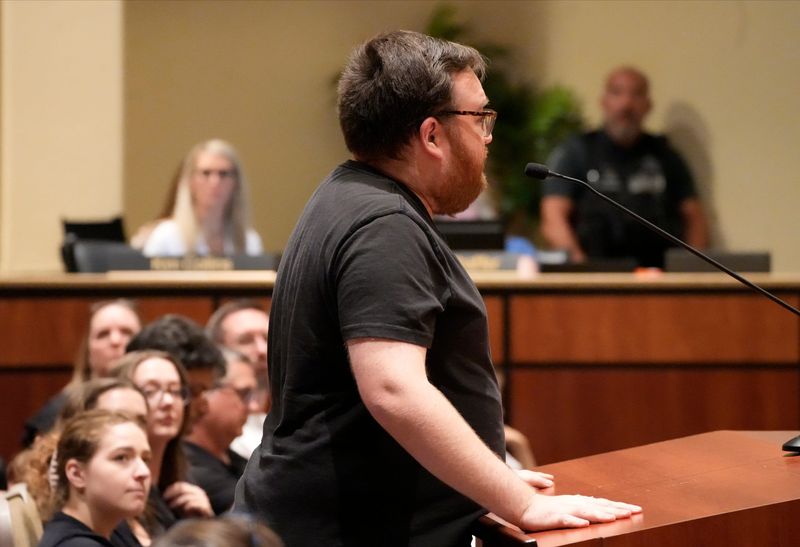
Gage Griffin, the husband of a teacher whose contract was not renewed, also spoke during the board meeting, his voice breaking.
“It’s because of her that we could afford to buy our first home. It’s because of her I was able to go back to school. And it is because of you she no longer has a job,” he said. “It’s hard to believe that you can say fiscal responsibility is the reason that you’re cutting waste when what’s being cut is my wife’s job, my family’s home. And it’s shameful saying that she’s waste, and to stand in front of us and lie about what you can do is wrong.”
Griffin was referring to recent district statements framing the staffing changes as an effort to reduce waste
“Taxpayers expect fiscal discipline, and that is exactly what we are delivering,” Carlin said in a district statement released April 29. “These efforts are about reducing waste, not cutting the budget for education, athletics, or the arts. Too much money has drifted away from the classroom, and to stay in line with the state’s funding model, we must realign spending so it follows the student based on current enrollment. Our top priorities will always be improving student achievement, strengthening school security, and paying our teachers more. By eliminating waste and unnecessary spending, we can direct more resources to those priorities while also reducing overall costs. This realignment is designed to deliver long-term results and put our district on a stronger, more fiscally responsible path.”
For veteran teachers, the cuts have felt deeply personal.
Chelsea Clarke, an English teacher and Lee County alum, protested the district’s cuts. Her husband, the only full-time World History teacher at Cypress Lake High, received a preliminary non-renewal notice.
“He’s been in education since he was 20 years old, worked for the district for about 15 years. He was a highly effective teacher. He’s been a dean, he’s been an athletic director. He’s certified. He has 30 to 40 kids in his classroom, sometimes up to 12 different languages,” Clarke said. “And, to hear that he is able to work in those conditions and be a productive and highly effective teacher, and that they don’t have a position for him next year, is heartbreaking.”
How has the school board and district responded?
Carlin defended the cuts as part of a broader push for fiscal responsibility, noting the district has reduced central office spending by nearly $16 million. Savage echoed that position, describing the changes as a correction to years of over‑allocation tied to enrollment.
School board member Bill Ribble supported the district’s “right‑sizing” efforts, comparing it to private‑sector management: “If no one’s buying your widgets, you have to figure out how to address your inventory.”
Board members Debbie Jordan and Melisa Giovannelli criticized the timing and optics as teachers are cut.
Jordan questioned whether the district was modeling the fiscal discipline it was asking of schools, asking, “How do we ensure that this process is about strategic efficiency rather than simply balancing a budget on the backs of employees and schools?”
Giovannelli pulled several agenda items, including new job descriptions and contracts, saying the moves sent the wrong message.
“This is not the time,” she said. “We’re asking schools to get lean and cut budgets when teachers don’t have jobs. It looks terrible on us.”
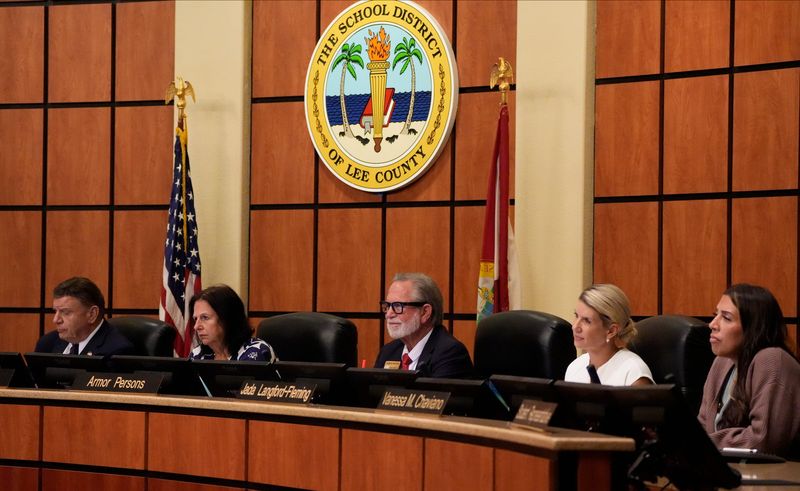
Despite those objections, the board approved the items through majority vote.
What happens next for the district budget?
Regarding the broader budget, the district is currently operating without a finalized state budget. Florida lawmakers returned to Tallahassee May 12 for a special legislative session to reach an agreement on the state budget.
The school district will continue a department-by-department review over the next 8 to 12 months to identify further efficiencies in the district’s central office. The final budget for the 2026-27 school year is scheduled for adoption in September.
Do you have an opinion about this topic? Write a letter to the editor and send it to letters@naplesnews.com and/or mailbag@news-press.com. Keep it to 250 words or fewer and include your contact info. Have more to say: Send a guest column of no more than 600 words.
Mickenzie Hannon is a watchdog reporter for The News-Press and Naples Daily News, covering Collier and Lee counties. Contact her at 239-435-3423 or mhannon@gannett.com.
Please support local community journalism and stay informed about Southwest Florida news by subscribing to The News-Press and Naples Daily News; download the free News-Press or Naples Daily News app, and sign up for daily briefing email newsletter, food & dining and growth & development newsletters here and here.
This article originally appeared on Naples Daily News: 457 teachers, staff cut in Lee County as $92M deficit hits schools
Reporting by Mickenzie Hannon, Fort Myers News-Press & Naples Daily News / Naples Daily News
USA TODAY Network via Reuters Connect