If there’s one thing Florida residents are — or should be — familiar with, it’s hurricanes.
From June 1 through Nov. 30, we have the National Hurricane Center’s website bookmarked, checking it regularly for the latest news of anything showing potential for development and several times a day when it looks as if something may be heading our way, especially if conditions are favorable for strengthening.

➤ Weather alerts via text: Sign up to get updates about current storms and weather events by location
We have a good reason to be concerned.
From Maine to Texas, Florida remains the state most likely to feel impacts from a storm in 2026 among those listed by Colorado State University.
Amazon hurricane supplies for your home
Which raises the question: What three hurricane prep mistakes do Floridians still make?
Here are answers to that question, as well as what you can do about it.
What three hurricane prep mistakes do Floridians still make?
If we had to pick three hurricane prep mistakes Floridians still make after all these years, it’s:
➤ Track all active storms
Let’s tackle each topic and what you can do about it.
Mistake No. 1: Preparing for a storm only if it’s heading toward Florida
The mistake: Waiting to a storm to be pointed at Florida before starting your preparations.
The reality: Once the National Hurricane Centers starts issuing advisories on a storm, with those associated graphics showing where the center of the storm is expected to go, the time to start preparations is over. You should be doing last-minute things, like topping off your gas tank, getting a little extra cash out and confirming where you’ll go if you have to evacuate.
➤ Hurricane forecast updates potential threat by Florida county
If Florida is in the cone, people tend to rush to the store to stock up on water, food, batteries, plywood, and fuel. Shelves empty quickly, gas stations run low, and supply chains become strained.
Well before the hurricane season begins, emergency managers and meteorologists stress preparedness should begin well before a storm threatens your area.
Relying on predictions for a quiet season could leave you dangerously unprepared. Even a below-normal season can produce a devastating landfalling storm.
What you should do:
Mistake No. 2: Focusing on winds and ignoring flood risks
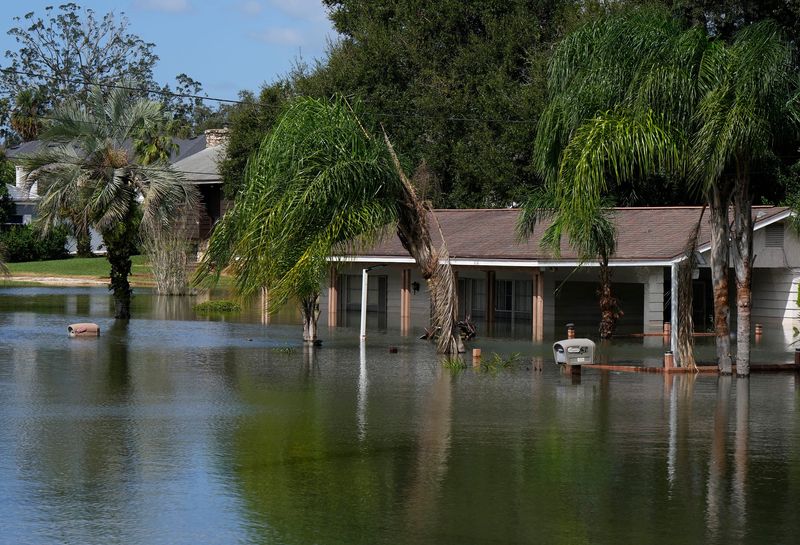
The mistake: People focus on a hurricane’s winds or category and overlook or ignore the flooding risk.
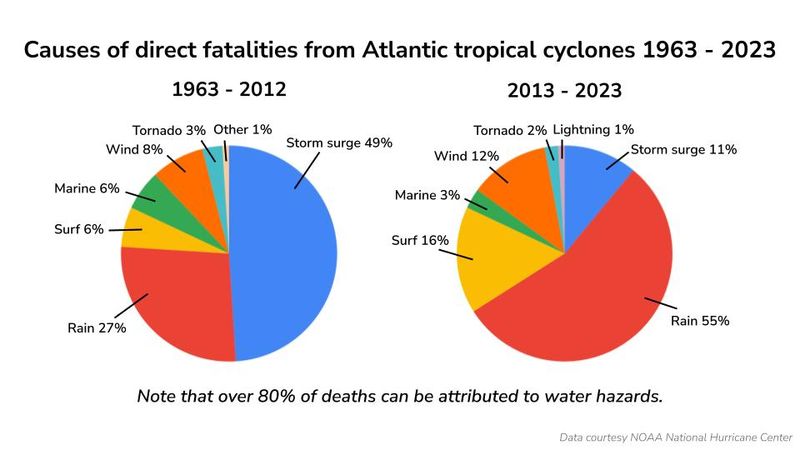
The reality: Yes, hurricanes can produce strong winds, but they can also bring storm surge flooding and heavy rainfall. The National Hurricane Center emphasizes hazards can extend well outside the forecast cone and beyond a storm’s center.
“Water hazards — storm surge and inland flooding — have historically been the leading causes of loss of life during hurricanes,” according to NOAA. What you should do:
Mistake No. 3: Not planning for how to survive for days or weeks without power
The mistake: You heeded warnings and have food and water for you and your family but you didn’t prepare for days without electricity.
The reality: After many Florida storms, the biggest challenge is living without all the things we take for granted: power, air conditioning, refrigeration, ovens and stoves that work with a turn of a knob, internet, functioning gas pumps, ATMs, and fully stocked stores and pharmacies that are open.
During most of the Atlantic hurricane season, Florida residents experience plenty of heat and humidity. Air conditioning makes it bearable, but try to imagine days, if not weeks, without ac. Power outages can quickly become health emergencies for seniors, people with medical needs, and families with young children.
Extreme heat is recognized by the Centers for Disease Control and Prevention and the National Weather Service as one of the leading causes of weather-related deaths in the United States, averaging 1,200 to more-than-1,700 reported deaths every year.
What you can do:
Bonus ‘mistake’ to avoid when preparing for 2026 hurricane season: assuming quiet season means a safe season
The mistake: You decided against making any preparations since weather experts have been predicting the 2026 Atlantic hurricane season will be below normal.
The reality: “It only takes one” is a repeated refrain by forecasters and emergency officials.
“As with all hurricane seasons, coastal residents are reminded that it only takes one hurricane making landfall to make it an active season. Thorough preparations should be made every season, regardless of predicted activity,” Colorado State University said in its updated forecast Aug. 5.
What you should do:
Track all active storms out there now
Stay informed. Get weather alerts via text
What’s next?
We will continue to update our tropical weather coverage to bring you the most current information you need to protect your home and family.
Cheryl McCloud is a journalist for the USA TODAY Network-Florida’s service journalism Connect team. You can get all of Florida’s best content directly in your inbox each weekday day by signing up for the free newsletter, Florida TODAY, at https://floridatoday.com/newsletters.
This article originally appeared on Florida Today: 3 hurricane prep mistakes Floridians still make. How you can avoid them
Reporting by Cheryl McCloud, USA TODAY NETWORK – Florida / Florida Today
USA TODAY Network via Reuters Connect
By Cheryl McCloud, USA TODAY NETWORK – Florida | USA TODAY Network