Every sport has its big names, the most famous of which are known by fans and non-fans alike.
Examples are legion: Arnold Palmer in golf, Babe Ruth in baseball, Pele in soccer. And then there’s perhaps the biggest of all: Muhammad Ali, aka “The Greatest.” Still, there are other names in the sport of boxing that resonate with people, and not all of them were boxers.

One is Everlast, a name associated with boxing since 1917, a time when Jess Williard was the undisputed heavyweight champion of the world. History has largely forgotten about Willard, but not about Everlast. Let’s look back a few rounds.
It turns out that Everlast was started in 1910 not as a boxing company but one that sold swimwear. The founder was 17-year old Jacob Golomb from the Bronx, a young man in a hurry who didn’t like the fact that the swimsuits of the day were shoddily made and didn’t last very long. As a tailor’s son, he knew his way around needle and thread and was able to create a line of durable swimsuits that he promised would last an entire year. With that as its primary pitch, the firm adopted the name Everlast and began to grow.
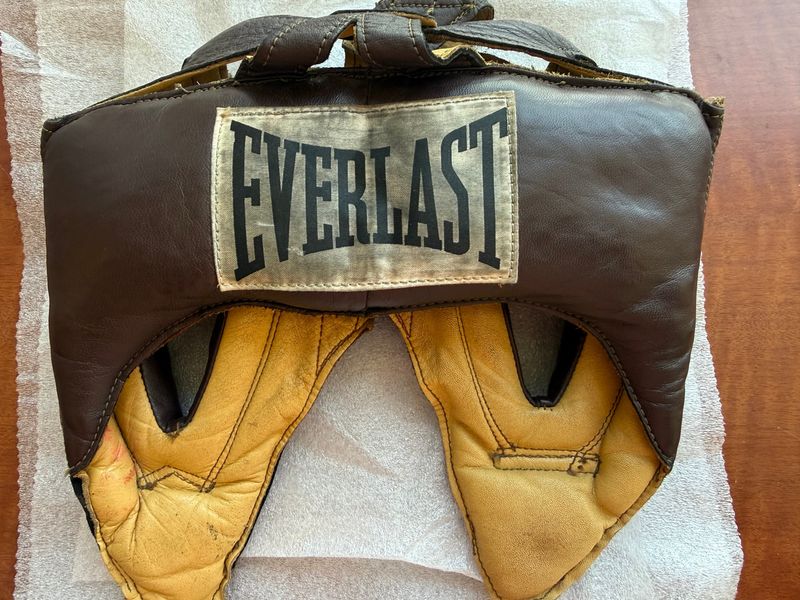
After seven successful years selling swimwear, Golomb was approached by an as-yet unknown boxer named Jack Dempsey to create a set of boxing headgear that was equally durable. It turned out that the young entrepreneur, then only 24, was himself a boxing fan and able to come up with a design of protective headgear that could survive 15 rounds of punishment. Just as with swimwear, Golomb recognized a hole in the market when he saw one and quickly pivoted his company into the boxing market.
He never looked back.
Over the next 35 year, Golomb built Everlast into the dominant name in boxing gear. His timing once again proved perfect as the 1920s and ’30s were golden years for the sport. During those decades, boxing’s appeal grew to worldwide proportions, and superstars like Dempsey developed huge followings.
Following Golomb’s death in the 1950s, his son Daniel took over and proceeded to plaster the firm’s distinctive logo onto everything he could. His timing, too, was prescient, as boxing experienced a second golden age in the 1960s, especially in the heavyweight division with its larger-than-life personalities like Ali and others. By that time, Everlast and boxing had become nearly synonymous.
It was during the 1980s that brand licensing began to emerge as big business, and once more Everlast proved to be ahead of the curve. Today, the company has evolved into an active lifestyle brand with a presence in more than 100 countries. It continues to manufacture protective equipment for a range of increasingly popular combat sports, thus maintaining a connection to its roots and ensuring that customers continue to perceive the brand as authentic. Occasionally, galleries like ours come up with vintage Everlast headgear, and it’s always a head-turner.
There just aren’t many brands like it.
Mike Rivkin and his wife, Linda, are long-time residents of Rancho Mirage. For many years, he was an award-winning catalogue publisher and has authored seven books, along with countless articles. Now, he’s the owner of Antique Galleries of Palm Springs. His antiques column appears Sundays in The Desert Sun. Want to send Mike a question about antiques? Drop him a line at silverfishpress@gmail.com.
This article originally appeared on Palm Springs Desert Sun: Why Everlast and boxing are a one-two punch
Reporting by Mike Rivkin, Special to The Desert Sun / Palm Springs Desert Sun
USA TODAY Network via Reuters Connect
By Mike Rivkin, Special to The Desert Sun | USA TODAY Network