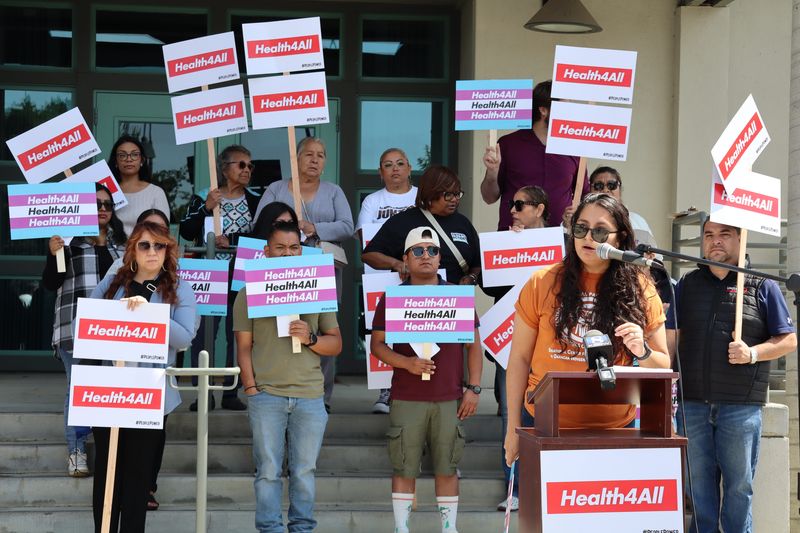
Monterey County is ramping up outreach to inform residents about upcoming changes to Medi-Cal and SNAP (food stamps) resulting from HR-1, the Big Beautiful Bill, and the state budget approved earlier this summer.
Some of the changes, which impact certain enrollees and new applicants, including undocumented adults and individuals 65 and over, will take effect Jan. 1, 2026.

Medi-Cal, California’s Medicaid health insurance program for low-income and disabled individuals, covers 173,502 people in Monterey County, according to county data for September, and 51,546 people receive SNAP food benefits. SNAP is called CalFresh in California.
Salinas has the largest share of recipients of both programs in the county, with 43,422 households receiving Medi-Cal and 14,014 receiving CalFresh benefits.
At its weekly news briefing earlier this week, Monterey County revealed that staff have seen a 20% reduction in applications in recent months and encouraged all residents who receive Medi-Cal and Cal Fresh to renew and those currently eligible for benefits to apply.
Those who have concerns about applying can get information over the phone.
“There’s a lot of different programs for Medi-Cal and every household is unique—there are some individuals that may be undocumented in the household, and there may be some individuals that are not,” said Christina Barajas, program manager for the County of Monterey Department of Social Services. “We can tell you what you need to know for your family and what is going to impact you.”
Changes to eligibility for undocumented adults in 2026
In recent years, health care coverage in the state has been extended to an increasing number of low-income people, including undocumented adults, as part of the state’s mission to create a “Healthy California for All.” Medi-Cal for undocumented individuals is funded solely by the state, not the federal government.
State-funded Medi-Cal was extended to income-eligible adults ages 19-25 in January 2020, followed by adults ages 50 and older in May 2022 and adults ages 26-49 regardless of immigration status in January 2024, making all low-income immigrants in the state eligible for state-funded health coverage regardless of immigration status.
California is one of 14 states who offer health care coverage to undocumented individuals in some capacity, according to Newsweek.
Undocumented adults 19 and over have until Dec. 31 to apply for full coverage Medi-Cal, because starting Jan. 1, 2026, those individuals and others with an “unsatisfactory immigration status” will only be able to apply for coverage for emergency or pregnancy related services.
Adults 19 and over with an unsatisfactory immigration status will no longer be eligible to receive Medi-Cal dental starting July 1, 2026. Emergency dental care, including extractions will still be covered.
Medi-Cal will consider assets again for older adults
Starting Jan. 1, 2026, Medi-Cal will again consider assets when reviewing eligibility for older adults (65+) and people with disabilities or in long-term care as part of the application and annual renewal process.
The asset limit is $130,000 for one person, and $65,000 for each additional household member, up to 10 members per household.
Assets include bank accounts, cash and anything over one home or vehicle.
Work requirements for CalFresh
President Trump’s “Big Beautiful Bill,” introduced the strictest work requirements in SNAP history, requiring an increasing number of people to work, volunteer or attend a training program at least 20 hours per week, as reported by EBT app Propel, and many people who were previously exempt from work requirements will now have to show they meet them or risk losing their food stamps altogether.
Starting Jan. 1, the CalFresh work requirements waiver ends for able-bodied adults ages 18 to 64. Benefits will be limited to three months within a 36-month period for adults without exemptions and who do not meet the work/community service/training hour requirements.
“This will impact our homeless community,” Barajas said. “In the past, it would be an exemption.”
Have questions? These organizations can help.
To help residents navigate the updated rules and eligibility requirements for the various programs, Monterey County has partnered with the following local community organizations to help get the word out.
This article originally appeared on Salinas Californian: What Monterey County residents need to know about Medi-Cal, CalFresh changes coming Jan. 1
Reporting by Roseann Cattani, Salinas Californian / Salinas Californian
USA TODAY Network via Reuters Connect