I am a first-generation immigrant. I know what it feels like to grow up between two worlds. One rooted in sacrifice, survival, and culture, and another demanding assimilation at the cost of identity.
I know the quiet pain many immigrant families carry: the fear of being judged for your accent, your name, your food, your skin color, or where you came from. Many of us learned early that acceptance as an American often came with a condition to erase a part of yourself to belong.

That is the tragedy of the immigrant experience in the United States of America. Not just the struggle to survive, but the pressure to disappear. Many of us learned how to navigate by camouflaging ourselves and learned the hard lesson that comes with resiliency.
Today, we are witnessing a cruel chapter in our nation’s history as families are targeted and dehumanized under President Donald Trump’s immigration policies. Policies built not on compassion or solutions, but on fear, division, and punishment.
Let me be clear: most Americans agree that individuals who commit serious and violent crimes should face consequences, including deportation when warranted under the law. That principle is not controversial. Previous Republican and Democratic administrations deported individuals through established legal processes, respecting due process and the rule of law. But that is not what we are witnessing today.
What we are seeing is an unprecedented expansion of executive power that treats entire communities as suspects, disregards fundamental constitutional protections, and bypasses the legal safeguards that have long defined our democracy. The issue is not whether laws should be enforced; it is whether those laws are enforced fairly, consistently, and with respect for the rights that belong to every person. When a government begins to ignore due process for some, it weakens the protections that ultimately safeguard us all.
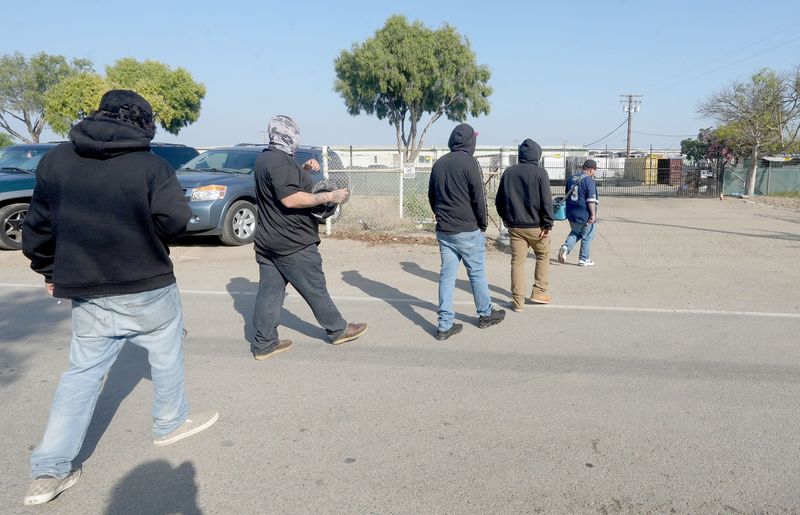
And while immigrant communities suffer, too many corporations, industries, and political leaders remain silent. The truth is this country has benefited enormously from a broken immigration system. For decades, businesses have profited from immigrant labor while denying immigrants dignity and protection. We have depended on low-wage immigrant workers to landscape our lawns, clean our homes, harvest our food, build our cities, and care for our children and elders. Banks and corporations have made millions selling products, services, and provided access to credit to immigrant communities while making enormous profit. Entire industries were built on the labor and consumption of people this country refuses to fully accept.
Now, when immigrant families are under attack, where are those same corporations? Where are the CEOs, developers, financial institutions, and billion-dollar industries that profited from the immigrant sacrifice? Too many stand idly by, unwilling to risk discomfort in defense of human beings.
What kind of country have we become when we hurt those who are most vulnerable?
People do not leave their homes, families, languages, and cultures because it is easy. They leave because poverty, violence, desperation, and hopelessness leave them with no other choice. Parents cross deserts, borders, and impossible odds for one reason: the chance that their children might have a better life than they did.
That dream should not be criminalized, or we lose the core values that made us the land of the free and home of the brave.
As immigrants, many of us grew up trying to minimize ourselves to survive. We changed how we spoke. We hid our traditions. We learned to stay quiet about discrimination because we were taught that gratitude meant silence. Racism has a way of making people believe they must abandon their roots to earn humanity. But our cultures are not weaknesses. They are strengths. They are stories of resilience, survival, and hope.
I often think about the vision presented in “Star Trek,” a future where humanity moves beyond prejudice, greed, racism, and division. A future where people from different worlds and cultures work together not out of fear, but for the betterment of humanity itself. That vision resonates because it challenges us to imagine a society where no one has to erase who they are to belong.
America should aspire to be that kind of society once again. A nation where immigrants are not exploited when convenient and discarded when politically useful. A nation where diversity is celebrated instead of feared. A nation where we do not force people to destroy their identity in exchange for acceptance into the American fabric.
Immigrants are not the problem. The real problem is a system that profits from their labor while denying their humanity.
We can do better. We must do better. Elections have consequences so use your voice and your vote to send a message that change must come sooner rather than later. We must end the greed driven corruption and bring back a focus on the common good.
Because the measure of a nation is not how it treats the powerful. It is how it treats the vulnerable.
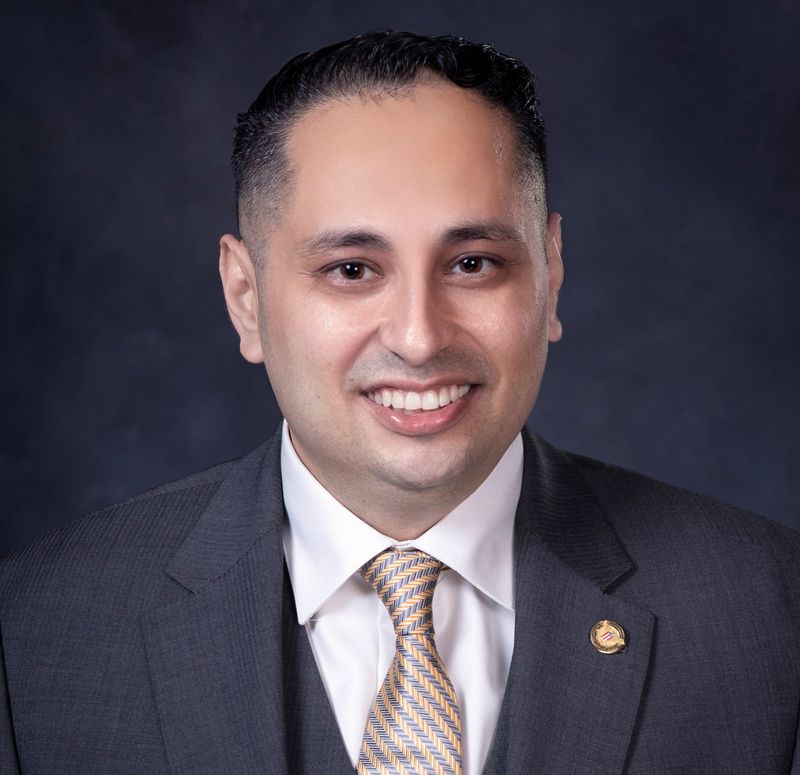
Pedro A. Chavez is a resident and homeowner in Santa Paula and serves as a member of the Santa Paula City Council and its former mayor. The article is not reflective of the city of Santa Paula.
This article originally appeared on Ventura County Star: We cannot build a future on the backs of the invisible | Your Turn
Reporting by Pedro A. Chavez, Your Turn / Ventura County Star
USA TODAY Network via Reuters Connect
By Pedro A. Chavez, Your Turn | USA TODAY Network