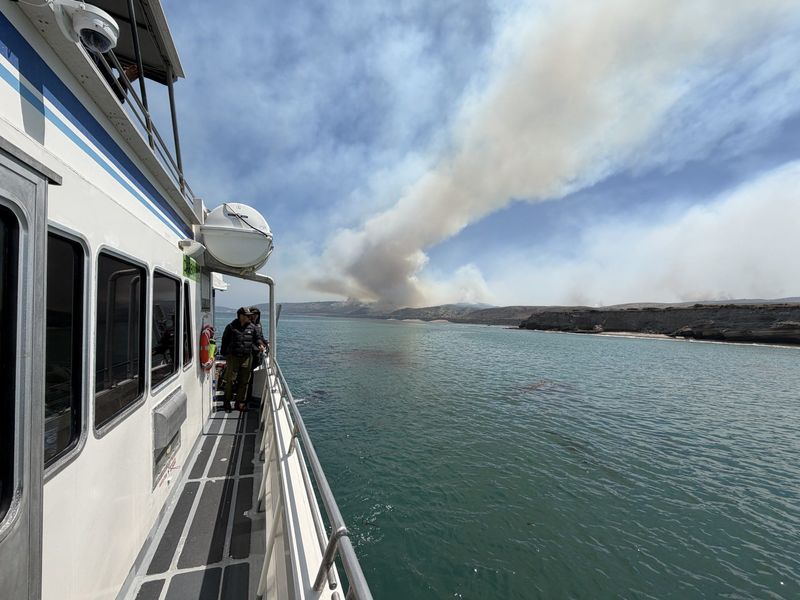
A fire burning in Channel Islands National Park has become by far the largest in recent recorded history on a remote island off Ventura, burning nearly 29 square miles.
The U.S. Wildland Fire Service described fires on Santa Rosa, one of five islands in the park, as uncommon. A 1997 blaze called the Old Ranch Fire was the next largest since the park began recording in 1980, officials said. It burned 813 acres.

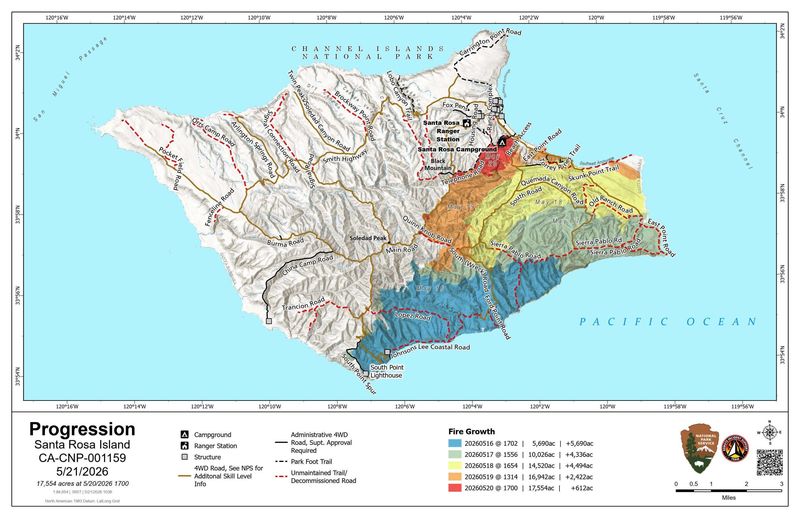
The current blaze, called the Santa Rosa Island fire, had grown to nearly 1,000 acres in its first day. By May 21, authorities reported flames burned more than a third of the remote island, or nearly 18,400 acres. The fire was 59% contained.
Flames swept through nonnative grasses and burned through island chaparral, said Mike Theune, a fire service spokesperson. Earlier in the week, the human-caused blaze reached a rare stand of Torrey Pines, trees found only on Santa Rosa and one other spot in the San Diego area.
The cause of the fire was under investigation. The blaze appeared to have started after a sailboat crashed into rocks on the island and stranded a mariner overnight. The 67-year-old was rescued the following morning by the U.S. Coast Guard.
The park service began to take over management of the island in the 1980s. Since then, other reported fires in 2001, 1989 and 1988 all burned fewer than 40 acres, Theune said. The fire service classifies a large fire as burning over 300 acres in grass, he said.
In 2020, a blaze called the Scorpion Fire on Santa Cruz Island, also part of the park and near Santa Rosa, burned more than 1,300 acres.
What discoveries and wildlife call Santa Rosa Island home?
Sometimes called the Galapagos of North America, the Channel Islands are home to more than 2,000 plant and animal species. Some are found there and nowhere else in the world.
As Santa Rosa transitioned from decades of ranching to a park starting in the 1980s, native plants, from coastal sage scrub to manzanita and oaks, returned, moving in around nonnative grasses growing there.
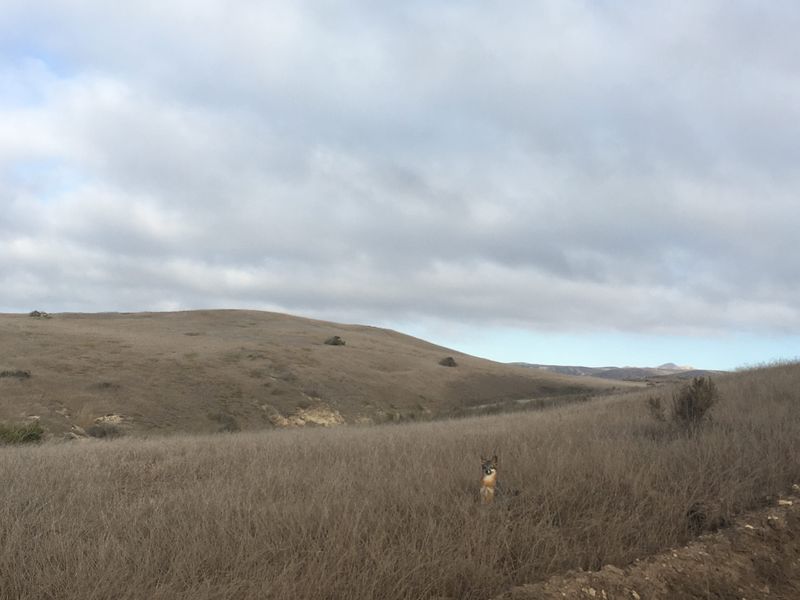
Among the wildlife on the island, Santa Rosa is home to small, cinnamon-colored fox that is found on three of the northern Channel Islands. A decade ago, island foxes, about the size of a house cat, made one of the fastest recoveries in the history of the federal Endangered Species Act.
Researchers also made discoveries of rare fossils and significant archeological sites on the island. Arlington Man, the earliest known human remains in North America, date back 13,000 years and were found on Santa Rosa.
Paleontologists and archeologists excavated sites holding fossils from an extinct sea cow buried deep in a steep ravine to a skull that may be a link in the evolution of a long-extinct mammoth.
Under a historic ranch house, archaeologists uncovered stone tools characteristic of sites occupied 8,000 to 13,000 years ago.
What’s the status of the Santa Rosa Island fire?
The fire has destroyed two historic structures on the island, the U.S. Wildland Fire Service reported. Earlier this week, officials reported the South Point Light Station was still standing, despite flames reaching that area.
Conditions slowed the process of transporting firefighters and equipment to the island in the first couple of days, authorities said. As of May 21, however, around 140 personnel had reached Santa Rosa, along with specialized fire trucks and other resources.
The Chumash people and their ancestors have been on the islands for thousands of years, and a crew from a Chumash fire department was among the firefighters who responded to this week’s blaze.
Cheri Carlson covers the environment for the Ventura County Star. Reach her at cheri.carlson@vcstar.com.
This article originally appeared on Ventura County Star: Santa Rosa wildfire largest in island’s recent history
Reporting by Cheri Carlson, Ventura County Star / Ventura County Star
USA TODAY Network via Reuters Connect