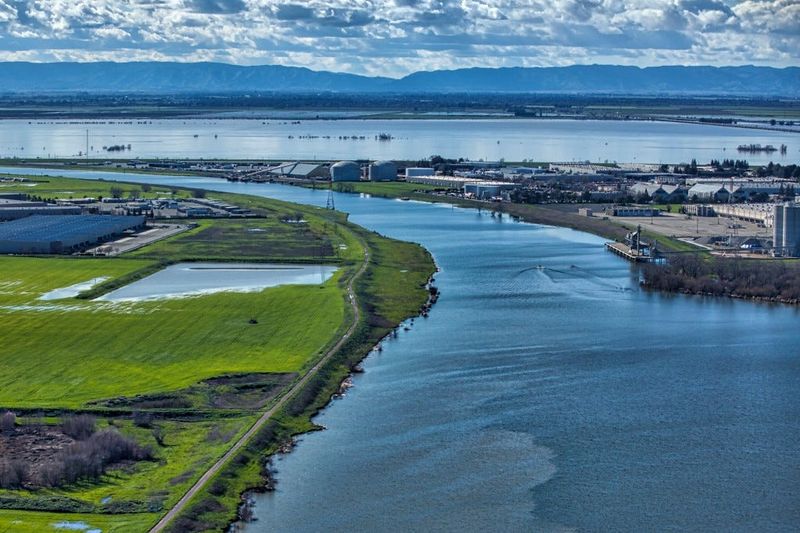
California regulators are moving toward a long-awaited decision on how much water can be taken from the Sacramento–San Joaquin Delta — a choice that could reshape supplies for cities, farms, and fragile ecosystems statewide. The Bay-Delta Plan, now nearing final approval, would require more freshwater to remain in rivers and estuaries, limiting how much can be pumped south during much of the year.
Recent public hearings underscored how consequential the plan is: conservation groups say the Delta’s ecological collapse demands urgent action; agricultural districts and urban water agencies warn it could reshape supply chains, decimate the ag industry, and raise household water bills.

Here is what’s at stake — and what it means for California water users.
How could the Bay-Delta Plan affect agriculture?
For decades, the Delta has served as the main pumping hub for Central Valley agriculture. Almond orchards, tomato processors, dairy operations, and seed growers all depend on export pumps that move water south through the State Water Project (SWP) and Central Valley Project (CVP).
Under the Bay‑Delta Plan, required river flows could restrict the amount of water available for export — especially in below‑average years. That has triggered sharp criticism from farm groups who testified that:
Agricultural coalitions argue the plan “overcorrects,” prioritizing fish flows over food production. Conservation groups respond that decades of over‑pumping have pushed salmon, steelhead, and the Delta ecosystem to the brink.
What are the State Water Project and Central Valley Project
Any discussion of Delta pumping traces back to California’s two massive “plumbing systems”: the State Water Project and the Central Valley Project. Together, they form the backbone of water delivery in the state, supplying water to millions of people and hundreds of thousands of acres of farmland.
The Central Valley Project (CVP) began during the Great Depression as a federal effort to stabilize farm production, control floods, and move water from the northern Sacramento Valley to the San Joaquin Valley. Over time, the CVP grew into a network of reservoirs, canals, and pumping plants operated by the U.S. Bureau of Reclamation. It now supplies irrigation water to some of the nation’s most productive agricultural districts on the west side of the San Joaquin Valley.
The State Water Project was approved by voters in 1960. Run by the California Department of Water Resources, the SWP was designed primarily for urban use, sending water to communities from the Bay Area to Southern California, while also serving farms in the San Joaquin Valley. It includes major dams like Oroville, the California Aqueduct, and key pumping stations in the Delta.
What the Bay‑Delta Plan could mean for residential water rates
For urban water users, the most immediate impact may be financial. According to the California Chamber of Commerce, if metropolitan water agencies receive less supply from the Delta, they will likely need to:
Agencies will face rate‑setting requirements under Proposition 218, which means increases must be tied to documented costs. Early estimates suggest moderate but noticeable rate increases for many households, though the size will vary by region and reliance on Delta exports.
Possible danger of continued Delta water pumping: Saltwater intrusion
The Delta sits at the intersection of freshwater rivers and the Pacific. When too much freshwater is pumped south, saltwater can push inland, contaminating drinking and irrigation water.
State regulators say the new flow requirements help preserve the Delta’s natural resistance to salinity intrusion by:
Local water districts, however, warn that relying on fixed flow standards may not provide flexibility during extreme drought years.
What role does the Delta Smelt play in the Delta controversy?
No species symbolizes the Bay‑Delta conflict more than the Delta smelt. Once abundant, the tiny translucent fish has become a proxy in the battle over water policy — praised by conservationists as a bellwether of the delta’s health and dismissed by critics as an example of regulation run amok.
Key points from this month’s hearings:
Regardless of the species’ future, the smelt’s legal status continues to shape how much freshwater must remain in the Delta each year.
Potential conflicts between California and the Trump Administration
The Bay‑Delta Plan could become a new flashpoint between California regulators and the Trump administration, which has favored increased water deliveries to agricultural districts.
Potential areas of conflict include:
State officials say California has the authority — and responsibility — to protect the delta. Water users fear dueling regulations could create uncertainty just as agencies plan for long‑term investments.
What’s next for the Bay‑Delta Plan
The State Water Resources Control Board is expected to vote on the Bay‑Delta Plan within weeks. If approved, the rollout will unfold over several years as agencies file compliance plans, adjust operations, and prepare for legal challenges likely from multiple sides.
This article originally appeared on The Record: Proposed Bay-Delta plan could reshape way California delivers water
Reporting by James Ward, USA TODAY NETWORK / The Record
USA TODAY Network via Reuters Connect