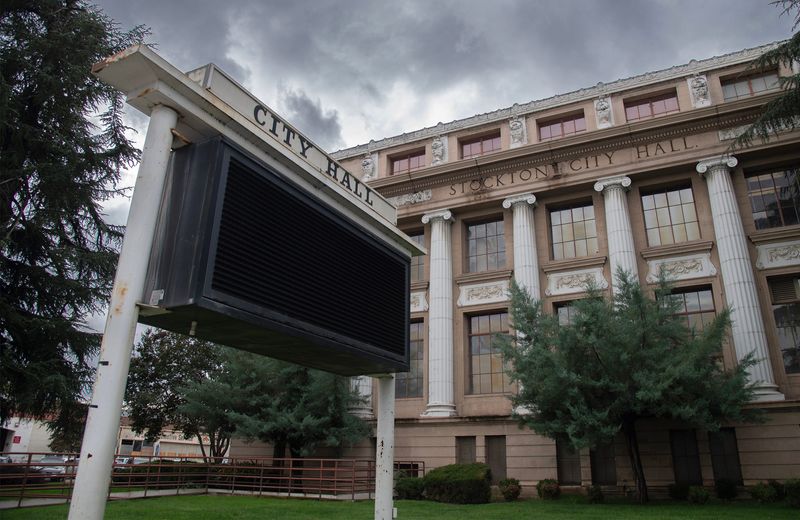
Stockton has paid more than $900,000 in penalties since 2023 after failing to make timely payroll tax payments and submit required reports, city officials said.
City officials said the problems began in January 2023 when Stockton transitioned from its former HTE payroll system to the Tyler MUNIS ERP system. The rollout was plagued with errors, including a failure to implement bi-weekly payroll as required under labor agreements, which left payroll processing incomplete and unresolved for months.

Human Resources Director Rosemary Rivas told councilmembers at a Feb. 18 Council Audit Committee meeting that the penalties were assessed on payroll obligations, including retirement reporting to the California Public Employees’ Retirement System and state and federal tax payments.
Costly penalties
Since 2023, the city has paid $181,027 in penalties related to CalPERS and state payroll taxes. Of that amount, about $1,200 was waived by CalPERS, Rivas said.
About $164,000 of those penalties stemmed from late reporting of retired annuitants to CalPERS. Under CalPERS rules, cities can be assessed a $200 penalty per retiree per pay period for late payroll reporting.
The largest financial impact came from federal tax penalties, according to Rivas.
During the 2025 transfer of payroll responsibilities to human resources, Rivas said staff began reconciling records and discovered unpaid payroll taxes for the first two quarters of the year. The city requested a waiver for one quarter and received about $41,000 in relief.
Despite the waiver, the city has paid about $750,000 in federal tax penalties for late payments since 2023. Rivas reported that total penalties during that period reached about $931,721.
City officials were unable to determine why the payments were late or why the penalties were incurred, Rivas said.
“I cannot, and the team cannot, explain why these were assessed and why they were paid late,” Rivas said. “We just were able to pull that this is what we did pay since 2023.”
Checks and balances
Councilmembers expressed concern about the scale of the penalties and the lack of clarity about how they occurred.
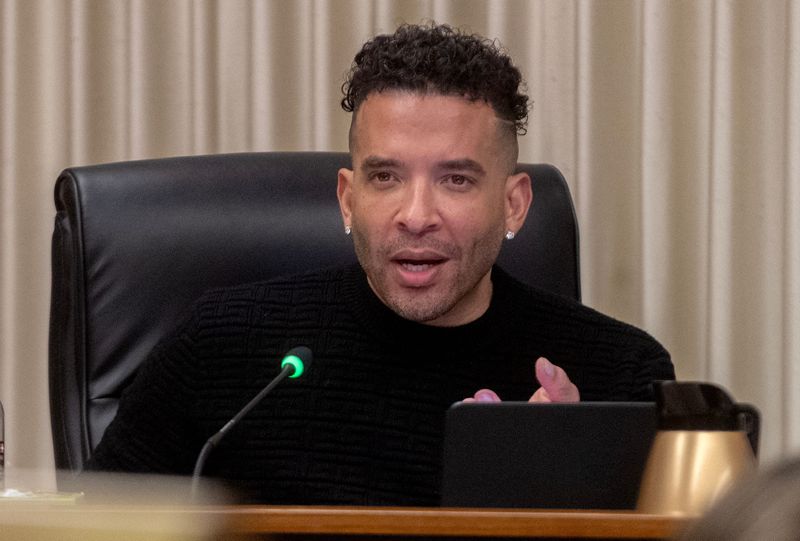
Vice Mayor Jason Lee noted that the nearly $1 million in penalties represents a significant loss of public funds.
“You need full-time people digging in these books and in these numbers,” Lee said. “While I believe we have good people here now, we should have a process set up to where, no matter who’s here, the process has checks and balances where we don’t lose a million dollars.”
Since then, Rivas said, the city has implemented new procedures to avoid future penalties, including an annual compliance calendar listing tax deadlines and standard operating procedures for payroll processing and auditing.
Consultants were brought in to help correct the system. The city contracted with the staffing firm Robert Half to assist with payroll reporting processes and worked with Regional Government Services to identify compliance requirements and develop reconciliation procedures.
The consulting work to fix the payroll system is expected to cost about $700,000 through 2026, Rivas said. That amount is nearly as much as the roughly $900,000 in payroll-related penalties the city has paid since 2023.
She added that the consulting work was needed to correct payroll errors and rebuild parts of the city’s payroll system after widespread reporting problems were identified.
Regional Government Services was hired for its expertise in payroll regulations and compliance, including requirements related to tax reporting, pension reporting and labor agreements. Rivas said the firm helped review payroll errors, establish reporting procedures and develop calendars for tax and reporting deadlines.
To date, the city has paid Regional Government Services about $12,913.
Robert Half provided temporary staff and technical expertise to rebuild portions of the city’s payroll and human resources information system, including correcting pay codes, payroll processing rules and other system configurations.
Initial contracts for both vendors were approved in March 2025 under the $100,000 signing authority of former Interim City Manager Steve Colangelo, Rivas said. As the work expanded, the Robert Half contract was later increased with the city council’s approval.
Rivas said the original Robert Half contract was approved for $100,000 for six months. Additional work later extended the contract by $300,000, bringing the total to $400,000 with council approval.
The city issued a separate $140,000 change order after two payroll employees went on leave. Rivas said additional part-time support was required to continue the work.
Some councilmembers raised concerns about whether projects that begin under the city manager’s $100,000 signing authority can grow significantly without earlier council oversight.
“I don’t feel comfortable giving city management an authority to just start a project and then add tons of tentacles on it that go beyond their authority,” Lee said, adding that if a project’s authority is $100,000 and it needs to exceed that or expand, it should return to the council for approval.
Councilmembers said the issue highlighted broader concerns about how the city’s contracting rules interact with the city manager’s spending authority.
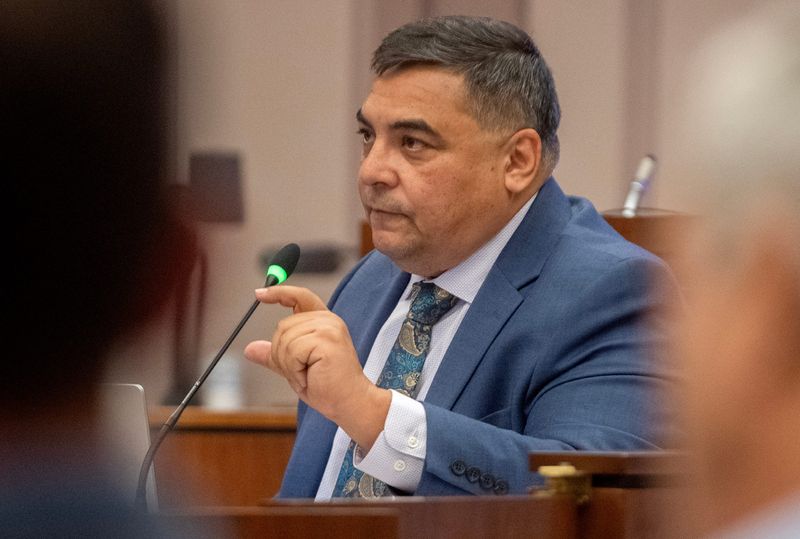
“Our charter is written one way, but it’s allowing for the controls to exceed his spending authority,” District 1 Councilmember Michele Padilla said.
City officials said the work ultimately required more time and resources than originally anticipated.
“When we did first start this, I don’t think we had any idea of how much work had to be done,” Rivas said. “Yes, we did anticipate that it may be $100,000, it may take us about six months, and we’re here at a year heading toward $700,000, but having to rebuild the platform is literally what’s been taking a lot of the time.”
Those contracts are scheduled to expire in December 2026.
Rivas said the payroll division has also implemented cross-training so multiple employees understand the reporting requirements and procedures.
Unanswered questions
Despite the operational fixes, several councilmembers pressed staff to determine how the penalties accumulated without being flagged earlier.
Councilmembers questioned whether outside auditors, including the city’s former audit firm Moss Adams, should have detected the issue.
Rivas said the matter is also being reviewed by the California State Controller’s Office as part of an audit covering the period from 2023 to the present.
Chief Financial Officer Gilbert Garcia said delays in producing financial statements and completing bank reconciliations could have prevented auditors from identifying the issue sooner.
Councilmembers said they plan to request additional information on whether the problem fell within the auditors’ scope of work or whether internal processes failed to identify the penalties.
“We’re talking about $931,000,” Lee said. “We have to be able to communicate how we got there, and I think not knowing that answer is problematic.”
Record reporter Hannah Workman covers news in Stockton and San Joaquin County. She can be reached at hworkman@recordnet.com or on Twitter @byhannahworkman. Support local news, subscribe to The Stockton Record at https://www.recordnet.com/subscribenow.
This article originally appeared on The Record: Payroll errors cost Stockton nearly $1M in penalties since 2023
Reporting by Hannah Workman, The Stockton Record / The Record
USA TODAY Network via Reuters Connect