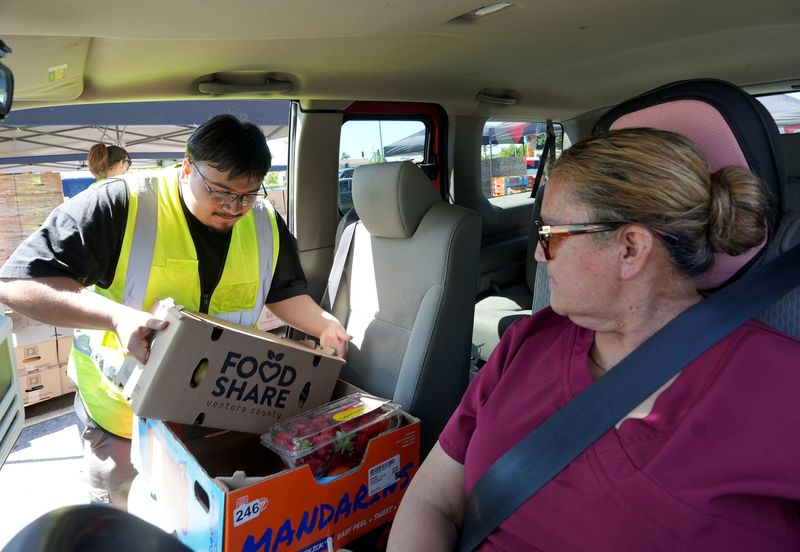
Ventura County’s regional food bank and others across the state say they’re bracing for “a perfect storm” as potential cuts coincide with spikes in demand.
Changes in federal food assistance programs could soon significantly increase the number of Californians who rely on food banks, officials said. At the same time, funding cuts could be on the way for Food Share in Ventura County and their counterparts across the state.

Those include state funds for CalFood, a program that allows food banks to buy truckloads of produce and other groceries.
“We are facing a perfect storm when it comes to food insecurity,” said Monica White, Food Share’s president and CEO. “We’re seeing more people. We’re giving out more food, and we’re seeing a decrease in resources.”
The proposed state budget included base funding for the program but not millions in one-time money added annually since the height of the COVID pandemic.
Food Share’s base funding for the program totals close to $139,000, but with the one-time funding, it received a little over $1 million in recent years, officials said. The money accounts for close to 35% of its food purchasing budget for the Oxnard-based nonprofit, White said.
While the state’s 2026-27 spending plan is far from finalized, she said such a cut could leave a wide gap. The shortfall could come as she expects more people to need food assistance.
Last year, the federal budget included changes to the Supplemental Nutrition Assistance Program, called CalFresh in California, which can help people afford groceries. The California Association of Food Banks described the cuts as the most severe in the program’s history.
How many rely on local food banks?
The cuts are expected to increase demand on top of a surge that has continued since the COVID pandemic, officials said. Food Share reported a more than 170% increase in the number of people receiving food since 2019.
Last year, around 254,000 received food from one of Food Share’s network of 200 local pantries or distribution sites, White said.
That was down slightly from the peak of around 270,000 a few years ago, but far above the numbers pre-COVID, the food bank reported.
In April 2020, Food Share started a weekly drive-thru distribution at College Park in Oxnard that has continued in the years since.
“It continues to grow,” White said. “We see about 700 to 1,000 cars every single week.”
What happens next with the state budget?
In May, the governor is expected to propose a revised spending plan.
The California Association of Food Banks has called for more state funding such as raising the CalFood baseline to levels funded since the pandemic, said Jared Call, the organization’s public policy and advocacy director.
The association also has called for longer term solutions. But at least over the next year, food banks are the ones that will have to help meet the need, Call said.
“We’re going to need to shore up the emergency food system,” he said.
Cheri Carlson covers the environment and county government for the Ventura County Star. Reach her at cheri.carlson@vcstar.com or 805-437-0260.
This article originally appeared on Ventura County Star: County food bank braces for ‘perfect storm’ amid cuts. Here’s why
Reporting by Cheri Carlson, Ventura County Star / Ventura County Star
USA TODAY Network via Reuters Connect