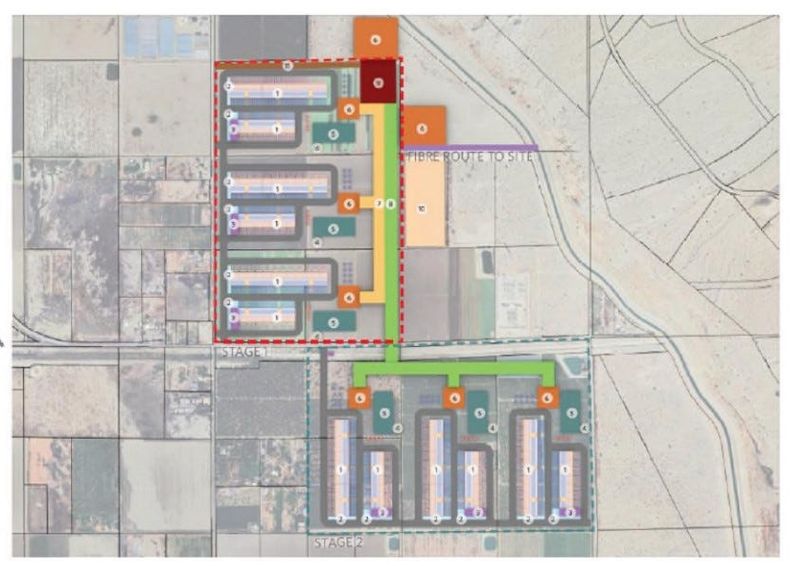
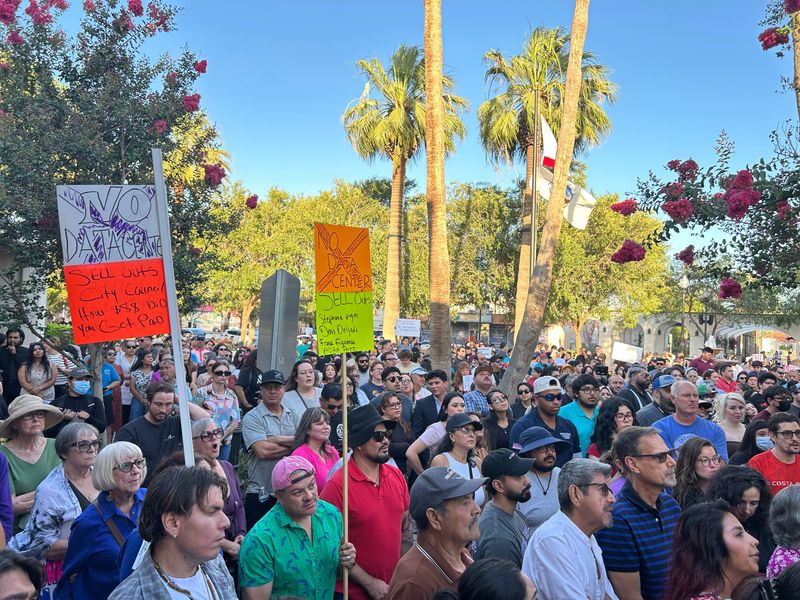
On June 4, the Coachella City Council voted unanimously to impose a moratorium on new data center applications and terminate its agreement with Stronghold Power Systems, the developer behind a 450-acre campus. Cheers erupted outside City Hall. That same day, the Indian Wells mayor published an op-ed in this paper urging the council to stay the course with Stronghold. The council heard a different message from its own residents — and listened.
The road to that vote ran through weeks of packed council chambers. “This valley is already facing extreme heat, water scarcity, and infrastructure strain,” resident Adriana Suarez told the council. “These data centers do not belong here, and you guys know it.” The anger was informed, not irrational.

The promises were real enough on paper: jobs, revenue, economic salvation for a cash-strapped city. The numbers said otherwise. Data centers at this scale operate with as few as 20 to 30 staff per 100 megawatts, meaning 60 to 90 jobs for a 300-megawatt campus. Workers with those skills are rarely local — they have to be imported. A new Cambridge study suggests data centers raise surrounding land temperatures by an average of 3.6 degrees, with effects reaching up to six miles. In a valley that already hits 115 degrees, or higher, farmers working surrounding land will feel it first.
Desert heat adds a wrinkle: Like a home air conditioner on a sizzling day, cooling systems must work harder, using more electricity and pushing up costs for existing residents. In February, the council made Stronghold the partner for a new municipal electric utility, whose sole customer would be Stronghold’s data center. No environmental review. No water supply assessment. Just pressure to sign the contract.
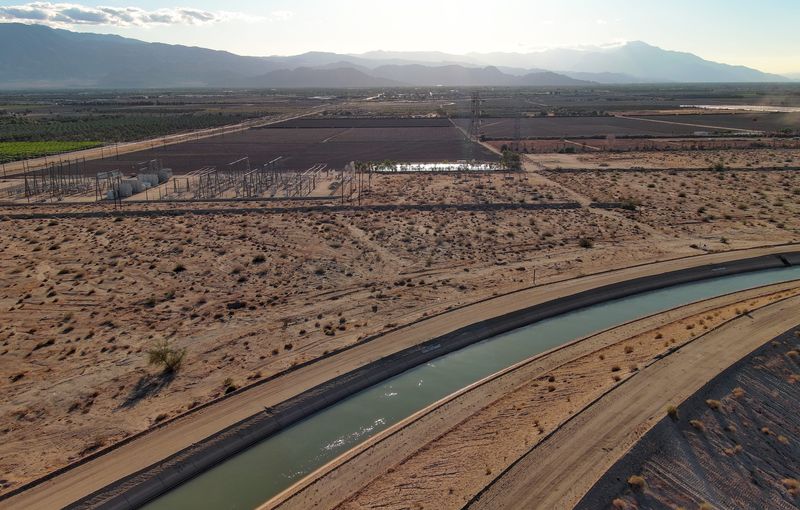
The water question is the most urgent. Stronghold’s CEO said the facility would draw from the canal — “that’s non-potable. We’re not using drinking water.” But canal water is Colorado River water, and California has already faced federal orders to cut its draw from the river. Stronghold has never said how much water it would use, and California has no law requiring data centers to report water use.
Water does not recognize human-imposed boundaries. The Agua Caliente Band of Cahuilla Indians hold federally reserved rights to 20,000 acre-feet per year from that aquifer — rights dating to 1876 that make them senior to virtually every other water claim in the valley. If federal cutbacks reduce supply, the aquifer is next, and no environmental review has examined that risk. As UC Riverside’s Shaolei Ren said: “You may have money to build treatment plants and pipes, but money can’t buy more snowpack.” The public record contains no tribal consultation. That silence is an answer in itself.
Scholars and tribal advocates have started calling this pattern “data colonialism,” where out-of-town developers move faster than local government can respond, extract value, and leave the costs behind. As Brenna Yellowthunder of the Indigenous Environmental Network observed: “We have seen this type of extraction before. We saw it in 1492. We saw it in the 1900s. We are seeing it again.”
Data colonialism rarely arrives with a warning. It comes with a PowerPoint and a contract. Coachella’s residents saw through it. On July 9, the council votes on a permanent ban. The rest of us will be watching, and taking notes.
Catherine Curtis spent eighteen years at Southern California Edison, the last eight in Local Public Affairs involved with utility-local government relationships. She is a former planning commissioner for the city of Claremont, California.
This article originally appeared on Palm Springs Desert Sun: Coachella data center pushback should teach us a lesson
Reporting by Catherine Curtis, Special to The Desert Sun / Palm Springs Desert Sun
USA TODAY Network via Reuters Connect
By Catherine Curtis, Special to The Desert Sun | USA TODAY Network