Redding and the Shasta Cascade region is home to world-class fishing that draws thousands of anglers looking for that special catch.
Not only are the fish in these waters healthy, but they are big. California lists nearly 200 angling and diving records of fish (trout, catfish, salmon, tuna, sturgeon), crustaceans (crab and lobster) and mollusks (abalone). Ten of these records are held by anglers who are immortalized in California’s history by catching large fish in rivers, lakes, streams and reservoirs in Shasta, Butte, Trinity and Lassen counties.

Before getting into the fish themselves, how does an angler get into the state records? Simple. Fill out the California Inland Water Angling Record Verification form with a name, address and phone number. The form should be filled in completely with a photo of the fish, the name of the lake, river or creek, along with the names of two witnesses who watched the fish get reeled in and weighed.
If the fish caught meets all the required measurements, your name could be in the history books. Here are those who own records for some of the largest catches in North State waters in California history.
For daily bag and possession limits, refer to the state’s 2026 Freshwater Sport Fish Booklet. Far Northern California is split into two districts: the North Coast to the west and the Sierra to the east.
Sally Nachreiner: Inland chinook (king salmon); 20 pounds, 15 ounces
Retired elementary school teacher Sally Nachreiner remembered July 16, 2013 vividly when she spoke to the Record Searchlight in 2020. She was out fishing with her husband, Ernie, on their aluminum boat at Trinity Lake.
Nachreiner said the wind was blowing hard, which made the boat she and Ernie were on difficult to control. Her reel was calm until a sharp pull on her line sent a wave of exciting chills down her spine.
“We were trolling near Trinity Dam and I got a bite (that) grabbed the pole and I was wondering what is this?” Nachreiner recalled. “It got really super heavy and we fought it for a long time. I was getting super tired and I was thinking how nice it would be to see what this thing is. What I felt was the biggest thing we had caught at Trinity Lake ever.”
After about 30 minutes, the king salmon came to the surface and revealed itself.
“We didn’t think we had a chance in the world at getting it out of the water and actually into the boat because of how windy it was and how difficult it was to control the boat,” Nachreiner said. “There’s no way I could reel in the fish and net it. My husband was going to have to net it and we finally got it into the boat.”
The Nachreiners then jumped into their truck and made the 18-minute dash toward the Lewiston Hatchery. The official length of the fish measured at 35.75 inches, with a girth of 22.75 inches, but the hatchery didn’t have a scale.
With no scale, Sally and Ernie Nachreiner had to drive to Weaverville another 27 minutes away to get their fish officially weighed. It was there Sally got the confirmation. She had set a new record for the largest landlocked king salmon in California.
“It’s pretty exciting. I mean we all have our little claims to fame, you could say,” Nachreiner said. “We go over there, hang out and camp because that’s just part of our lifestyle. We’ve tried the same method for the last seven years and we haven’t come close to what we got before.”
California Department of Fish and Wildlife environmental scientist Monte Currier said king salmon, which migrate in the Sacramento River to the Pacific Ocean, also have natural populations in lakes across the West Coast.
“They inbreed when they are born on the water,” Currier explained. “They are reared at the hatchery or spawn naturally. When the (fish) hatch, they reside in the stream or in the river for a while. They know that’s where they need to go after three years using magnetic fields they sense or they smell the water to respawn.”
Lindy Lindberg: Chinook (king salmon); 88 pounds
The legend of Lindy Lindberg’s epic battle with a massive king salmon took place on Nov. 21, 1979.
The tale of his catch was told by famed adventurer and outdoorsman Tom Stienstra who described the struggle between man and beast at the Sacramento River. Stienstra wrote in the San Francisco Chronicle’s SFGate in 2008 how Lindberg “strapped the 2-foot salmon to the side of his boat to make it back to the boat ramp.”
Besides the record that is preserved on the California Department of Fish and Wildlife website, not much is known about Lindberg. It’s stories like Lindberg’s that have brought anglers from across the world to challenge the chinook, also called the King of the Salmon.
“It’s a big economic draw for sportsmen,” Currier told the newspaper in 2020. “Commercial fisheries used to profit off of the fish and it also provided a food source to Native American communities since the beginning of time. It’s a spiritual fish and amazing because it’s part of California’s life history.”
The chinook salmon is an icon of Shasta County’s ecosystem and draws hundreds of anglers for the salmon harvest at the Sacramento River, which starts in late August and ends mid-December.
The fish are anadromous — meaning they hatch in the rivers and streams of the Sacramento River before traveling south downstream through San Francisco Bay and into the ocean at the Golden Gate Bridge. The king salmon live their lives in the ocean before returning to the Sacramento River to spawn and die.
“The chinook are laid in the gravels here locally,” Currier said referring to the North State. “The journey and power of the fish are unprecedented and that’s why they call it the king.”
There are six variations of chinook salmon that swim up and down the waters, lakes and streams of North California. They include the California Coastal, Southern Oregon and Northern California Coastal, Upper Klamath-Trinity River, Central Valley fall and late-fall-run, Central Valley spring-run and Sacramento River winter-run chinook salmon.
The Sacramento River winter-run chinook are endangered due to dams and other projects that block traditional pathways and spawning grounds.
“It’s a balancing act for sure,” said Currier, who overseas the development, growth and protection of fish species in Shasta, Siskiyou and Trinity counties. “We need to make sure the species persists. If we can create a recreational fishery and there’s enough fish to go around, then we can definitely do that.”
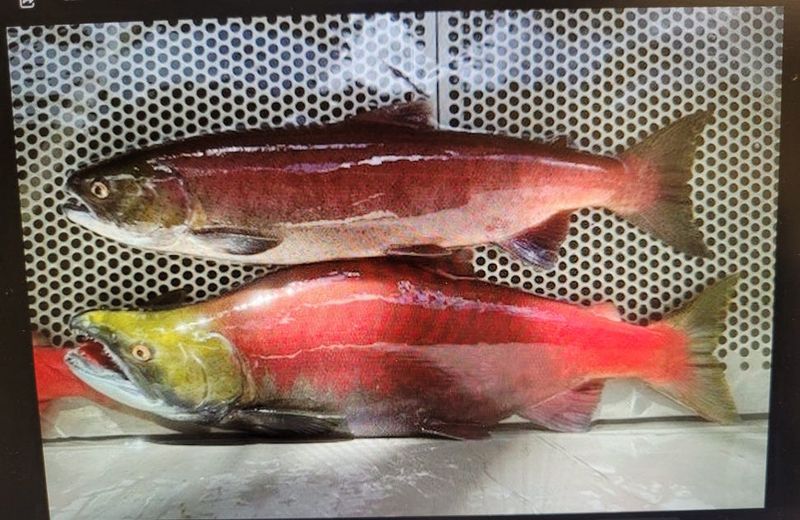
Michael Ritter: Inland coho (sockeye) salmon (8 pounds, 15 ounces)
Coho (sockeye) salmon just like king salmon are anadromous and can survive in freshwater and saltwater. On July 2, 2015, Michael Ritter landed a record-breaking coho salmon out of the Thermalito Diversion Pool near Oroville Dam and Lake Oroville.
Ritter’s fish had a length of 29.5 inches, with a girth of 16.25 inches.
Coho salmon are not native to California and were introduced as recreational fish in reservoirs.
“The ones that are here in California that are land-locked are from out of state and out of the country like from Canada,” Currier said. “We’ve done Coho introduction into Lake Oroville and introduced them throughout several reservoirs in California.”
Coho salmon like the chinook are protected and are listed as “threatened” under the Endangered Species Act, according to NOAA fisheries.
The biggest difference between the coho salmon and chinook salmon is the color of the meat. Coho has orange flesh and is considered more mild in flavor while chinook have red flesh. The chinook in appearance have a black gum line while coho have a white gum line.
Mike Daily: Pink salmon (8 pounds, 11 ounces)
The biggest pink salmon on record caught in California’s history was brought in by Mike Daily of Red Bluff on Sept. 22, 2001. Pink salmon are known for being the smallest of its four related species: coho, chinook and kokanee. That makes Daily’s catch much more of an anomaly because the average pink salmon weighs 5 pounds.
Pink salmon are not on the endangered list because of commercial breeding and harvesting.
Still, Currier noted wild salmon populations are in danger.
“Our salmon species and steelhead species are in peril because of the lack of habitat,” Currier said.
James McCloud: Bull trout (9 pounds, 11 ounces)
James McCloud not only holds the oldest fishing record in the North State but may have been one of the last anglers to catch a bull trout in California. McCloud reeled in his famed fish on May 1, 1968.
The last reported sighting of a bull trout was in 1975, according to CDFW. The bull trout died out in California because of a lack of cold water that it needed to survive.
Currier explained how the McCloud Dam built by PG&E in 1965 led to the bull trout going extinct in California. The fish swam and spawned in Lake McCloud and the McCloud River, and would feed off of the young chinook after they hatched.
As soon as the McCloud Dam was built, the water became too warm for the bull trout to spawn. In addition, the building of Shasta Dam in 1945 cut the winter-run chinook off from the McCloud River, which eliminated the bull trout’s main food source.
“If you cut off an animal’s preferred habitat and their food source and increase the water temperatures where they have to spawn below the dam, then that’s disastrous and leads to extinction,” Currier said.
Bull trout were placed on the endangered species list in 1998 and listed as threatened in 1999 by the U.S. Fish and Wildlife Service.
If anglers want to harvest bull trout, the species is still prevalent in Montana. They can be found in the dozens of lakes throughout the state and can weigh up to 32 pounds and measure over 30 inches in length, according to the Montana Department of Fish, Wildlife and Parks.
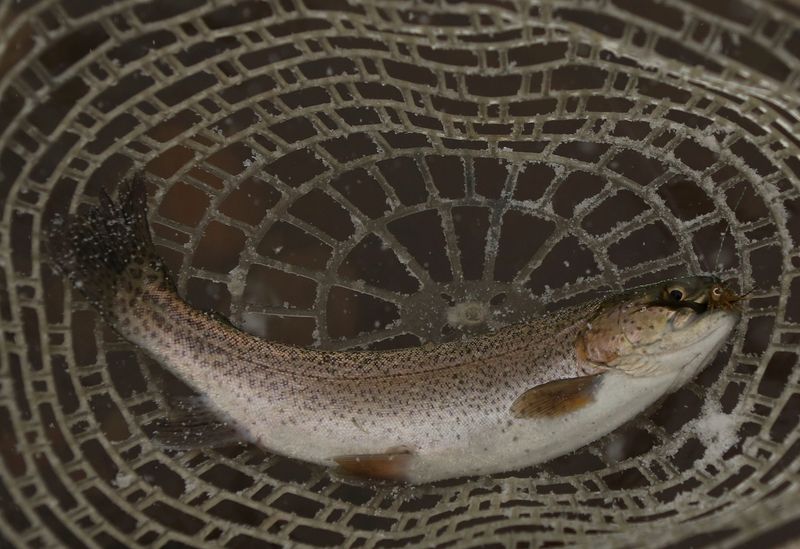
James Harrold: Domestic rainbow trout (28 pounds, 5 ounces)
Rainbow trout are a popular fish for both local hatcheries because of their ability to adapt to many different aquatic temperatures. The fish come in multiple colors including brown, olive and dark blue.
Rainbow trout can grow between 2 to 8 pounds. It was James Harrold who landed the California record-breaker on Jan. 3, 2006, at a private lake in Butte County.
Since Harrold’s grab, a couple of anglers have come close to matching his record. The Record in Stockton reported Joshua Giordano of Bangor came close when he landed a 35-inch long trout on May 22, 2020 at the Thermalito Diversion Pool near Oroville. The fish weighed 25.25 pounds, about 3 pounds short of Harrold’s trout that weighed 28.31 pounds.
Currier pointed to the different genetic strains cultivated in captivity that have allowed rainbow trout to thrive in different types of environments.
“Rainbow trout are just a little bit more resilient and easy to culture and cultivate different species,” Currier said. “Domestic rainbows can stay within a certain area their entire lives.”
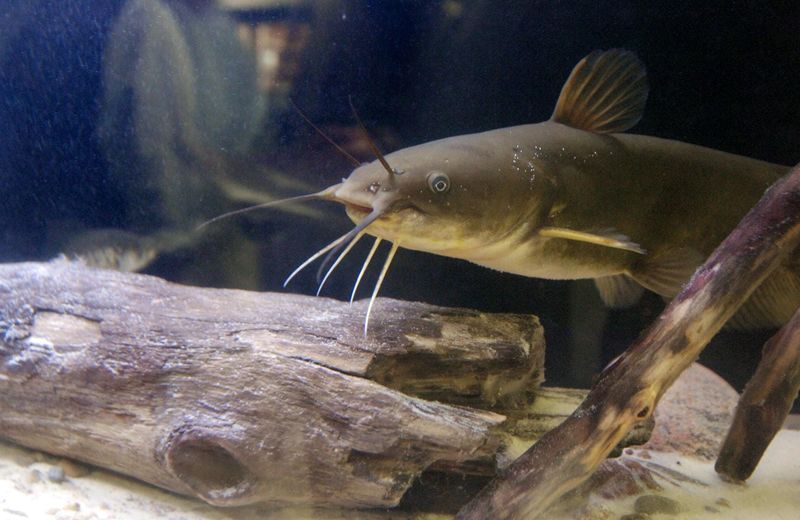
Gary Dittenbir: Bullhead catfish (4 pounds, 8 ounces)
Also known as the black bullhead catfish, the species can be found in many lakes across the North State including in Trinity Lake and Lake Shasta. It was at Trinity Lake that Gary Dittenbir of Lewiston was able to bring in the famed catfish on Oct. 7, 1993.
Bullhead catfish are one of the more common fish that anglers can catch. According to University of California, Davis Agriculture and Natural Resources, the fish are fairly common and not native to state ecosystems. Mature bullhead catfish have a yellow belly and can lay up to 7,000 eggs during spawning season, which occurs from May to June.
Although common to catch, bullhead catfish are poisonous and can release a secretion from their dorsal and pectoral fins, which causes a stinging pain if not handled properly.
Currier provided tips on how a person should handle a catfish safely without getting stung.
“If you catch a catfish you should slide the palm of your hand from the back of the tail going forward towards the back of the spine right behind the back dorsal spine and then control them and slide your hands underneath and you can handle the fish, no problem,” Currier said. “If you don’t feel comfortable grabbing it because they’re moving around, I suggest you get a pair of pliers and control them by the lower jaw and get the hook out.”
Dave Smith: Pumpkinseed sunfish (1 pound)
If you’re guessing the pumpkinseed sunfish is a species you might see in “Finding Nemo” or a fish tank, you might not be that far off. Pumpkinseed sunfish swim in shallow waters and are popular for young and amateur anglers to catch.
They get their namesake purely off their round shape and orange color that resembles a pumpkin. Currier says the species isn’t native to California.
“It doesn’t get as large as the red-eared sunfish, bluegill or the crappie,” Currier said. “It’s just beautiful and fun to catch.”
The pumpkinseed sunfish caught by Dave Smith at Mountain Meadows Reservoir in Lassen County on Aug. 4, 1998 weighed a pound and still stands as a state record.
Don’t let the pumpkinseed sunfish’s size fool anyone either. It’s known for having great taste, according to New Hampshire Fish and Game.
Emmett McLane: Sacramento sucker (2 pounds, 9 ounces)
Sacramento sucker fish are native to California’s Central Valley and can be found as far north as Oregon.
The fish was a food source for Native Americans and in particular, those who inhabited what is now Shasta County, according to fish and wildlife officials.
Remnants of the stone traps used by the Pit River Ajumawi have been found at Lava Springs State Park in McArthur, and their fishing techniques and tools to harvest the fish have been studied by state archaeologists.
The Sacramento sucker caught on Jan. 24, 2025 by Emmett McLane at Battle Creek, a tributary of the Sacramento River, set a new record. The fish measured 20 inches in length and weighed 2 pounds and 9 ounces.
Craig Stillwater: American shad (7 pounds, 5 ounces)
The American shad is the largest fish of the herring family, typically weighing 3 pounds to 5 pounds.
But the one Craig Stillwater pulled from the west branch of the Feather River in Butte County on May 9, 1985 set a record that still stands more than four decades later. It weighed 7 pounds and 5 ounces.
Shad are native to the East Coast but were brought to the West by way of the railroad between 1871 and 1880 and introduced into the Sacramento River. The fish has since populated other rivers in the West Coast, according to the Center for California Water Resources Policy and Management.
Editor’s note: Portions of this Record Searchlight article originally published in August 2020. It was updated with a new fishing record.
This article originally appeared on Redding Record Searchlight: 10 of the biggest catches in Northern California to set fishing record
Reporting by Ethan Hanson, Redding Record Searchlight / Redding Record Searchlight
USA TODAY Network via Reuters Connect
By Ethan Hanson, Redding Record Searchlight | USA TODAY Network