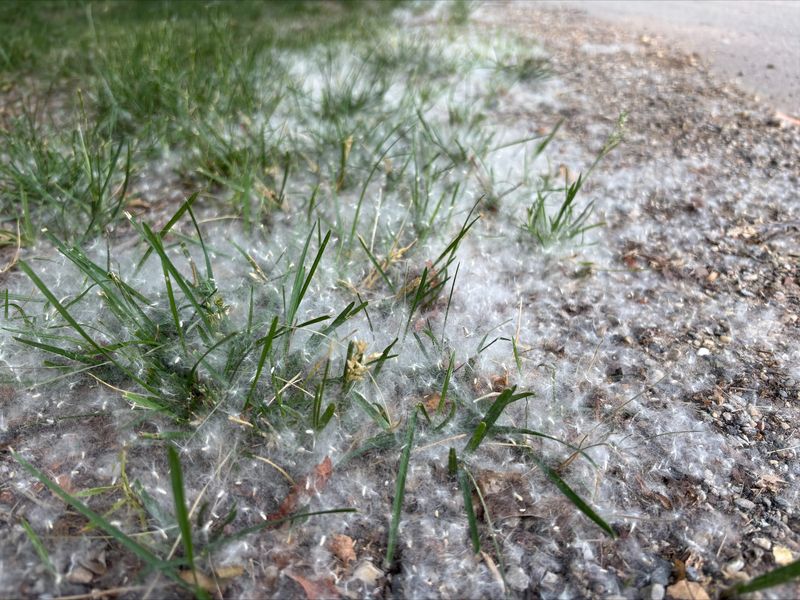
Trees are smarter than you think, and the evidence is found in their unique ways they disperse their seeds. Cottonwood trees release white tufts that float in the air – a dreamy sight until you accidentally inhale one.
“It’s kind of cool because each little individual tuft of cotton, is actually, that tuft is a mechanism that allows the seed to be wind borne,” said Julie Crick, natural resources educator for Michigan State University Extension. “It’s more advantageous for them to sort of disperse them via the wind and have them blow across the landscape.”

Every year, cottonwood trees disperse seeds after pollinators such as bees, birds, butterflies or other insects deposit pollen into the ovary of the seed.
These trees can grow up to 100 feet tall, typically around water sources and they favor the Lower Peninsula. The shedding is difficult to ignore as tufts get stuck in clumps of grass, curbs and sidewalks, at times resembling a pile of snow.
Cleaning tufts of seeds out of your gutter, roofs or anywhere you wouldn’t want a tree to grow is the main course of action, Crick said.
For those who find these seeds annoying, the rain and thunderstorms coming to Michigan this week will likely knock the seeds down and end the dispersal period.
“So really, it could stretch over like a four-week period, generally from the end of May until about mid- to the end of June depending on weather conditions, you know, and location,” Crick added.
Thus far, June has been dry in Michigan, so seeds have been dominating wind currents unbothered by rain. While this process for cottonwood reproduction is likely concluding, there is a next step.
“After all of these, the fluffy seeds, drop, you may get some dropping of like, sort of the inch-long flower structure,” Crick said.
MORE: How Protein Pints ice cream got its start at Michigan State University
These structures are called “catkins,” and since male and female flowers grow on separate trees, the female cottonwoods’ catkins are green in color while male cottonwoods’ are reddish, according to Grub, a community based gardening and food program based in Washington state.
As the tufts of seeds cease their dispersal and the remaining flower structures fall, here’s more on cottonwood trees in Michigan:
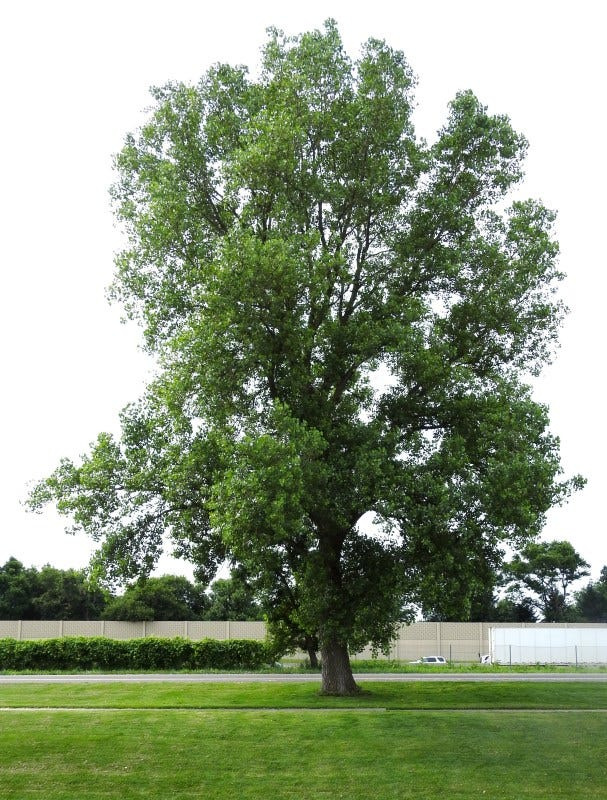
What do cottonwood trees look like in Michigan?
The eastern cottonwood tree (eastern poplar or populus deltoides) can grow from 70-100 feet tall, according to Michigan’s Department of Natural Resources, and they prefer to grow in wetlands and floodplains.
Cottonwoods grow mainly in the southern Lower Peninsula with some in northern areas and the Upper Peninsula, according to the University of Michigan’s Herbarium. They favor swamps, riverbanks, sand dunes and the shores of the Great Lakes.
Here are some identifiable characteristics listed from the DNR:
Will cottonwood tree seeds cause allergic reactions?
Not exactly. Cottonwood trees release their seeds after pollination (so there could be trace amounts of pollen on the seeds) but around the same time trees that release pollen directly into the air like pine and oak trees are the main causes for allergic reactions, Crick explained.
During the spring, tree pollen is the biggest irritant causing allergic reactions (this is called hay fever) and the state’s oak, pine, maple, birch and cedar trees are the main culprits.
Grass pollen is next in line as it peaks during summer months, according to Allermi (a personalized allergy care company) which can originate from ryegrass, bermuda grass and other grass types.
Contact Sarah Moore @ smoore@lsj.com.
This article originally appeared on Lansing State Journal: When will cottonwood trees stop shedding? Fluffy seeds fill the air for around 4 weeks
Reporting by Sarah Moore, Lansing State Journal / Lansing State Journal
USA TODAY Network via Reuters Connect