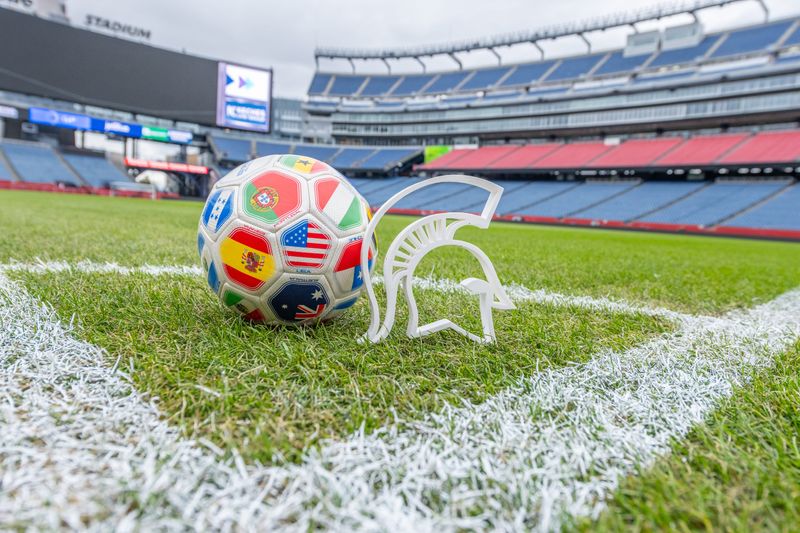
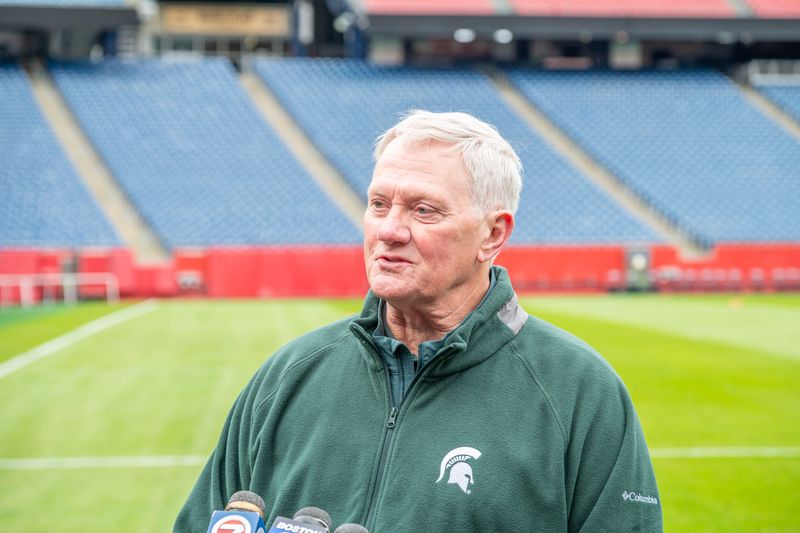
EAST LANSING — For MSU Professor Trey Rogers, the 2026 World Cup is more than a month-long soccer (or football, depending on where you’re from) tournament.
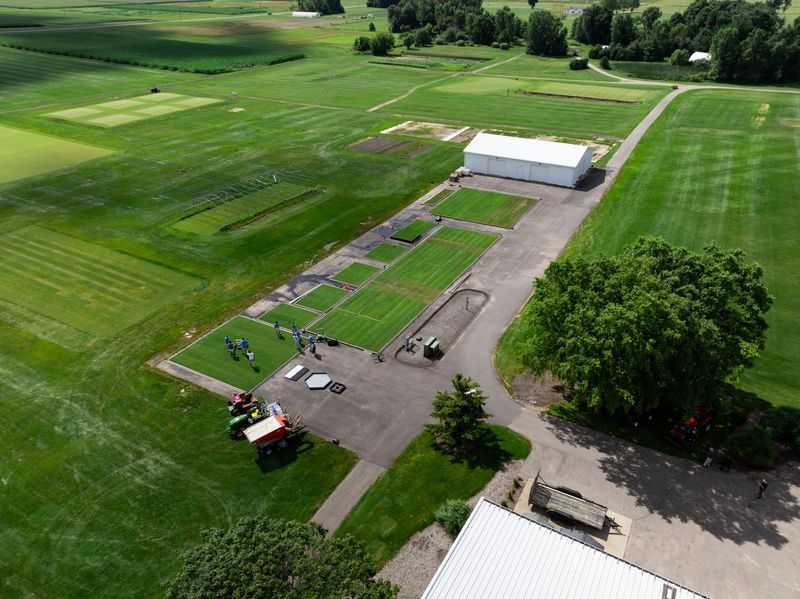
He’s traveled throughout the continent since 2019, from farms in Toronto to fields in Mexico, growing and developing grass for the 16 stadiums that will be hosting 2026 World Cup matches starting in June.

Rogers, 66, said he wasn’t looking for the chance to do the work, but when the opportunity presented itself, he couldn’t say no.
“Everyday I ask myself, ‘Is this worth it?’ ” he said. “I wasn’t looking for this, not even a little bit. This was not something I was looking for, but once it came along I couldn’t pass it up.”
From Pontiac to an international operation
The 2026 World Cup is the second time he’s contributed to the international tournament.
Rogers worked with a team for the FIFA World Cup in 1994. FIFA helped fund research to find a way to support putting a real grass field indoors.
The World Cup was coming to the United States, and the Pontiac Silverdome was looking like a key location.
“I had a chance to be a part of the project, lead the project – and it changed my world,” he said.
In 1994, he was only responsible for the research involved for making one field possible. For the 2026 World Cup, the school is involved in the research for 16 fields, eight of which are permanent grass fields, eight of which are temporary.
With fields ranging from Vancouver to Mexico City, Rogers said trying to make fields of similar qualities in different climates brings challenges, as does the variety in stadiums. Some are open-air, and others are domed.
While the work can be exhausting – from getting up at 4 a.m. each day to taking plane rides across the country for 5-minute check-ins – Rogers said he’s doing what he can to try to enjoy it.
“It’s like asking Coach (Tom) Izzo if he enjoys March really,” he said. “He does, and it is fun. It is what he does for a living, but it is chaotic the whole time.”
16 cities, 16 requirements
Rogers’ research making its way to an international stage isn’t a first (or second). While this is his second World Cup he’s worked on, he also helped with the 2004 Olympics in Athens and the 2008 Olympics in Beijing.
Rogers said he first got involved in the 2026 World Cup through John Sorochan, who was an undergraduate student at MSU before the 1994 World Cup and now serves as a turfgrass researcher at the University of Tennessee. The two are co-principal investigators on a FIFA grant to grow the turfgrass for the tournament.
This year’s World Cup is taking place in 16 host cities in three different countries during what will be the largest FIFA World Cup in history. Each individual city has different goals and requirements for when the fields can be built, Rogers said.
When Russia hosted the World Cup in 2018, he said, all decisions were made by one governing agency, rather than individual cities.
“Houston, for example, will be one of the last ones (fields) in because they have a rodeo going on right now,” he said. “It dominates everything that they do in that stadium. So they’ll be late, they’ll be last.”
The contractors will come in, put in drainage systems and soil before the grass will be brought in. The grass was planted more than a year ago, and will be trucked from one of the nine sod farms that has been holding the turf. He said the sod will be installed in the domed fields last, because while grass can survive in domed buildings, it doesn’t thrive.
He said he’s constantly thinking about things that need to get better before the tournament, or things that need to be fixed or perfected.
“I think about it all this time, I really do,” he said.
While he hadn’t heard of WhatsApp, an international messaging app, until a few years ago, he now finds himself checking his messages on it in the middle of the night when he has trouble sleeping. He said he thinks the connectivity throughout the world will be beneficial when it comes time for the soccer contests to begin.
He doesn’t know what his assignments will look like yet for the tournament, and won’t know until there’s a better idea of what weather will look like, but he does have some plans made. On July 3, he’ll head to Kansas City to catch a game with his family.
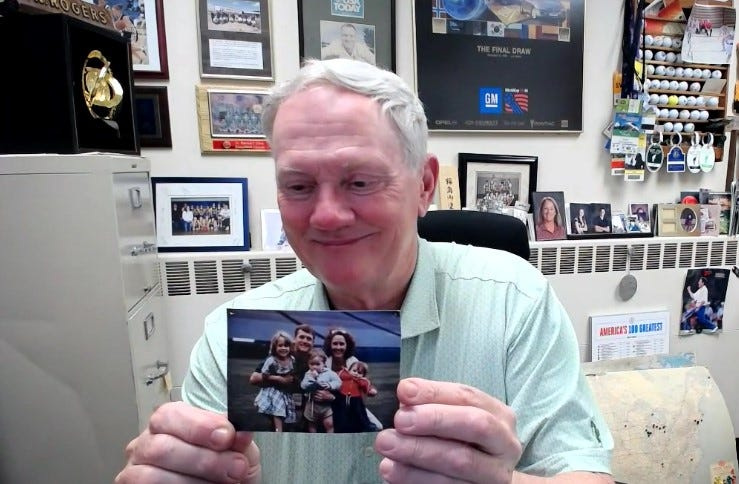
Rogers has a photo above his desk from the 1994 World Cup, with himself, his wife, and his three children on the field at the Pontiac Silverdome. He wants to recreate the photo on July 3 in Kansas City, but this time with his grandchildren too.
‘Lightning has struck twice’
Turfgrass management is firmly rooted in the agriculture industry, but it doesn’t get the research funding other segments might.
Because the university received enough funding to solve a problem – finding a way to put real grass into domed buildings – the soil used for the World Cup made its way into “more Michigan high school athletics buildings than you’ll ever know about.”
“That kind of funding doesn’t come around all the time. It’s OK, because we’re a part of agriculture, but we don’t feed anybody,” Rogers said. “It’s very difficult for us to see these seven-figure funding levels because we don’t feed anybody. So we have to wait for something to come along that … really needs us.
“Well in my case, lightning has struck twice. It struck in ’93, and it struck again in the third decade of the 21st century. I fully expect that what we’ve been able to learn in the last three to five years will push us even further forward, as being able to provide better, safer, athletic fields and maybe get more people back on natural grass. But that doesn’t come along unless people come along with their requirements and their funding.”
Contact Karly Graham at kgraham@lsj.com. Follow her on X at @KarlyGrahamJrn.
This article originally appeared on Lansing State Journal: For MSU researcher, 2026 FIFA World Cup is about turfgrass, and family
Reporting by Karly Graham, Lansing State Journal / Lansing State Journal
USA TODAY Network via Reuters Connect