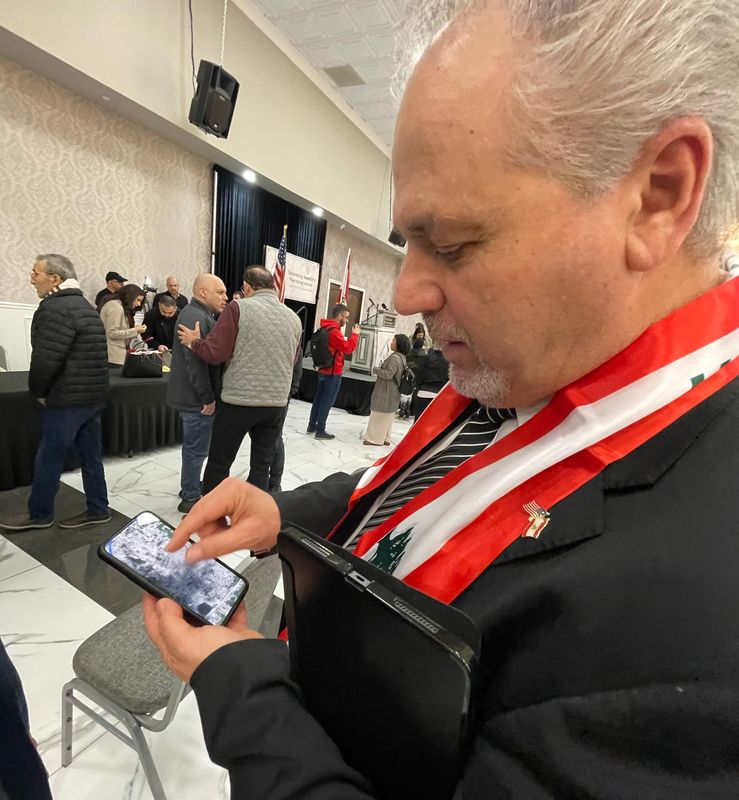
Gazing at a photo on his phone of his hometown in Lebanon, Wayne County Commissioner Sam Baydoun, D-Dearborn, pointed to a block with razed buildings and debris of what used to be a thriving area. The image showed the remains of Bint Jbeil, a town in southern Lebanon where he and many other metro Detroiters grew up.
“In this picture here, this is my elementary school where I used to go to,” Baydoun said, describing to the Free Press how his father’s home was destroyed in Israeli attacks in April. “This is my house. … I used to walk over there, from this school all the way down here. This was all a heavily populated area. It’s gone. Looks like a parking lot right now, very similar to what they did in Gaza.”

Baydoun’s anguish is felt by thousands of others in metro Detroit who have been affected by Israeli attacks that have intensified in Lebanon since the start on March 2 of renewed war between Israel and Hezbollah, a Lebanese group the U.S. government lists as a terrorist organization. The pain is especially seen in Wayne County, which has the highest percentage of Lebanese Americans among all counties in the United States. Metro Detroiters with roots in Lebanon interviewed by the Free Press say they’ve lost family members killed in Israeli attacks, and $1 million homes they built have been demolished as Israel razes buildings in southern Lebanon.
The largest Middle Eastern group in Wayne County is Lebanese Americans, many of whom with roots in the southern part of Lebanon, the same area Israel has especially targeted in recent weeks. In cities like Dearborn, many residents often visit southern Lebanon and have economic ties to the region. The mayors of both Dearborn and Dearborn Heights, Abdullah Hammoud and Mo Baydoun, have ancestral roots in Bint Jbeil and have spoken out against the attacks. Israel’s military announced on April 19 that it is occupying a southern part of Lebanon that is home to more than 50 towns and villages, an area that thousands in Wayne County have ties to.
“Right now, our family members and fellow Lebanese citizens are calling us in desperation,” said Sam Baydoun, a Lebanese flag scarf draped over his shoulders. “They are reaching out to the Lebanese American community here in Michigan, pleading for help, especially for those of us with roots in the south of Lebanon.”
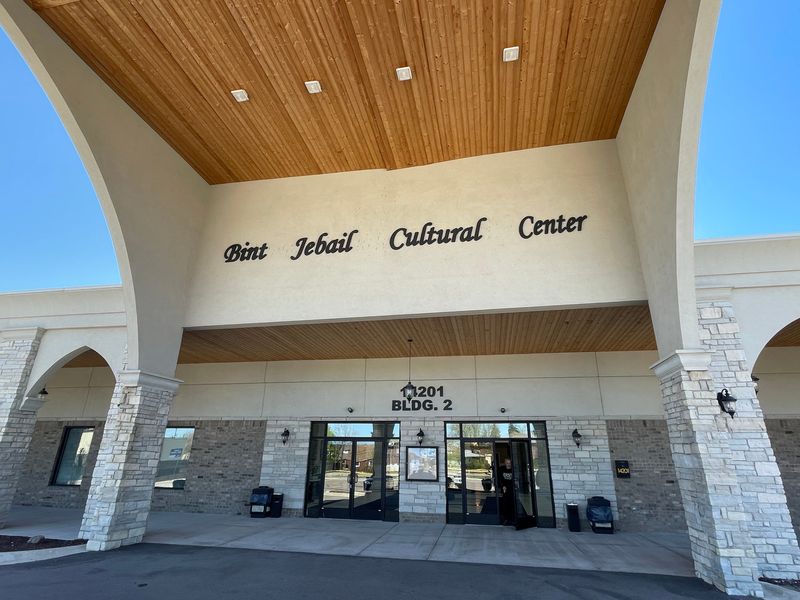
I feel “hopeless, speechless, very angry, because my U.S. tax dollars are being used to bomb our homes back back in Lebanon,” Baydoun said in an interview with the Free Press at the Bint Jebail Cultural Center in Dearborn, named after the town in southern Lebanon that’s one of the areas now controlled by Israel. “We’re funding the destruction of our properties. That’s what we’re doing. … I’m supplying the weapons of the State of Israel.”
Israel Defense Forces maintains it’s “in southern Lebanon in order to dismantle Hezbollah terror infrastructure sites and to prevent direct threats to communities in northern Israel.” Hezbollah has launched attacks against northern Israel starting on March 2 after Israel and the U.S. attacked Iran. On April 8, Israel launched more than 100 airstrikes in 10 minutes in Lebanon, killing more than 300 people, the deadliest day of the war in Lebanon since September 2024.
Ali Atat, of Dearborn Heights, said an aunt and cousin of his were killed in the April 8 attacks.
“My aunt was an amazing woman,” Atat told the Free Press. “She did charity work, she helped so many … and she has four sons of her own who are awesome kids and great guys, and you can only imagine what they’re feeling.”
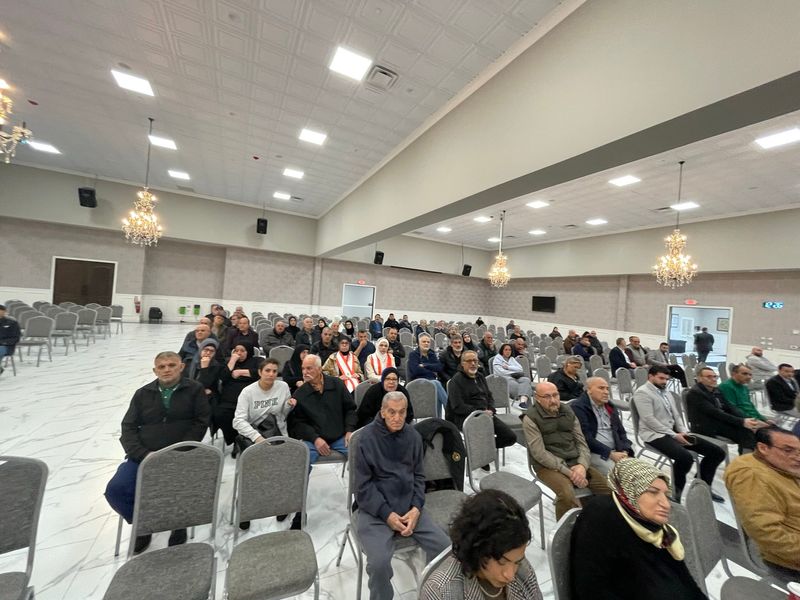
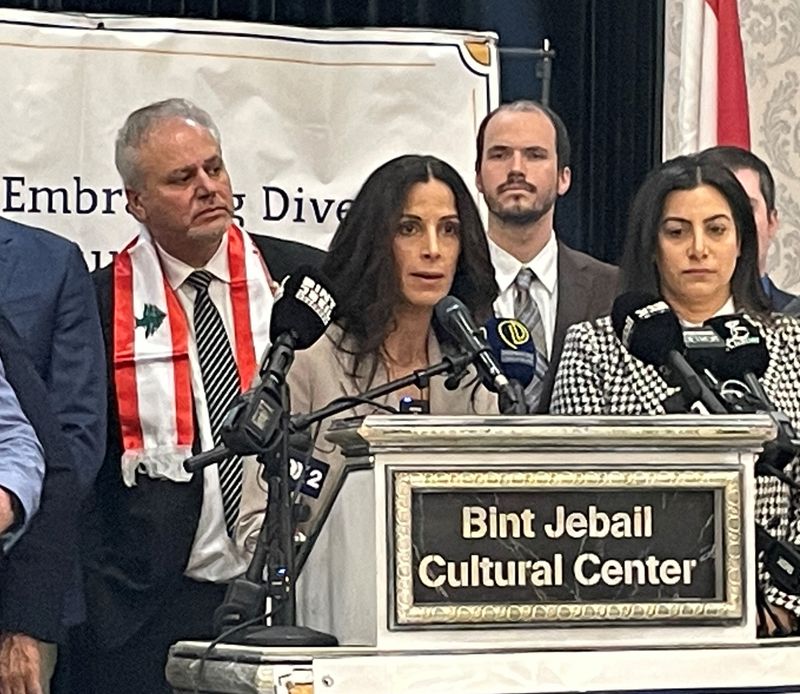
The April 8 attacks prompted a vigil two days later at Peace Park West in Dearborn, where residents and elected officials, including Secretary of State Jocelyn Benson, gathered, some holding up signs that read: “Children Murdered by Israel,” photos of kids beneath. Waving Lebanese and American flags, they called for an end to war. The following Monday, April 13, a town hall with Hammoud; U.S. Rep. Rashida Tlaib, D-Detroit; and state Senate candidate Abbas Alawieh was held at the Ford Community & Performing Arts Center in Dearborn, where Hammoud and Alawieh, both of Lebanese descent, spoke about the war’s impact on family members. Hammoud said 14 of his cousins were killed in the April 8 attacks. The next Monday, April 20, about 100 gathered at the Bint Jebail Cultural Center in Dearborn for a press conference held by the Dearborn-based Arab American Civil Rights League that announced plans to file a class-action lawsuit against U.S. government agencies for allowing attacks that impacted U.S. citizens with ties to Lebanon. The group is asking those affected to email the group at info@acrlmich.org so they can gather information on specific cases for their lawsuit.
“It’s about justice, accountability and the voices of people who have been ignored for far too long,” said Nasser Beydoun, chair of the Arab American Civil Rights League and a native of Bint Jbeil. “Two of my parents’ buildings in Bint Jbeil were destroyed. Both of my grandfathers’ houses were destroyed. This is not abstract. This is not political rhetoric. This is real. This is lost families, investments and generations of work reduced to rubble.”
‘Bint Jbeil is my soul’
Beydoun’s life, like many others in Michigan, is intertwined with Bint Jbeil and southern Lebanon. His grandfather once represented Bint Jbeil in Lebanon’s parliament and after Israeli occupation forces left Lebanon in 2000, he created a foundation to raise money to rebuild. From 2000 to 2006, more than 500 building permits were granted in Lebanon to Michigan residents of Lebanese descent to construct homes and buildings, said local residents. A Dearborn resident, Ali Bazzi, moved back to Lebanon to represent Bint Jbeil in its parliament. Lebanon’s current parliament speaker, Nabih Berri, used to live in Dearborn.
“American citizens and others whose property and rights have been devastated,” Baydoun said. “American citizens are entitled to protection, not indifference, from their own government.”
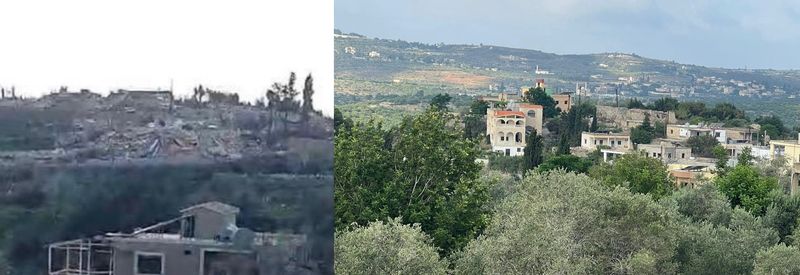
Twenty year ago, in 2006, Detroit attorney Nabih Ayad, who founded the Arab American Civil Rights League, filed a lawsuit against the U.S. State Department, accusing it of failing to help U.S. citizens trapped in Lebanon during the Israel-Hezbollah war that summer. The Free Press traveled to Lebanon that year after the war ended, observing the effects of Israeli attacks in southern towns such as Bint Jbeil. A $1.5 million civic center in Bint Jbeil that was largely funded by Dearborn residents was destroyed in the 2006 war and many homes financed by metro Detroiters were damaged. Lebanese Americans vowed to help rebuild the southern Lebanese towns damaged and poured in millions of dollars. Now, many of the buildings have been destroyed again. A report Friday, April 24, by CNN contained images of Bint Jbeil showing buildings and other structures were “completely flattened,” echoing earlier scenes out of Gaza.
Baydoun said one of his friends in Dearborn Heights “invested one and a half million dollars in his home,” but it was destroyed recently.
“It’s all gone,” he said. “Gone, completely.”
Bahaa Saad, of Dearborn Heights, also a friend of the man who lost his home, showed on his phone a photo of the home before it was destroyed, with the friend standing in front of the large house with columns and terracotta roof tiles nestled on a hill in Bint Jbeil.
“That’s his home,” Saad, pointing to the photo. “He built it stone by stone.”
Saad said he has tried to help people displaced over the past month, sending thousands of dollars to them by phone. About one in five people in Lebanon have been displaced, some of them now homeless, according to reports.
“People are in the streets,” Saad said. “They need the money. Whoever needs, whoever wants, I never say no.”
Majed Moughni, a Dearborn attorney born in Lebanon, has family members who had to flee their homes in southern Lebanon. They were able to find a place 10 minutes out of Beirut, but it’s a cramped apartment not suitable for a longterm stay.
“They all moved from the south, a forced eviction,” Moughni said. “My wife has 50 family members living in one apartment.”
For Moughni, Saad and others, the destruction of Bint Jbeil is hard to take. An estimated 10,000 people in metro Detroit have roots in the town, and for others, it’s a symbol of southern Lebanon and its resistance. Moughni’s family had to flee Bint Jbeil in 1982 after Israel’s invasion that year and moved to another village 30 minutes away, Aaitat, and are once again on the move.
“I go there ever year,” Saad said of Bint Jbeil, where he was raised. “Bint Jbeil is my heart. Bent Jbeil is my soul. Bent Jbeil is everybody’s soul. That’s why I go back every year. … I do whatever I need to do to help people out. And right now, people are in dire need.”
He worries that the home he built in Bint Jbeil may be next.
“They haven’t got to it yet,” he said.
$1 million homes destroyed
Ali Hammoud, who owned a bakery in Dearborn, showed the Free Press before and after photos of his family’s home, valued at over $1 million, in Mais al-Jabal, Lebanon, about 500 meters from the border with Israel. He said it was destroyed in 2024 by Israeli forces after the ceasefire was reached that year.
“This is my dad’s house,” Hammoud said, pointing to a photo on his phone of a heap of rubble that was once his home. “He gave it to me. After 40 years of work, in one minute, it’s gone, everything.”
Jeff Youssef, of Canton, shared a similar story, saying that his $1 million family home in Jibbine, also known as Al-Jibbain, a small village near the border with Israel, was destroyed. The home was first built 280 years ago, he said, and “we made into a castle” with nine bedrooms. Now, it’s been leveled, showing the Free Press before and after photos of the home.
“This is not the first time,” Youssef said of the home’s destruction. “In, 2006 they hit it. We rebuild. We keep on rebuilding, renewing, and whatever they mess up, we just fix.”
But since Israel now occupies that village and others across southern Lebanon, it’s unclear when metro Detroiters will be able to return and rebuild. For now, they’re working on documenting the fatalities and damage for legal action. Ayad said the U.S. is violating the Leahy Law, which prohibits the U.S. from funding foreign militaries that violate human rights. A lawsuit filed in December 2024 against the U.S. State Department on behalf of Palestinian families made similar accusations regarding deaths in Gaza.
“Their homes are being blown up for absolutely no reason,” Ayad said. “Enough is enough.”
The areas being targeted by Israel are mostly Shia Muslims, a group that was historically marginalized within Lebanon, where Lebanese Sunnis and Christians had more wealth and power. Israel appears to be deliberately trying to cleanse southern Lebanon of Shias while avoiding other areas, the New York Times reported April 1. In Dearborn and Dearborn Heights, most of the Lebanese Americans are Shia while Lebanese Christians tend to live more in other areas of metro Detroit.
In 1982, Israel’s military invaded Lebanon to battle Palestinian groups they said were threatening Israel. Hezbollah arose around that time to help protect the people of southern Lebanon, its advocates say. But Israel and the U.S. label them as a terrorist group, blaming them for the attacks against the U.S. embassy in 1983. Israel occupied southern Lebanon for years, leaving in 2000, which prompted celebrations in the streets of Dearborn. And now, Israel is occupying much of the same areas it did in the 1990s.
Lebanese Americans are asking President Donald Trump to deliver on his promises of peace he made during the presidential campaign. A few days before the presidential election in November 2024, Trump visited a cafe in Dearborn owned by a Lebanese American man, telling a packed crowd of Arab Americans he would be against war, portraying himself as a peace candidate.
“You’re going to have peace in the Middle East,” Trump said on Nov. 1, 2024 in Dearborn.
“I voted for him based on the ‘No wars,’ on ‘America first,'” said Atat, who now regrets voting for him. “He just completely went back on every word he said. ‘No war’ turned into war.”
Zeina Makki Djurovski, a Royal Oak attorney, immigrated to the United States from Lebanon in the early 1980s, escaping war, as did many other Lebanese immigrants arriving in metro Detroit during the 1970s and 80s. Her parents are educators in Dearborn public schools and worked to help build homes in Lebanon, she said, “to make sure their children and their grandchildren have a connection to our land, have a connection to our village,” Tibnin, a place in southern Lebanon that, like nearby Bint Jbeil, many Dearborn residents have roots.
But over the past month, “that dream of a home, of a connection was destroyed,” Djurovski said. “A bomb was dropped on it and it was reduced to rubble.”
Djurovski said that three family homes were obliterated: two of the homes of both grandparents and one of a cousin.
“It’s the most gut wrenching feeling,” Djurovski told the Free Press. “It’s indescribable, it’s devastating.”
Contact Niraj Warikoo: nwarikoo@freepress.com
This article originally appeared on Detroit Free Press: Lebanese in Michigan feel ‘hopeless’ over war, destruction in Lebanon
Reporting by Niraj Warikoo, Detroit Free Press / Detroit Free Press
USA TODAY Network via Reuters Connect