Dearborn — Home values in several Wayne County suburbs experienced large increases over the past year, according to new assessment data, driven in part by new construction in some cities and jumps where values were already lower.
In most of the county’s 43 cities and townships, home values rose between 3% and 7% in the last year, but the cities of Wayne, River Rouge, Ecorse and Highland Park each experienced increases above 10% in their residential assessments, according to Wayne County’s annual property assessment report released at the end of April.

Highland Park saw the biggest increase with a 24% jump. Highland Park Mayor Glenda McDonald didn’t respond to multiple inquiries for comment.
Dearborn also saw above-average growth at aboutr 9%.
In all of Wayne County, 2026 residential property values total more than $64.6 billion. That’s an increase of more than $3 billion over last year, when the county’s home values totaled $61.1 billion.
Eric Lupher, president of the public affairs-focused nonprofit Citizens Research Council of Michigan, said the growth rates that are outliers in Wayne County, despite those cities not having “hot” housing markets the same way as Detroit, are likely driven by people looking for affordable places to live. The gains in value also are proportionally bigger because of lower home values to start with, he said.
The increase in home values for a city such as Dearborn is likely also driven by buyers seeking quality housing near other family and friends, Lupher added.
A lot of that housing stock probably has been undervalued for some time, he said, as Michigan has struggled to grow in population.
“So now as people are looking for places to live and they’re finding those somewhat more affordable houses … where you can start a family, and I think that’s what you’re going to find in a lot of those communities,” Lupher said.
How assessments impact what you pay in property taxes
Assessments, which are done every spring in every community, play an important role in what homeowners pay in property taxes. In Michigan, property taxes are calculated using a home’s taxable value, which is multiplied by a resident’s local millage rate.
Along with taxable value, each home is also given a state equalized value. A home’s state equalized value is reviewed and adjusted by county and state equalization departments to ensure assessments are uniform throughout the state. In most cases, a home’s SEV will be identical to its assessed value.
But even as a home’s value increases, under Proposal A, taxable values can only increase from year to year by the rate of inflation, or 5%, whichever is lower, regardless of how much your home’s market value increases. That keeps tax increases in check even if housing values soar.
How values increased in Wayne County
The economic recovery since the Great Recession has led to home values rebounding in Metro Detroit, where Wayne County officials have touted more than a decade of annual budget surpluses. And construction of more housing, whether single-family or multifamily units, adds more data points to counties’ calculation of the total residential property values.
Brian Parthum, an economist for the Southeast Michigan Council of Governments, said a mix of new single-family homes and condos has been built in Dearborn since 2022, according to data from SEMCOG based on building permits. He said builders constructed 21 new single-family homes in the city last year, with a median estimated value of $343,000. That’s far above Dearborn’s overall median home value of $219,000.
He said in Wayne, permits for 17 new single-family homes and 18 condos were filed in 2022, and it likely takes a few years for those new homes to come onto the assessment rolls.
“I think it’s the combination of not just having more affordable housing in Dearborn as well as in Wayne, but it’s also the construction of new housing as well, too, that has helped to increase their assessed values,” Parthum said.
Adding new housing units to a city’s existing stock is also key to housing affordability. Wayne County added 4,037 new housing units from 2024 to 2025, according to data from the U.S. Census Bureau. The county’s stock of new units grew 3% from 2020 to 2025, outpacing Michigan at 2.6%.
Housing challenges in Dearborn
Housing affordability is key for residents such as Debbie Frazier of Dearborn. Frazier, in her late 70s, now rents a home on a tidy street on the city’s west side after selling her house on Mason Street about five years ago when the upkeep got too expensive. She lives with her 40-year-old son and said she would not be able to afford to buy a home on her own now, which she did in 1978.
“We’d have to find some ‘Golden Girls’ and all chip in,” Frazier said.
Dearborn Mayor Abdullah Hammoud doesn’t want Dearborn residents to be priced out of buying homes like Frazier has been. He said the city is grappling with high demand for housing, with a housing vacancy rate of less than 2%. Dearborn is growing in popularity for its proximity to Detroit and the airport, he said.
It has also grown as a hotspot for visitors because of its food and coffee, and Greenfield Village is a mainstay as Michigan’s most popular tourist destination.
But the need for affordable housing has grown along with the city’s home values. Dearborn is projected to need 1,500 new housing units by 2035, Hammoud said. He also called for property tax reform at the state level because the state’s formula hasn’t accounted for the jump in home values seen after the COVID-19 pandemic.
“It’s a harder issue, but it’s one where it requires all parties to come together … to ensure affordability for folks who are entering homes later in life, or new families that are trying to enter a home for the first time,” Hammoud said, referring to Prop A reform.
Proposal A defenders have noted that it protects residents who stay in their homes a long time and doesn’t price them out in their senior years.
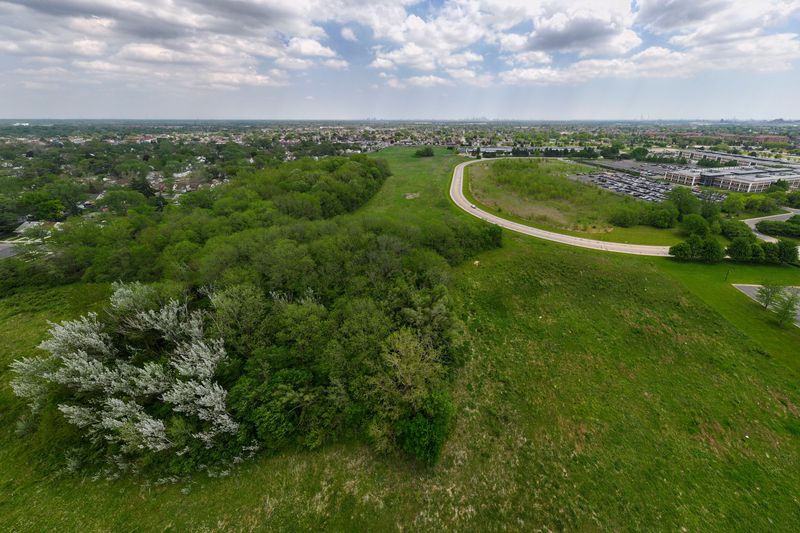
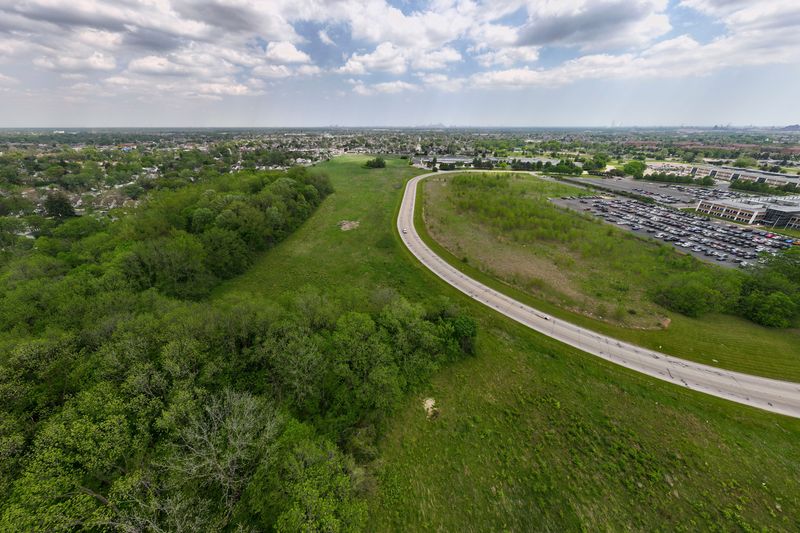
Dearborn has announced future plans for housing construction on at least two sites of vacant land: A development of 111 townhomes at 15625 Lundy Parkway by the Carhartt World Headquarters on a large swath of mostly publicly owned land; and a publicly funded project in the Lonyo neighborhood, where Dearborn owns more than 40 parcels of commercial, residential and green space. Both projects are in the planning stages and are expected to put out bids for construction next year.
The development on Lundy Parkway will incorporate brownfield tax incentives, a type of tax credit meant to encourage development at distressed sites.
But some Wayne County residents don’t always feel like they’re getting high-quality services for what it costs to live in their city.
Aaron Greene and Alexis Scharp, who bought their home on the tree-lined Elm Street in Wayne about three-and-a-half years ago for themselves and their four children, have been frustrated because they don’t feel the city services have improved proportionally with how much their home’s value has risen. The couple sees issues with services such as litter pickup, inadequate street lights and frequent reckless driving on Elizabeth Street, which intersects with Elm right by their home.
“We don’t even want to live in the area anymore,” said Scharp, 34. They already go to Belleville or Canton Township for groceries and want to move to Belleville, she said.
Although the amount residents pay for city services isn’t based directly on the value of their homes, Lupher acknowledged the reality that people may feel less invested in their communities if they don’t believe they’re getting high-quality services in exchange for how much it costs to live there.
“The property tax tends to be the least popular tax,” he said. “It kind of hurts to write a check that big, and then you try to go about your life, and you’re affected by the quality of the services one way or another. Having the pain of writing the check, and then turning around and (feeling) good about what you got for your money isn’t always there.”
jcardi@detroitnews.com
This article originally appeared on The Detroit News: Wayne County home values: Why some suburbs saw values rise over 10%
Reporting by Julia Cardi, The Detroit News / The Detroit News
USA TODAY Network via Reuters Connect