Lyon Township — Home values in three Oakland County communities increased by more than 10% in the past year, according to new assessment data released this spring, with some of the biggest changes in rural communities still building new homes.
But some older, inner-ring suburbs in Michigan’s wealthiest county also experienced notable jumps.

With an assessed property value increase of 13% over 2025, the tiny village of Leonard in northern Oakland County led all 62 Oakland County communities in year-over-year change for residential property values. It was followed closely behind by Hazel Park, an inner-ring suburb just north of Detroit, at 12%, according to the county’s 2026 equalization report.
Milford Township, Pontiac and Lyon Township experienced the next biggest gains in the county, increasing 10%, 9%; and 8%, according to the report.
Jeff Glover of Glover Real Estate said any community on the outskirts of Metro Detroit — such as Leonard, which has just 346 residents — is primed for large property value increases.
“Housing (in that area) is still in the $400,000-$600,000 price range, which is considered very affordable” compared with the rest of the county, Glover said.
Hazel Park, however, is “a new one” for cities that are seeing significant increases in home values, he said. The city of 15,000 just north of Detroit saw its overall residential value grow by $49.6 million from 2025 to 2026, or 12%, according to the county’s equalization department.
While it trailed Hazel Park in the percentage increase, Pontiac, the county’s urban seat, also saw its raw residential value increase by $92.4 million in that time.
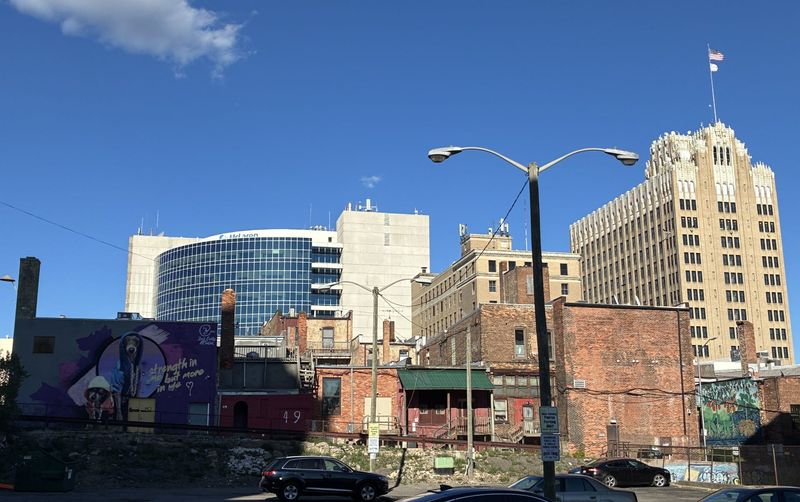
“Pontiac and Hazel Park are roaring up the pack in part because we’re finding our groove, and our niche in the region is becoming even more noticed, desirable, and a draw,” said Pontiac Mayor Mike McGuinness.
These urban cores are contrasted by the suburbs of Lyon and Milford townships in southwestern Oakland County, whose property values are punctuated by home construction that can’t keep up with demand.
None of the 64 communities in the equalization report experienced an overall property value decrease. Only the villages of Wolverine Lake and Lake Orion and the city of Lathrup Village had value increases below 4%, according to the report.
These value gains reflect a broader regional trend in the United States, according to Glover.
“The Midwest, for the first time in my 24-year career, is the hottest market in the country” because of its affordability, Glover said.
Do assessments determine property taxes?
Assessments, which are done every spring in every community, play an important role in what homeowners pay in property taxes. In Michigan, property taxes are calculated using a home’s taxable value, which is multiplied by a resident’s local millage rate.
Along with taxable value, each home is also given a state equalized value. A home’s state equalized value is reviewed and adjusted by county and state equalization departments to ensure assessments are uniform throughout the state. In most cases, a home’s SEV will be identical to its assessed value.
But even as a home’s value increases, under Proposal A, taxable values can only increase from year to year by the rate of inflation, or 5%, whichever is lower, regardless of how much your home’s market value increases. That keeps tax increases in check even if housing values soar.
An urban rebound
Hazel Park’s and Pontiac’s significant property value increases represent a rebound from outside economic forces and a realization of the cities’ affordability, according to local officials.
McGuinness said Pontiac’s property values “took a major beating” from the Great Recession and the bankruptcy of General Motors Corp., which led to the closure of the company’s plant in the city in 2009. In 2024, home values in Pontiac still lagged 8.9% behind what they were in 2007. Former Mayor Tim Greimel partially credited the lag to a significant cutback in city services after state emergency managers took over the city in 2009 due to financial problems.
But in 2025, Pontiac’s assessed property value rose 9.6% from the year prior, according to county records. It was followed in 2026 by a 9% property value rise.
McGuinness said Pontiac’s rebound is pronounced because the city declined as much as it did in the late 2000s and early 2010s. But the rebound wasn’t a given, he said.
“Just because we fell isn’t a guarantee that we’d grow again,” McGuinness said.
McGuinness said the city has been on a “strong roll” in recent years due to the presence of businesses like United Wholesale Mortgage, Amazon and Williams International. The city has also invested in home repair programs to keep its existing housing stock in good condition, he said.
Additionally, people are realizing Pontiac is a good place to buy their first home, said McGuinness.
“We don’t want anyone priced out,” the mayor said. “We don’t want anyone pushed out. Pontiac’s growth should not, and does not, and must not need to come at the expense of those residents that have been able to sustain through the years.”
First-time buyers seek affordability in Oakland County
People looking to buy their first home are also looking southeast of Pontiac in Hazel Park. Glover said the demand from first-time home buyers is what’s behind the 12% property value increase from 2025.
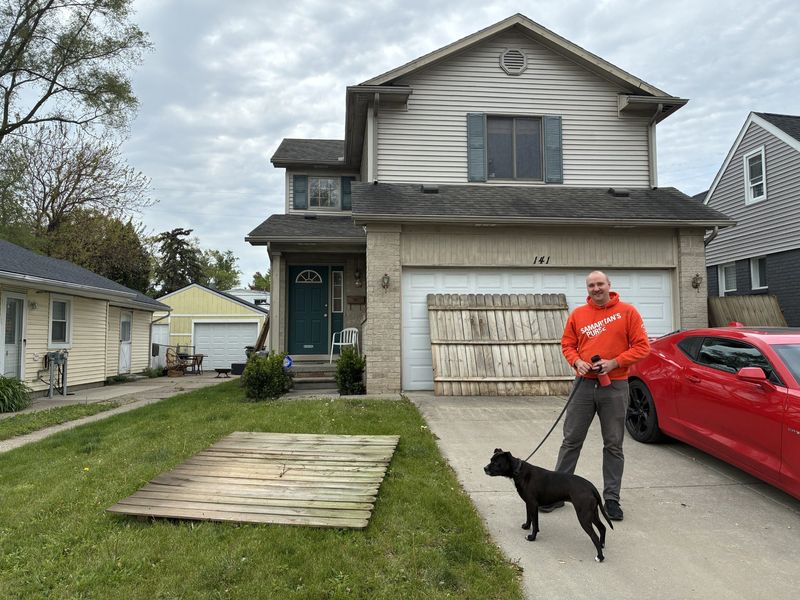
One homebuyer in Hazel Park is Ryan Cleveland, who bought his two-story house on Garfield Avenue in 2020. Cleveland said he paid $189,000 for his house in August 2020. His home’s value is now north of $250,000, a 32% increase.
“That was one of the reasons why I moved here, because the nominal house prices were lower than a corresponding house two miles west of here in Ferndale or a couple miles north of here in Royal Oak,” said Cleveland, 30. “People want to live there. They love the name of those cities.”
But Cleveland has also noticed more activity on Hazel Park’s commercial corridor in recent years. The corridor on John R Street stretches through the middle of town and is filled with restaurants, drug stores and coffee shops.
“With the redevelopment that’s happening there, people are seeing it as a desirable place to start a family,” Glover said. “Hazel Park is trending upward as a great first place to live.”
But Hazel Park’s newfound desirability comes with a challenge, said City Manager Ed Klobucher. Klobucher said the city has been “pretty much fully developed since the 1960s,” meaning space for new development is limited.
This dynamic has prompted the city to encourage the development of infill housing, or housing on vacant lots between existing homes. Klobucher said the city has succeeded in these efforts.
“It makes sense to buy in Hazel Park because we’re a full-service community, we’re in a great location, and we have a lot of things that are happening in our city that are exciting,” Klobucher said.
Southwest Oakland County booms
Hazel Park’s dynamic is virtually the opposite of the situation in southwest Oakland County, where large plots of land exist for new housing development.
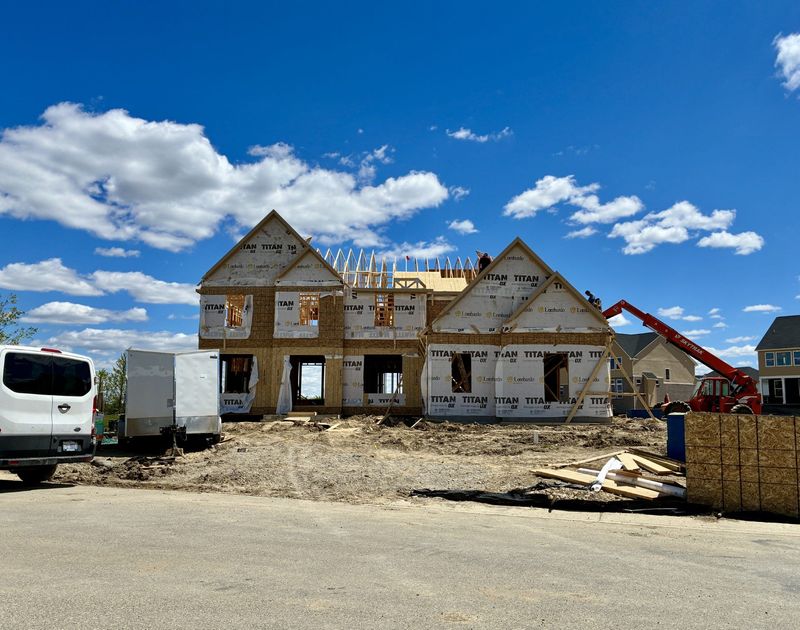
Lyon Township, for instance, has housing developments less than 15 years old surrounded by empty land. And new ones are being built.
“As we put in new builds, they tend to be at a higher price point,” said Darrin Fendley, a real estate agent with Stonway Group.
Fendley was at his sister Racquel York’s house on Thursday because she was selling. York said her house in the development at the corner of Milford and Twelve Mile roads was $263,000 when she built it 11 years ago. Fendley expected it to sell for twice that much.
The high price points, Fendley said, are in part because Lyon Township has fewer homes than buyers. At $178.1 million, the township led all Oakland County communities in raw residential value increase over the past year.
Lyon Township also grew from 23,323 residents in 2020 to 26,867 in 2025, according to estimates by the U.S. Census Bureau. Its 15.2% population gain was the second highest of any community in Metro Detroit.
“The house we bought is still in this subdivision, just on the other side. I think it went on the market (last) Thursday, and we were on contract Sunday,” said York, 40.
“It’s really more of a second home community,” Glover said, noting that $500,000 to $600,000 “is really a very affordable price range for people buying a second home.”
Glover said the attractiveness of Lyon Township stems in part from the quality of South Lyon Community Schools. According to U.S. News & World Report, 70% of high school students in the district tested proficient in reading.
In Milford Township, the village of Milford’s downtown is a draw because it gives the area “a strong sense of community,” Glover said. Milford Township had a $145.2 million residential value increase, according to the equalization report.
The two townships in the southwest corner of Oakland County are also reasonably close to metropolitan amenities, said Glover, the real estate agent.
“You’re still in Oakland County, you’re still 35 minutes from downtown Detroit, 35 minutes from the airport,” Glover said.
mbryan@detroitnews.com
This article originally appeared on The Detroit News: Home values in Oakland County: Which communities saw largest increases
Reporting by Max Bryan, The Detroit News / The Detroit News
USA TODAY Network via Reuters Connect