The date was Sept. 3, 2011.
The venue was the campus of the University of Michigan in Ann Arbor.

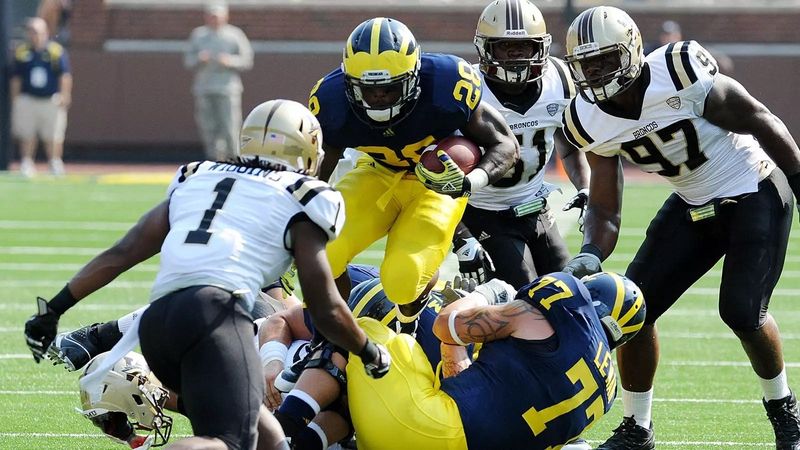
And on that Saturday afternoon Michigan’s football team defeated Western Michigan, 34-10, in front of 110,506 fans that had packed Michigan Stadium.
Longtime Michigan football fans may recall that the season-opening game was declared final with less than two minutes remaining in the third quarter due to storms that rolled over Michigan Stadium during the second half.
However, what fewer people may know is that when that game ended, a humanitarian tradition began.
The tradition involves the collection of cooked, unsold food at University of Michigan sporting events being delivered with care to trusted Detroit nonprofits that provide food for people in need.
That tradition, which continues to this day, will be on display Saturday afternoon, April 18, at 2 p.m., when the University of Michigan hosts its annual Maize versus Blue Spring Football Game at Michigan Stadium.
For diehard fans of Michigan’s football program, the Spring Football Game will provide the first look at the team under the leadership of new head coach Kyle Whittingham.
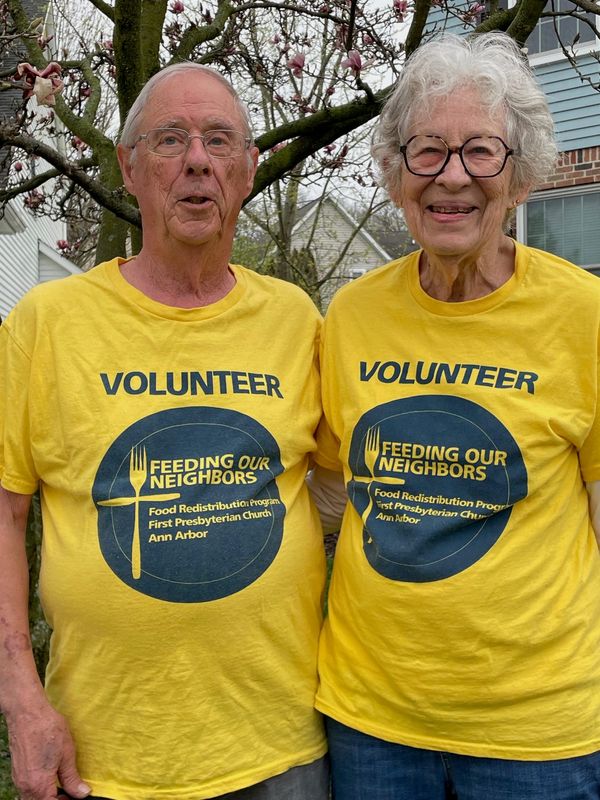
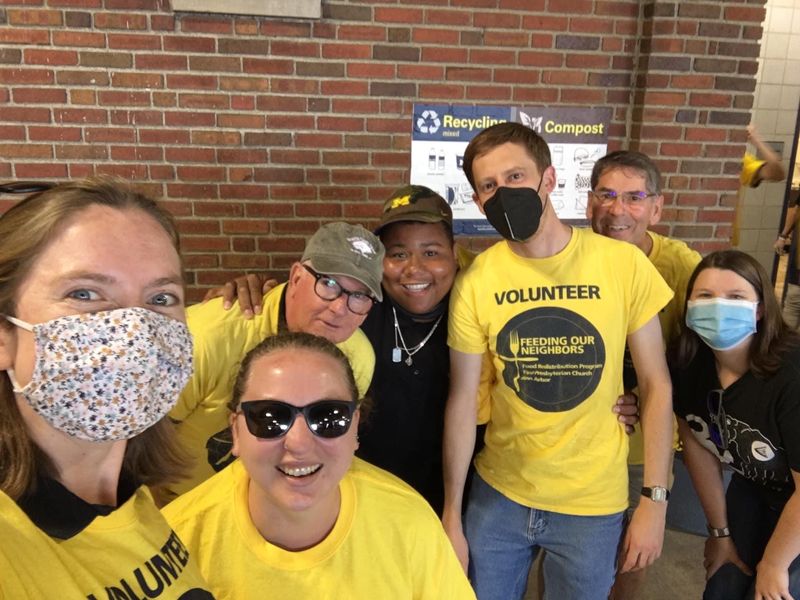
But for Don Redding, the game also presents an opportunity to lead a small, spirited team of food-collecting volunteers from his church that do their best work after the action has ended on the field at the Big House.
“You look for people in need and then you respond,” says Redding, who 15 years ago launched the “Food Rescue: Feeding Our Neighbors” program at First Presbyterian Church of Ann Arbor after a church member noticed that all of the leftover food at a Michigan Stadium concession stand operated by the church was being thrown in the trash, which also was happening at concession stands throughout the stadium.
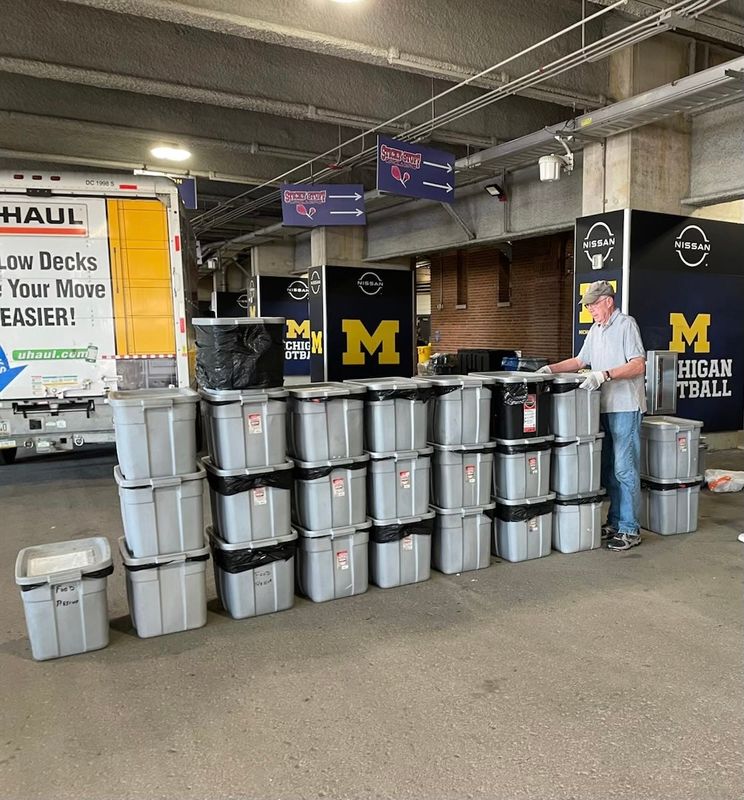
“Since 2011, we have saved about 200,000 pounds of food like pizzas, hot dogs, chicken tenders and other meat products. These foods are collected after the games, stored in freezers at the stadium and then brought to Detroit in the following days.”
A native of Addison, Michigan, near Jackson, Redding graduated from Addison High School in 1958 as part of a class of 57 students. And along the way he also learned the importance of helping others through the example provided by his parents, Clara and George Redding.
Later, an early career as a software developer followed by years spent in management running a mid-sized company, helped Redding to hone skills that were needed to launch the food redistribution program in his retirement, which entailed conducting his own research to determine the impact that could be made by the previously discarded stadium food, and successful outreach and coordination with the University of Michigan and Sodexo, the owner of the stadium food that Redding wished to collect and redistribute.
Even with all of the planning and coordination, and despite the good intentions of his group and the many years of experience they have acquired in collecting food at University of Michigan sporting events — which has expanded through the years to also include men’s basketball, select women’s basketball games and gymnastics events and summer concerts — Redding says the task facing his volunteers at the conclusion of Saturday’s Spring Game and throughout the year is never exactly routine.
“It’s never as smooth as one might think,” said Redding, whose group began their journey with the project 15 years ago on that stormy day by collecting a whopping 3,500 pizzas, coincidentally, made by a group of young people from Detroit, that would have gone to waste largely due to the fact that it was the first Michigan home football game to be stopped before all 60 minutes of regulation had been played.
Redding continued: “For football games, on Wednesdays, one of our volunteers distributes 40 (18 gallon) tubs (that can hold approximately 50 pounds of food) to the concession stands (across Michigan Stadium). And then on game day (Saturdays), we are allowed into the stadium late in the fourth quarter and we wait until the concourse clears, and then we use both hand carts and a golf cart to get the food.
“When there is a night game, we are working the 40 concession stands from about 10:30 until midnight. Picking up food late at night isn’t a lot of fun and certainly not convenient. But being serious about doing God’s work in our communities requires a real commitment.”
And the commitment of Redding’s volunteer group — generally no larger than six to eight people at regular season football games — has been appreciated by members of a different team that Redding has become closely connected to during the past 15 years.
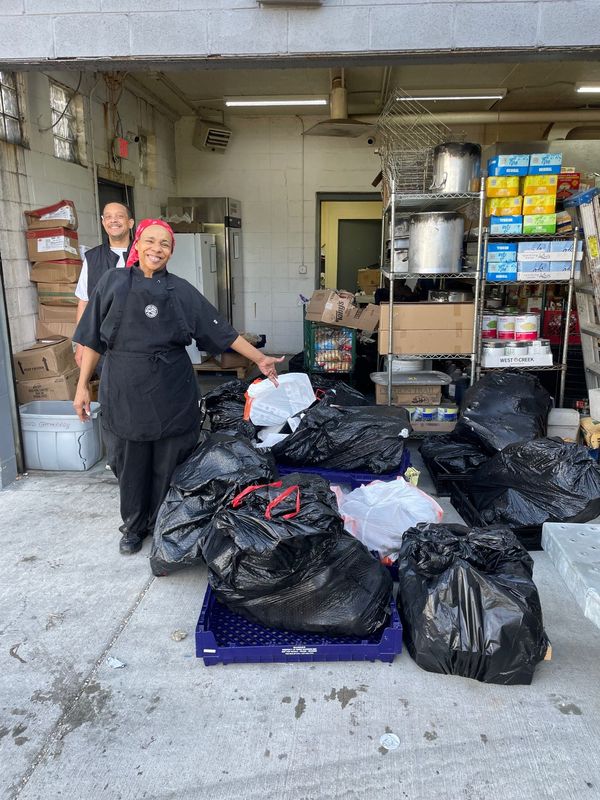
This team consists of women and men in Detroit that perform important roles at vital community institutions that are always happy to see Redding roll up in a U-Haul truck or van with food, through rain or shine — and even during the COVID-19 pandemic — because when that happens, both parties are accomplishing an important goal.
“It’s been a wonderful partnership,” said Tanya Taylor, Food Service specialist supervisor at Detroit Rescue Mission Ministries, a multifaceted nonprofit organization that has served Detroit’s “homeless and addicted communities” since 1909, while being one of the largest housing and treatment providers in metro Detroit.
“Even though the Lions didn’t make the Super Bowl this year, I took the pizza and chicken tenders we receive and we had our own Super Bowl party and everyone loved it. You couldn’t beat that party with a stick. I couldn’t have afforded to go to the Super Bowl myself, but we were able to celebrate together just like anyone else. It was a normal day — a normal special day.
“And that’s what their gift of food does each time, it gives us additional hope.”
Taylor’s words were echoed by Carl Angott, Food Service Director and chef at Cass Community Social Services, which prepares meals for 400 people, three times a day, at its family shelters and warming centers.
“We get a lot of food from Forgotten Harvest and we try our best to provide very healthy meals with a lot of vegetables. But what Don brings is a nice treat that they love,” said Angott, who also credited Redding’s project for helping his agency save “quite a bit of money” on food costs.
“The pizzas, which are Buddy’s Detroit-style pizza, provide a great treat. And the pizza, or a pizza and a salad, is just a good meal.”
There is an appreciation for another type of “goodness” that can be detected when Redding lists the names of the Detroit agencies and institutions that he has become acquainted with throughout the 15 years of the project:
In addition to Detroit Rescue Mission Ministries and Cass Community Social Services, that list over the years has also included the Pope Francis Center, Second Mt. Carmel Missionary Baptist Church, the Salvation Army and Capuchin Soup Kitchen.
And as Redding tells it, his many interactions with these partners has allowed him to take away something that is perhaps as valuable as any of his deliveries, which for him represent nourishment, dignity and care for neighbors who might otherwise go without.
“I have asked my church members if they have ever asked themselves where are they going to sleep tomorrow? Or where will there next meal come from?,” said Redding, whose project also supports the St. Andrew’s Meal Program in Ann Arbor.
“You can give money to a cause or volunteer, but do you take the time to think about what other people are going through? Our partners do this. I’m no expert on poverty, but I can devote my time to helping organizations and groups that make a difference. And I am thankful for everyone I have worked with along the way.”
Scott Talley is a native Detroiter, a proud product of Detroit Public Schools and a lifelong lover of Detroit culture in its diverse forms. In his second tour with the Free Press, which he grew up reading as a child, he is excited and humbled to cover the city’s neighborhoods and the many interesting people who define its various communities. Contact him at stalley@freepress.com or follow him on Twitter @STalleyfreep. Read more of Scott’s stories at www.freep.com/mosaic/detroit-is/. Please help us grow great community-focused journalism by becoming a subscriber.
This article originally appeared on Detroit Free Press: This is where leftover Michigan football concession stand food goes
Reporting by Scott Talley, Detroit Free Press / Detroit Free Press
USA TODAY Network via Reuters Connect