Look, it could happen to anyone.
On the 20th floor of my apartment building one recent Saturday, I struggled with a metal basket of clothes.

I was in the very slow and awkward process of moving and the cart I wielded had only three wheels ― one had broken off the year before. At this moment the cart had partially tipped over onto open elevator doors.
While I thrashed the basket around, unbeknownst to me, my car keys slipped out of my jacket pocket and plunged into the dark.
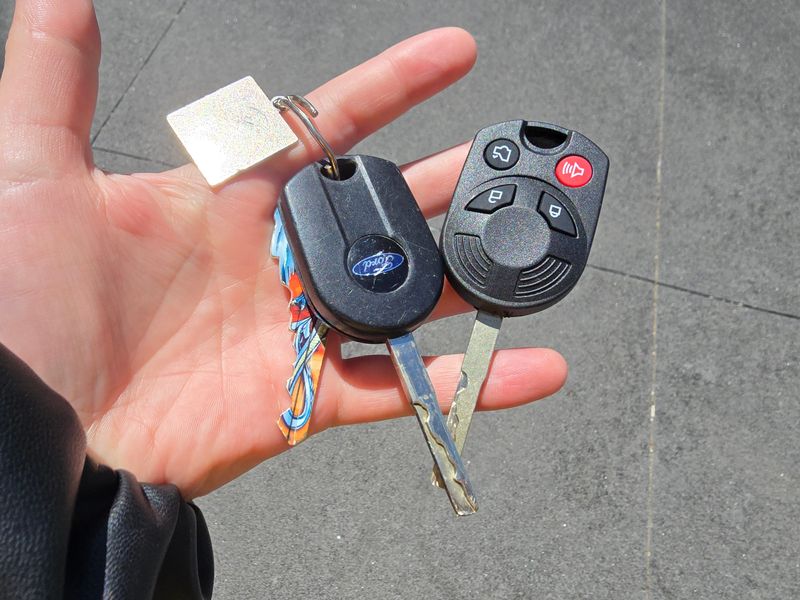
When I purchased my 2015 Ford C-Max from a Pennsylvania dealership two years ago, the salesman warned me there was only one key. He let me know at the point of purchase I could, and should, get a duplicate made for a fee.
Smart key fobs can cost hundreds of dollars, and the intricate designs of laser cut keys can cost a great deal more than the side-cut keys of the past. I put “make spare car key” on a mental to-do list that I discarded long before driving the vehicle across Michigan state lines.
That is, until that Saturday.
Cutting a spare key
I’ve never had a key cut without a spare, but I figured it had to be possible.
The apartment warned that cutting a whole new key might actually be cheaper than paying the elevator company to make a special trip. And GD Locksmith Services, based in Waterford, Michigan, had the most readily available technician.
Leonard Vladi, a technician with GD Locksmith, arrived within two hours.
“Is the key that opens the door the same that starts the engine?” he asked even before getting out of his Ford Transit van.
I replied that I didn’t know, realizing at that moment I had never tried to unlock the car door with the physical key before. “That’s OK. We’ll find out,” Vladi said.
The process was relatively simple. He measured the keyhole with a multipart tool that reminded me of measuring cups, and slid in one metal piece after another until, somehow, he had enough information to feed the software program on his phone. After he plugged in the car’s make and model, the program generated two numerical sequences ― a key code and the bitting code.
The bitting, he explained, aligns specifically to the pattern of the lock. Each number corresponds to the depth of each groove on the key ― if one number is off, the key won’t work.
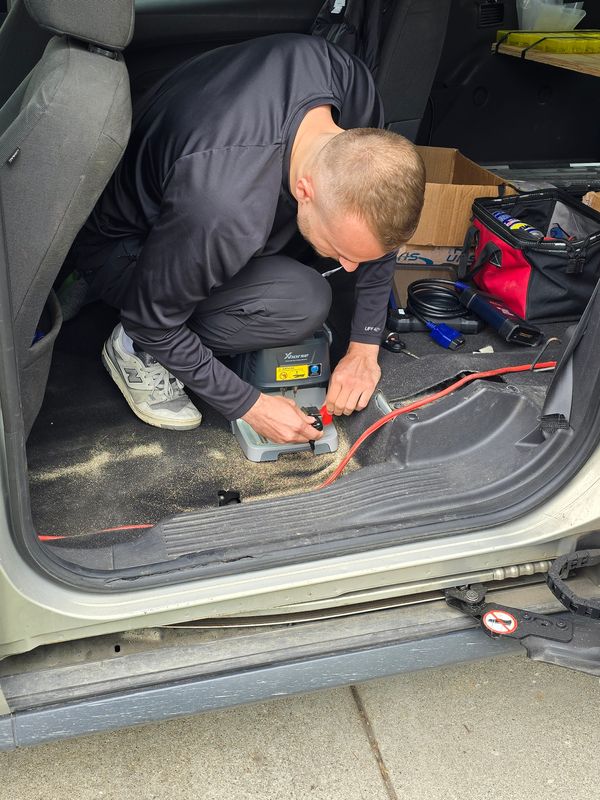
Once we had the data, I watched Vladi cut the key from a machine on the floor in the back of his van already blanketed by metal shavings.
Vladi took the key from the cutter and stuck it in the door. “Try it,” he said. The door opened. I immediately hopped in the driver’s seat and tried to turn on the engine.
“That won’t work,” he said. “I haven’t programmed it yet.”
Apparently I couldn’t get away with not paying for some smart functions. Most vehicles made within the past 15 or so years require a small chip in the key that communicates with the vehicle ignition system. Without syncing the key to the C-Max, the car wasn’t going to start.
Vladi hooked up his iPad to the OBD port on the vehicle to siphon out the right programming information. This took about 10 minutes.
Once my car engine responded to the new key, I paid the man $220 and sent him on his way.
And what happened to my other key? While in the parking structure with Vladi, the elevator company arrived to fix one of the elevators and agreed to check down the shaft of the one I used at no extra cost. Sure enough, my car keys were among the rubble and a discarded Doritos chip bag.
Did the key work after falling 20 floors?
No, it didn’t. It couldn’t even open the door.
Cutting a second spare key
Two days later Vladi is back, bent over the C-Max, trying to put the original key in the lock. He turned it back and forth performatively before looking over his shoulder.
“It’s done,” he said, with the tone used to report a death in the family.
He tried to point out a bend in the metal my eyes couldn’t see. I did see the tiny corner of the key’s tip that had been compressed.
Once we used the key he made Monday to get inside the car, he showed me how it turned in the ignition but wouldn’t start the car.
“The chip inside it is broken,” he said. “If you drop it, or put it in water, it’s not going to work anymore.”
That’s one interpretation, at least. Ron Asmar, a vehicle access controls engineer at General Motors, has another.
“When the locksmith programmed your new key, they likely erased the old one from the vehicle’s security system for theft-protection reasons, so the car no longer recognizes its electronic code — even if the metal blade still matches the locks,” Asmar said over email. “In some cases, the mechanical cut on the new key may also differ slightly from the original, so if the lock cylinders were re-keyed or the cut pattern changed, the old key may no longer turn the door lock either.”
Asmar has been at GM for 35 years, more than long enough to track how the key has changed over the past several decades.
The traditional metal car key that simply turned a mechanical ignition cylinder until GM introduced the transponder in the 1990s, or “chipped” keys, that needed to be recognized before the engine would start in order to make hot wiring a car more difficult.
From there, separate or integrated fobs from remote keyless entry could lock and unlock doors, open the trunk, sound a panic alarm and, eventually, start the vehicle.
By the mid‑2000s, many vehicles moved to push‑button start systems, where the key evolved into a proximity fob and a Start/Stop button replaced the traditional ignition.
By the 2010s, many GM vehicles started to offer a key card that uses Near Field Communication (NFC) technology for keyless vehicle lock, unlock, and start. Digital keys through apps accessed on smart watches or phones will soon become far more common.
And that’s not going to exactly make them cheaper to replace.
“They’re no longer just cut metal — they’re secure electronic devices. Each one contains multiple radios, encryption, and vehicle-specific programming that ties it to a single VIN and to features like passive entry, remote start, power liftgate, and theft deterrent systems,” Asmer said.
I let Vladi cut me another key, this time for $180, not just because he took the time to drive out to me but because I had already resigned myself to the idea of needing a working spare in case of emergency. The second one opens the car door and starts the engine but won’t lock or unlock anything from a distance.
So, did I waste the better part of a week and $400? One expert suggested had I been patient and waited for the technician to pry open the elevator shaft, I could have continued on as I had before, one old laser-cut key and I against the world.
I may never know the true answer to that. But now I have three keys, one that likely will never work again, and a cautionary tale.
How to avoid a fate like mine
Amser advises customers to do the following:
Jackie Charniga covers General Motors for the Detroit Free Press. Reach her at jcharniga@freepress.com.
This article originally appeared on Detroit Free Press: I dropped my only car key down an elevator shaft. What happened next
Reporting by Jackie Charniga, Detroit Free Press / Detroit Free Press
USA TODAY Network via Reuters Connect