As much as seniors love a new tax break, a risk exists that retirees and others will miss out if they think the new enhanced deduction for seniors on 2025 federal income tax returns is somehow automatic.
It is not.

Another potential problem: treating your Social Security benefits as if they’re not potentially taxable on 2025 federal income tax returns.
They are.
Many seniors will see substantially bigger refunds and smaller tax bills when they file their 2025 federal income tax returns — if they qualify and pay attention to detailed rules.
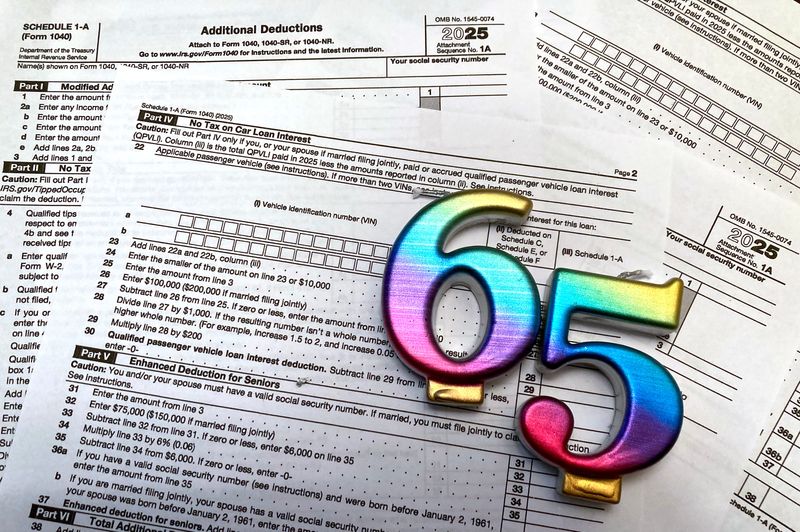
A new, temporary senior bonus will enable many taxpayers age 65 and older who fall within income limits to deduct up to $6,000 in income from their federal returns. To do so, though, you must file a new, extra form called Schedule 1-A for “additional deductions.”
If you don’t complete that form, you’re not getting the much-publicized extra tax break for seniors that is part of the One Big Beautiful Bill Act signed into law July 4.
How much can seniors save in taxes?
How much you might save in taxes will depend on your tax rate.
At a 12% marginal tax rate, for example, the $6,000 deduction for a single taxpayer who is 65 or older would result in $720 in tax savings.
Yet, tax professional Tom O’Saben warned the new enhanced deduction for seniors could turn into a commonly missed deduction, especially for seniors who file simple returns and historically did not need additional schedules.
Many seniors, he warned, will assume the new deduction is an automatic increase, similar to the long-standing additional standard deduction for taxpayers who are 65 and older. Yet, we’re talking about a new boost here, which requires extra paperwork.
“It is not part of the standard deduction,” said O’Saben, enrolled agent and director of tax content and government relations for the National Association of Tax Professionals.
The new enhanced deduction for seniors is an extra break on top of the existing extra standard deduction for taxpayers age 65 and older who do not itemize. For the 2025 tax year, the extra standard deduction for older adults is $2,000 for single taxpayers and $1,600 per qualifying spouse for married couples filing jointly.
DIY tax software or working with tax professionals can help tackle new, unexpected forms.
“Most self-prepare tax software starts with a process of asking questions, rather than filing out the forms themselves by hand,” said April Walker, senior manager for tax practice and ethics with the American Institute of CPAs.
By obtaining the date of birth for the taxpayer, the tax software will likely calculate the enhanced senior deduction for adults who are age 65 or older, she said.
“But not all taxpayers have the access to tax prep software, so the need to determine eligibility on another schedule is a concern,” Walker said.
The Internal Revenue Service notes that taxpayers will use the new Schedule 1-A to claim recently enacted tax deductions, such as the enhanced deduction for seniors, “no tax on tips,” “no tax on overtime” and “no tax on car loan interest.”
The fact that the enhanced senior deduction appears on “page 2 of Schedule 1-A with no specific line for the senior deduction on Form 1040 or 1040SR will also tend to increase chances of it being overlooked,” warns Mark Luscombe, principal analyst for Wolters Kluwer Tax & Accounting in Riverwoods, Illinois.
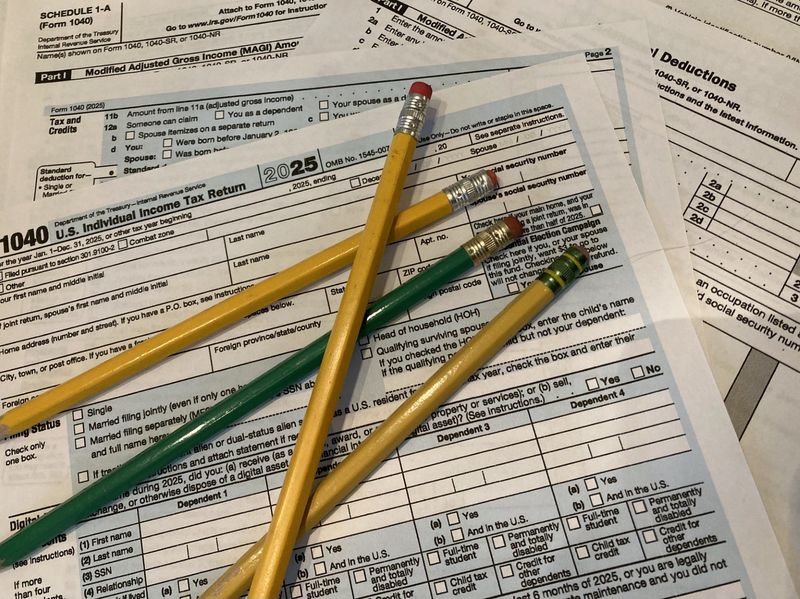
I had one longtime reader, James Huddleston, of Canton, Michigan, email me Jan. 13 asking: “On this new 1040-SR, I couldn’t find anywhere to claim that new $6,000 deduction??? Another form required???”
My response: “Yep. See Schedule 1-A. You need it. Section 5, page 2.”
You don’t need to itemize for the new senior tax break
Many baby boomers and their parents who qualify might wrongly assume that they don’t qualify for the enhanced deduction for seniors because they just claim the standard deduction; they don’t itemize deductions on Schedule A.
But the new deduction for seniors — much like the new tax deduction on car loan interest and some other new deductions — will cover taxpayers who itemize and those who claim the standard deduction, as most people do.
Even so, even some who itemize could get tripped up.
“Many non-itemizers may not think of being entitled to any deduction after adjusted gross income other than the standard deduction, and many itemizers may only think of deductions on Schedule A without looking at the new Schedule 1-A,” Luscombe said.
You’re not going to find the new enhanced deduction for seniors on Schedule A.
The risk is that do-it-yourselfers — and even some tax preparers — might not realize that a new Schedule 1-A exists to claim the enhanced deduction for seniors, which was supported by AARP and others.
Many times, O’Saben said, taxpayers and even some preparers are conditioned to look only at Form 1040 and Schedule A.
How your age, income will matter
Like many tax breaks, seniors will still need to take their own situations into account.
Rules relating to one’s age and income, for example, will mean some retirees won’t qualify for the enhanced deduction of up to $6,000.
If you’re 62 or 63 now, for example, forget about it for your 2025 return. This tax break only applies for those 65 and older.
What older adults need to know at tax time to get a break:
You do not need to claim Social Security benefits to claim the tax break: Many people heard much misleading rhetoric about “no tax on Social Security” before and after the passage of One Big Beautiful Bill last summer. The White House even proclaimed “NO tax on Social Security” on July 4 when President Donald Trump signed the bill into law.
In a speech at the Detroit Economic Club on Tuesday, Jan. 13, Trump once again used the term “no tax on Social Security.”
You could see how people could still be confused.
“With the references to ‘no tax on Social Security’ leading up to enactment of the deduction, some seniors may not think that they are entitled to the deduction unless they have started taking Social Security benefits,” Luscombe said.
Not true. Older adults who qualify still can claim the enhanced deduction for seniors on Schedule 1-A, even if you’re still working and did not claim Social Security benefits yet.
How old you are matters: While many collect Social Security retirement benefits at 62 or 63, they won’t get a new tax break on 2025 returns. You’ll need to be 65 or older for the enhanced deduction for seniors.
The enhanced deduction for seniors applies on 2025 tax returns to older adults born before Jan. 2, 1961. If you’re 65 or older now, you can claim an additional deduction of up to $6,000 on your 2025 federal income tax return.
Eligible married couples who are both 65 and older can claim up to $12,000 for an additional deduction. What if one spouse who was 65 or older died during 2025? Luscombe noted that the surviving spouse still may be entitled to a $12,000 deduction, if a joint return for the couple is filed for 2025.
How will you prove your age: You’re not being asked to file a copy of your birth certificate or passport with your tax return. O’Saben notes that age is typically verified by the IRS through Social Security records and prior-year IRS data.
“As with most individual return items, documentation is required only if questioned in an examination,” O’Saben said.
Be sure to include your Social Security number: The IRS notes that taxpayers must include the Social Security number for qualifying individuals on the return. You must have a valid Social Security number.
Filing status matters: Older adults must file a joint return to claim the enhanced deduction for seniors if they are married. The new deduction is not allowed for those married couples filing separately.
Income matters: Higher income seniors receive a smaller tax break or no tax break because the deduction starts phasing out for those with a modified adjusted gross income of $75,000 for singles and $150,000 for joint filers.
The deduction phases out at a 6% rate for every $1,000. It is fully phased out at $175,000 for single filers or $250,000 for joint filers.
You’re dealing with your modified adjusted gross income — which is calculated by adding back some income to your adjusted gross income. On Schedule 1-A, you’re adding back any income from Puerto Rico that you excluded from AGI, as well as some income for U.S. citizens from Form 2555 that relates to foreign housing and foreign earned income, and income related to a tax break from Form 4563 for the exclusion of income from bona fide residents of American Samoa.
The term “modified adjusted gross income” can have somewhat different meanings, depending on the Internal Revenue Code section in which it is being used.
Social Security benefits could still be taxable: The complex rules for when Social Security benefits are taxable remain in place.
“The rules on taxation of Social Security did not change with the new tax law,” said Walker, of the American Institute of CPAs.
If some people wrongly believe that Social Security benefits are no longer taxable, Walker said, the risk is that they might not include Social Security income on tax returns, which could trigger delays processing the return and any possible refund.
She warned that some seniors with higher incomes could see no change in their tax situation at all, such as in situations where 85% of their Social Security benefits are taxed and they do not qualify for enhanced senior deduction based on their income.
The taxation of Social Security benefits is based on combined income — adjusted gross income plus non-taxable interest plus one half of annual Social Security benefits. It is a different calculation, Luscombe said, than what’s used for the new deduction for seniors.
Social Security benefits began being taxed at the federal level in 1984 to shore up the Social Security trust fund.
About 40% of people who get Social Security currently pay income taxes on their benefits, according to an earlier report issued by the Social Security Administration in 2025. Other estimates, though, suggest that a bit more than 50% currently pay taxes on benefits.
The White House Council of Economic Advisers estimated in a report in June that the “enhanced senior deduction” will result in only 12% of seniors owing federal tax on Social Security benefits, as a result of their total deductions exceeding their taxable Social Security benefits. The report called One Big Beautiful Bill the “largest tax break in American history for our nation’s seniors.”
“The problem will be if they accidently overlook the deduction,” Luscombe said.
For single filers, the threshold for paying taxes on up to 50% of Social Security benefits applies when your combined income is between $25,000 and $34,000 a year. Once the combined income is higher, up to 85% of benefits may be taxable.
Couples filing a joint return face taxes on up to 50% of their Social Security benefits if their combined income is between $32,000 and $44,000. If the couple’s combined income is higher than that, up to 85% of benefits would be taxable.
As a result, someone who is working while collecting Social Security benefits would need to take their earnings from a job into account. The same’s true for someone who is retired and taking taxable withdrawals from traditional 401(k) plans.
Timing is a concern: The enhanced senior deduction is only available for four years — 2025, 2026, 2027 and 2028. Someone who turns 65 in 2029, for example, isn’t going to get that deduction in future years unless the tax rules change again.
How the paperwork looks: See new Schedule 1-A for “Additional Deductions.” The “enhanced deduction for seniors” is covered in part five of the form on page 2 at the bottom of the form, right above where you’d list “total additional deductions.”
Contact personal finance columnist Susan Tompor: stompor@freepress.com. Follow her on X @tompor.
This article originally appeared on Detroit Free Press: How seniors can boost tax refunds with new deduction on 2025 returns
Reporting by Susan Tompor, Detroit Free Press / Detroit Free Press
USA TODAY Network via Reuters Connect