Lansing ― House Republicans began to take testimony Thursday on a package of bills that would roll back various Michigan property taxes, but lawmakers have yet to outline the specific services that would be taxed to replace the revenue from the reduced property taxes.
A bill has been introduced in the House to impose a 6% service tax, but it lacks any details regarding which types of services would be subject to the tax.

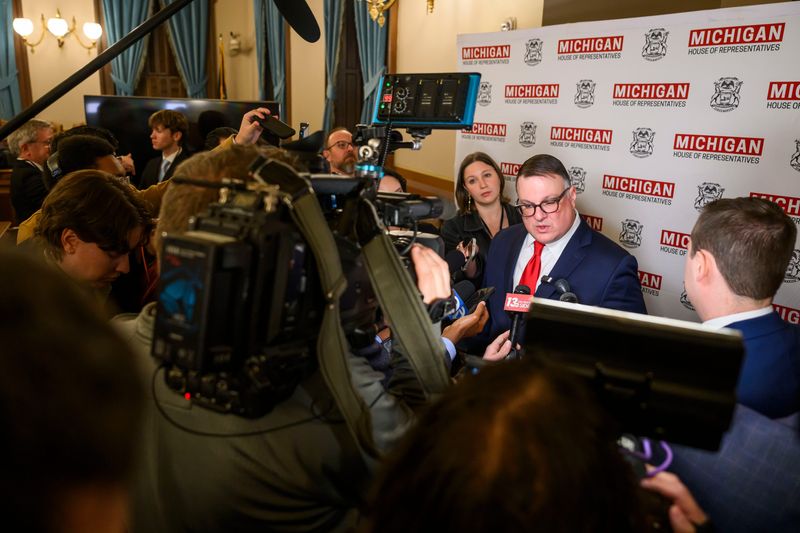
House Speaker Matt Hall, R-Richland Township, said the House would work with the state Department of Treasury to finalize a list of services that could be taxed and how much each would generate in revenue. So far, the speaker has mentioned “luxury” services such as private jets, lobbying, limousines, robocalls or newspaper publishing as services that could be targeted.
“I think we really will benefit from the collaboration with the Treasury Department,” Hall said.
A Department of Treasury spokesman said Thursday that the department has not received any outreach on the matter.
State Rep. Brian BeGole, an Antrim Township Republican who leads the committee considering the property tax bills, said he expects the property tax legislation will be referred out of committee in the next couple of weeks. He did not have a timeline for advancing the service tax bill, which is tie-barred to the property tax bills.
But Hall said Thursday he hopes to have some sort of property tax relief in the annual state budget.
Projected property tax revenue losses are tagged at $5.5B to $7.5B
All combined, the four property tax cuts discussed in the House Government Operations Committee Thursday are estimated to result in a tax revenue loss that could progress from $5.5 billion to $7.5 billion a year, according to a series of nonpartisan House Fiscal Agency analyses. When Hall first announced the plan, he pegged the projected revenue loss at about $5 billion.
House Republican property tax relief proponents have included language within the bills stating it is the intent of the Legislature to backfill the School Aid Fund for the dollars lost through the proposed property tax cut. But the fiscal analysis noted that the “statute cannot mandate an appropriation.”
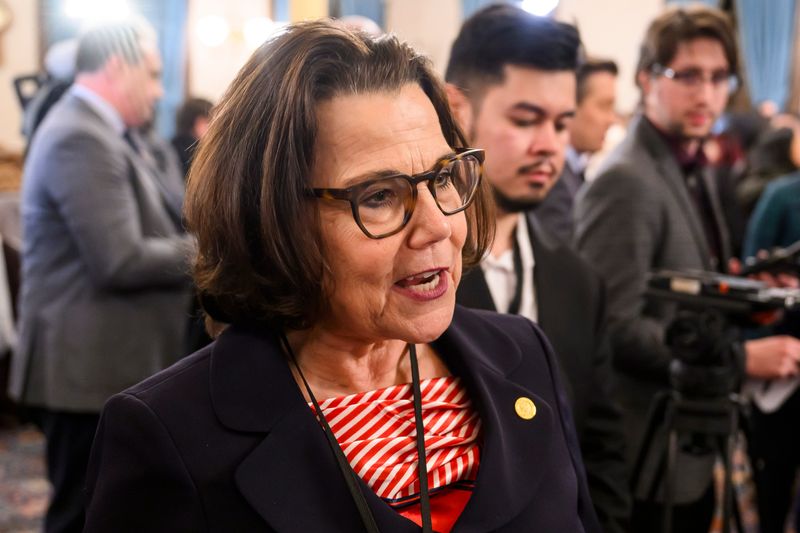
Without the details on the proposed service tax and a real plan to backfill school funding, state Rep. Regina Weiss, D-Oak Park, said she doubted the House leadership’s promises to hold schools harmless.
“I really am curious to see their math and how they actually are looking at doing this,” Weiss said. “But everything that I’ve heard so far gives me zero confidence that there is any seriousness to this proposal.”
House Democrats ‘don’t trust’ lawmakers to backfill aid for schools
While most committee members on Thursday acknowledged the need for some property tax cuts, some Democratic members expressed doubts that future lawmakers would or could dedicate enough funding to schools and local governments to make up for the losses those property tax cuts would create.
“It is a real problem, there’s no question,” state Rep. Mike McFall, D-Hazel Park, said of the current taxes imposed on property owners. But he expressed concerns about how lawmakers would replace that revenue stream for schools and local governments.
“One of the things you mentioned was that the backfill for schools would come from the Legislature,” McFall said. “I have to tell you, I don’t trust the Legislature. We don’t send money back to municipalities already, we’re really bad at that.”
State Rep. Steve Frisbie, R-Pennfield, argued the state would have no choice but to honor its commitment and prioritize school funding or face the censure of voters.
“The public will demand it, and they always do, that we have public education and it’s well-funded and it’s well-supported,” Frisbie said. “I understand your concerns, but I also think it’s time to try something different.”
The tax cuts discussed Thursday would eliminate the 6-mill State Education Tax, which is projected to result in a loss of between $3.1 billion and $3.2 billion from the School Aid Fund, according to a House Fiscal Agency analysis.
The cuts would include the elimination of the 0.75% real estate transfer tax assessed on the sale price of real estate, which a nonpartisan fiscal agency analysis pegged between a $475 million and $488 million loss in tax revenue.
Eliminating ‘pop-up tax’ is a high House GOP priority
Another tax on the chopping block is the so-called “pop-up tax,” the elimination of which would require voter approval because it would require a change to the Michigan Constitution. The pop-up tax is a tax increase that occurs when a property transfers from one owner to the next in Michigan, uncapping a constitutional limit on the property tax increase on a home’s value.
Under the state Constitution, a property’s taxable value cannot increase by more than the rate of inflation or 5% each year. But when a property is sold, that cap lifts and is reset at a new, often higher taxable value, resulting in a “pop-up” in property taxes.
The elimination of the pop-up tax would result in a tax revenue loss of between $200 million and $250 million in the first year it took effect and increase to up to $2 billion loss in revenue by fiscal year 2035, according to a House Fiscal Agency analysis.
“Property tax relief is a priority for us, and the pop-up tax, we’ve heard, is just crippling people when they buy new homes and it’s stifling people from moving out of their home to make their home available for other people,” said state Rep. Ann Bollin, a Brighton Township Republican who sponsored the bill.
Lastly, House Republicans are exploring the elimination of the personal property tax. The bill, largely meant to benefit utilities, is tied to separate legislation that requires utilities to pass down personal property tax savings through cuts to residential rates. It also requires utilities to freeze rates for two years.
The personal property tax cut would result in decreases to state and local property tax revenue of between $1.7 billion and $1.9 billion, according to a House Fiscal Agency analysis.
eleblanc@detroitnews.com
This article originally appeared on The Detroit News: House GOP property tax plan takes shape, but service tax plan lacks details
Reporting by Beth LeBlanc, The Detroit News / The Detroit News
USA TODAY Network via Reuters Connect