Can you take an electric vehicle on a 2,300-mile vacation drive? I just did.
You can, too.

Here’s what you need to know and do:
Relax. It’s easier — and far less stressful — than you expect.
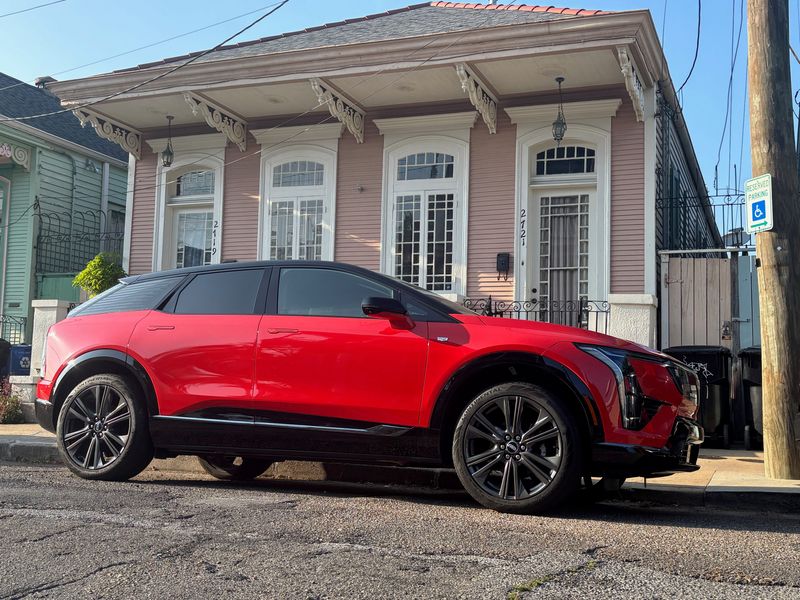
I drove the Optiq from Detroit to New Orleans to enjoy the Jazz and Heritage Festival, spring on the Gulf Coast and the music and food that go with them.
I used DC fast chargers — which charge EVs much faster than the 240-volt Level 2 chargers most vehicle owners use at home or work — from a range of providers. I charged in every state from Michigan to Louisiana.
I evaluated their comfort, security and amenities in addition to charging ease, speed and reliability.
The trip was a piece of cake — except for two unreliable suppliers that wasted my time, frayed my nerves and fouled my mood.
Despite those foul-ups — EVgo and Electrify America, if you’re keeping score, and I am — charging added less time to the trip than I expected.
My arrival in New Orleans shifted from around noon when I’ve driven a gasoline vehicle to shortly after 2 p.m. in the EV, the difference between an early and late lunch in the French Quarter or a rounding error in a two-week vacation.
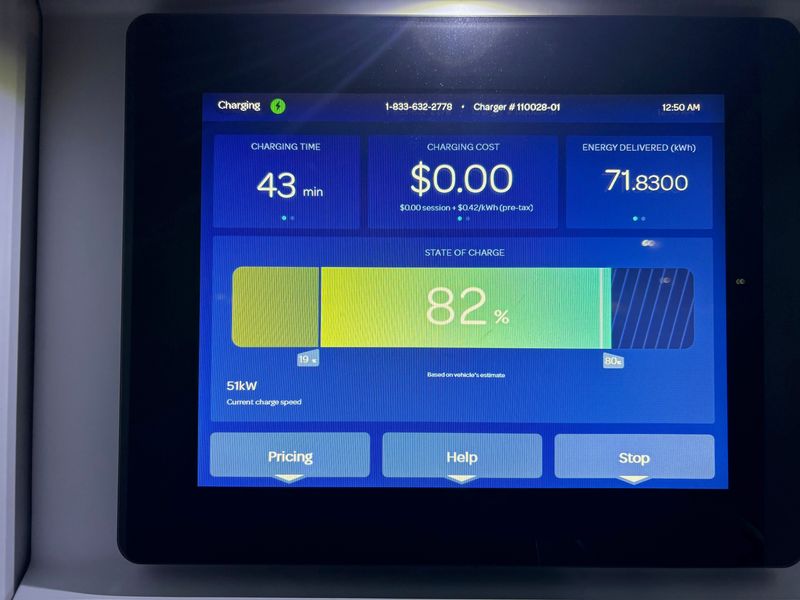
Excluding the unreliable suppliers I learned to avoid, most charging stops lasted 20-35 minutes.
I saved $100-$200 versus similar gasoline-powered vehicles, based on current fuel prices — $5.42 a gallon for premium, per AAA — and EPA fuel economy estimates for comparable luxury SUVs: the Genesis GV70, Lexus RX and Lincoln Nautilus.
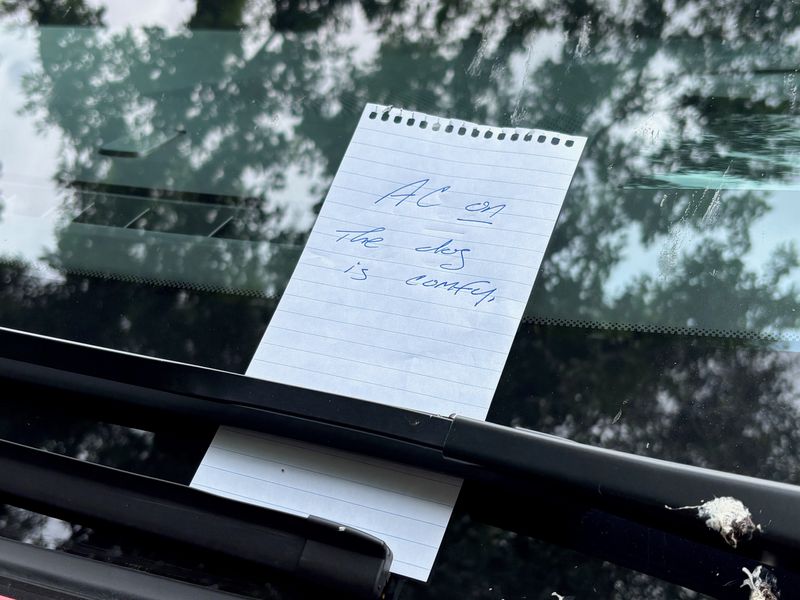
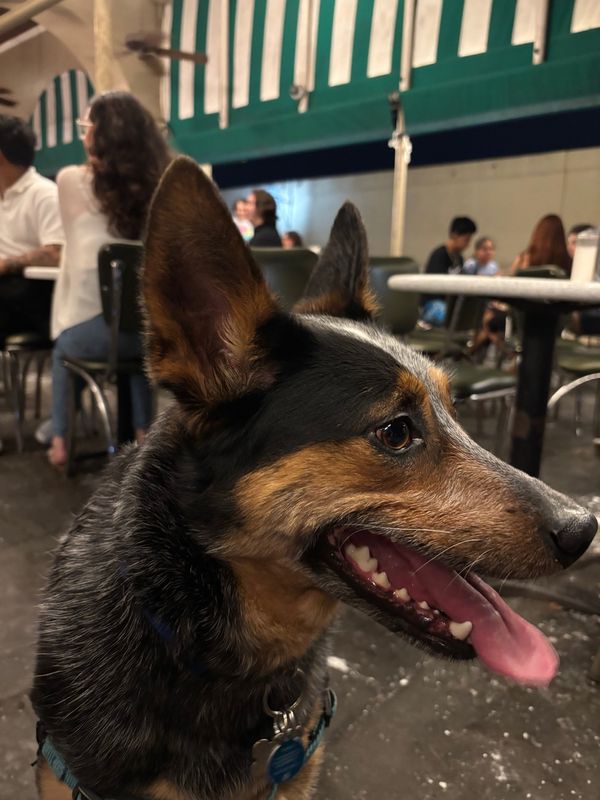
Bonus: I discovered that a few minutes in a dog run with my Australian cattle dog Rocket or sipping a latte in the palatial Tennessean truck stop are pleasant, relaxing alternatives to my usual rush to pump gas, hit the restroom and snag a Coke when fueling conventional vehicles.
Plus, I visited my first Buc-ees. Love the statue.
I’d do it again in a minute, and this time I’d be smarter about which chargers I used.
First, some highlights and takeaways from my drive
My favorite DC fast chargers
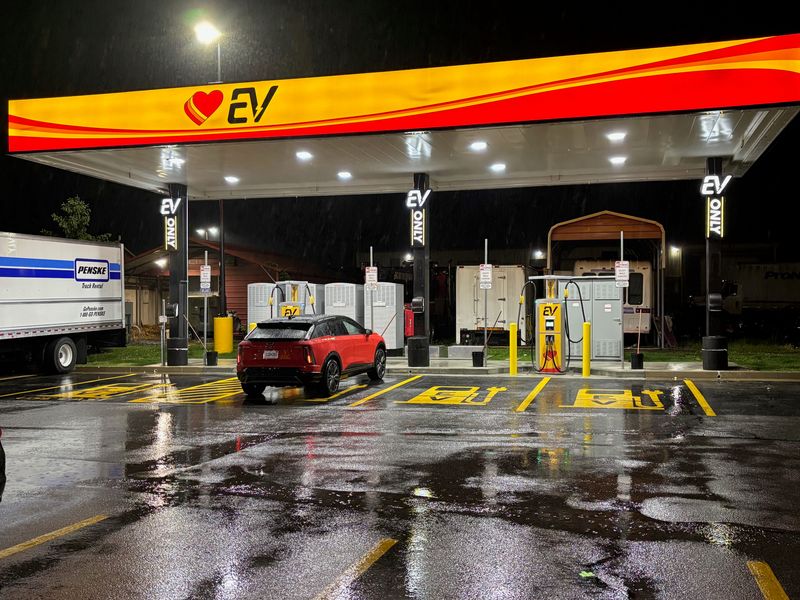
ChargePoint at Love’s Travel Stop, Sparta, Kentucky. Its 320-kW chargers started flawlessly and charged fast on two stops. This was the only place with a roof to shelter chargers from rain and sun. Also squeegees and buckets of washer fluid; a small dog run; 24-hour amenities. Very pleasant service. Love’s currently has 40 stations with DC fast chargers. It uses a variety of providers, including ChargePoint, Electrify America and Tesla.
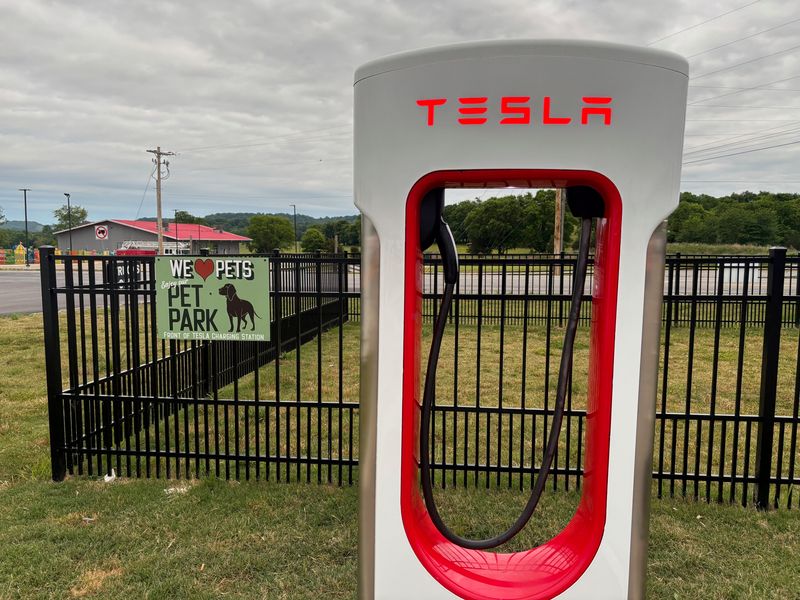
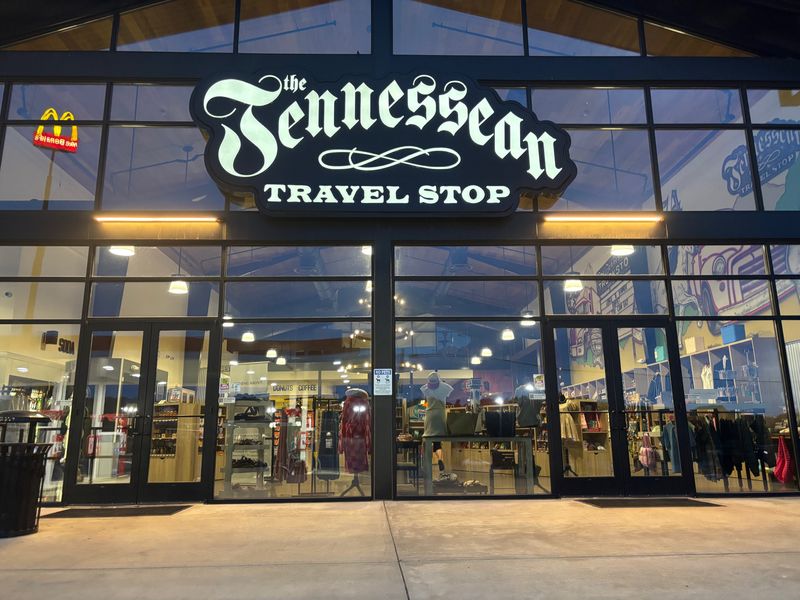
Tesla at The Tennessean Travel Stop, Cornersville, Tennessee. This place had a whopping 24 chargers. Like every Tesla charger I used, they were easy to use and reliable. It featured a big, grassy dog run with a picnic table; many choices for food and drink in a clean and welcoming building. Plus, there was coffee-shop quality latte, terrific service; spotless, from parking lot to coffee shop.
Tesla at the Buc-ee’s, Smith’s Grove, Kentucky. This one was big, clean, well lit and has helpful staff. It was a typical flawless Tesla charging experience and my first Buc-ee’s. I’ll go back.
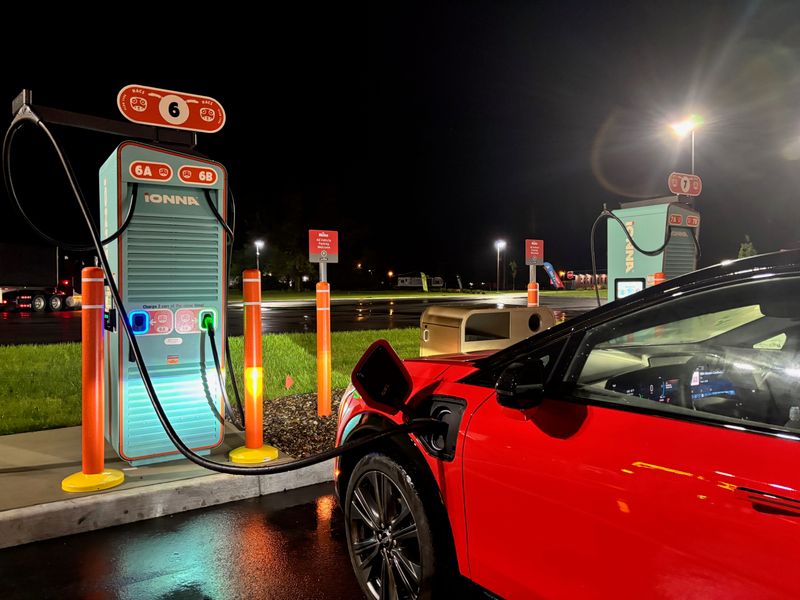
Ionna at Wawa, Lima, Ohio. I liked the 400-kW chargers with credit card readers and connectors for both NACS and CCS, though directions on the kiosks were vague, and toll-free customer service wasn’t much help.
The chargers were fast. Wawa had 24-hour food and amenities. Staff was pleasant. Ionna is a new provider created by BMW, GM, Honda, Hyundai, Kia, Mercedes, Stellantis and Toyota. It has 111 charging locations across the country now, targeting “a reliable, high-powered network that our drivers can rely on, no matter their location” by July 2027.
And the worst 2 DC fast chargers
Over more than a dozen stops during my two-week vacation, the only chargers that didn’t work on the first try were at EVgo and Electrify America stations.
I swore off using them again, and regretted it when I made an exception.
EVgo, Meijer, Troy, Ohio. The charger quit when I walked away to get coffee in the store. Starting over on my return wasted at least 20 minutes. A week later I rolled the dice on a GM Energy-branded, EVgo-operated station in Birmingham, Alabama.
I tried three chargers before one worked.
Electrify America, Walmart, Athens, Alabama. Arriving in the forbidding parking lot of a closed Alabama Walmart after midnight with less than 10% charge remaining, the first three charging kiosks I tried didn’t work.
The last one did, or I might still be there. I walked 300 yards across the dark parking lot for a restroom and Coke, only to discover the brightly lit station was under construction and hasn’t opened yet. Walking back, I saw enough occupied vehicles, patrolling police and security to suspect the parking lot sees as much commerce at 1 a.m. as the Walmart does at noon.
All told, it was an hour before I could continue — thankfully, to a Tesla charger sharing a restroom and busy, well-lit parking lot with a Shell station in Bessemer, Alabama.
Full disclosure: My first Electrify America stop — at the National Corvette Museum in Bowling Green, Kentucky — was fine, though it has no amenities when the museum is closed.
Rating Super Cruise
GM’s Super Cruise hands-free driving system is No. 1 and keeps getting better.
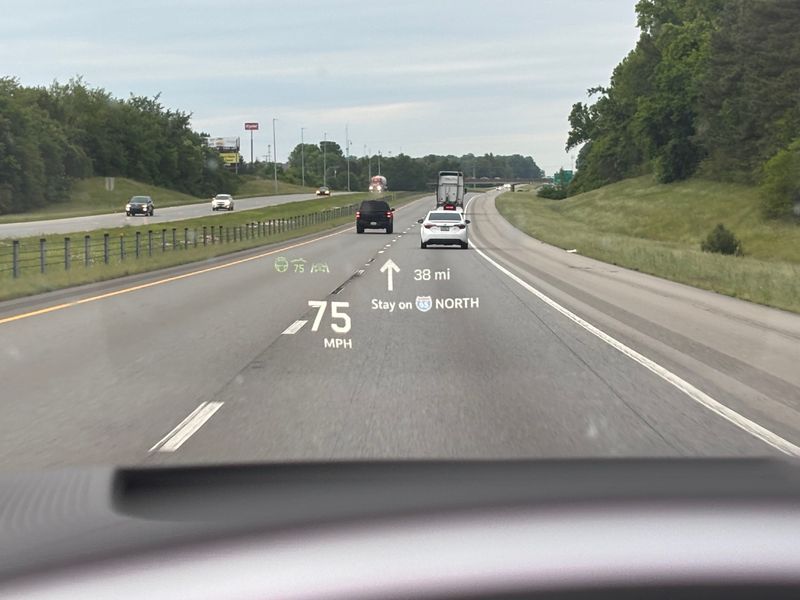
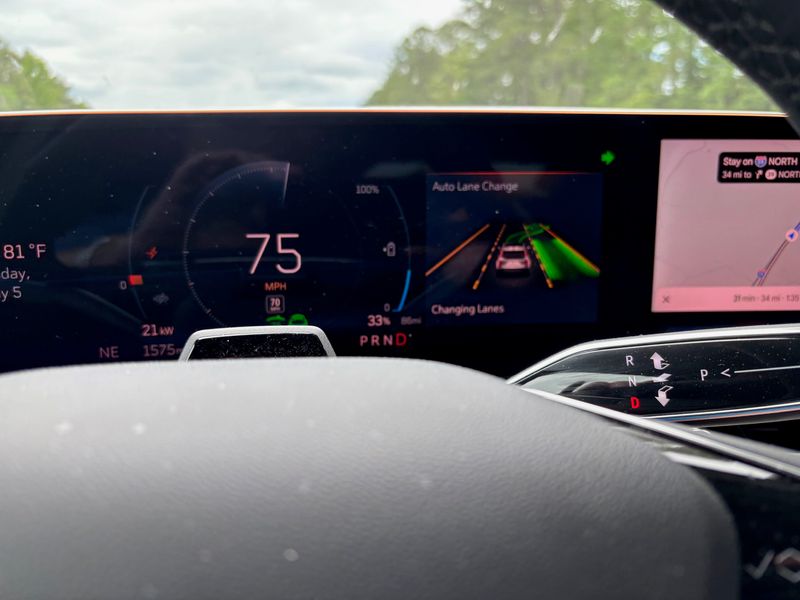
Its latest upgrades include ensuring “you’ve navigated to the correct lane at exit ramps or interchanges,” which is a lot more impressive than it sounds. It doesn’t just change lanes without driver action. Super Cruise has handled lane changes for years. It took me onto connecting ramps and the next highway at interchanges. It moved the Optiq safely across multiple lanes and merged into the new road — without my ever touching the wheel. Smooth, secure and wonderful.
Other subtler improvements make driving feel more natural.
I drove for hours at a time without touching the steering wheel, remaining fresh and alert for longer than I do during hands-on driving.
I set the speed for 75 mph, the prevailing rate of traffic. Super Cruise moved me around to pass slower vehicles and tucked back into the middle lane so others could go around me. The car slowed to a stop and resumed motion without any action on my part at a couple of slowdowns for accidents.
The system returned control to me for exits to surface streets, some construction areas and when torrential rain made the lane markings invisible.
Who needs Apple CarPlay? Not GM.
Nobody was more skeptical than I was when GM decided not to allow Apple CarPlay in its latest EVs.
I’m an infotainment system super-user, perpetually making calls, receiving and send texts, and playing music in endless shuffle mode from my iPhone.
I’ve seen GM — in fairness, just about every major automaker — fail miserably every time it tried to beat Apple at its own game. I expected the worst when GM banned CarPlay from its most advanced vehicles. What were they thinking?
It turns out, GM knew what it was doing.
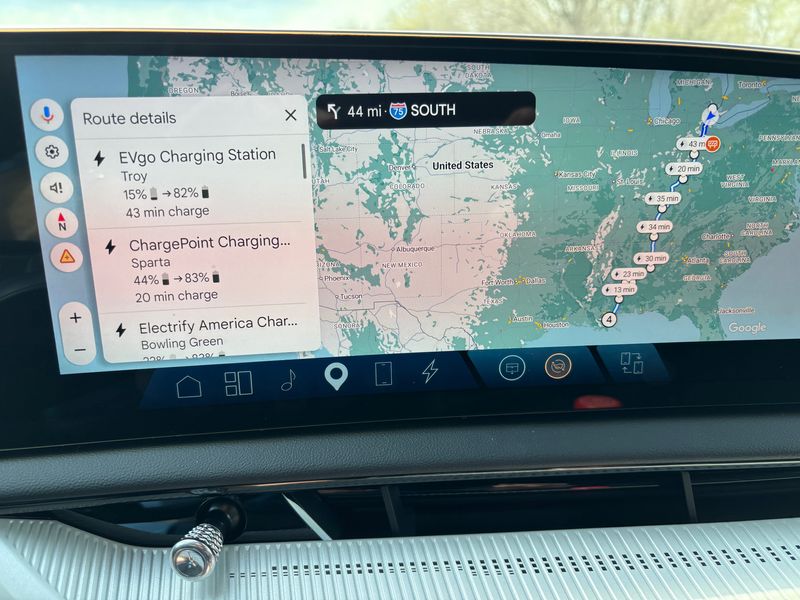
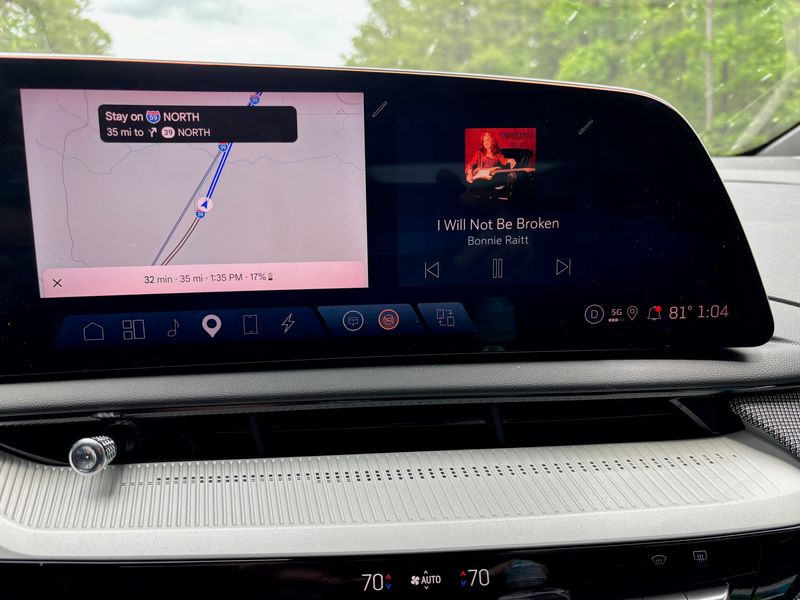
The new system, which combines Google navigation and live access to the vehicle’s battery with hands-free calling, texts and music through the Optiq’s AKG audio system, gave me everything I wanted.
It started reliably over two weeks and 2,350 miles, found every destination I requested, even allowed me to veto charging companies I didn’t trust, providing a list of options that didn’t add any time to my trip.
GM still needs to make it easier for owners to pair their phones for full functionality. A continuously updated demo of pairing with the latest IOS would be good. Link it to the vehicle’s app. Until GM’s infotainment team achieves that, a laminated card with up-to-date, step-by-step directions in every new EV would be a good start.
I still love CarPlay, and I appreciate automakers that engineer their vehicles to work with it. But I never missed it during my long test of the Cadillac Optiq.
I thought GM’s decision would drive owners away from their new EVs. Instead, it created one more reason to buy them: world-class route-planning and smartphone integration.
Fellow EV travelers’ troubles show need for dealer demos
Nobody wants to hang around the dealership after buying a car. One false move and somebody may have to talk to their manager again.
Despite that, EV buyers should insist on a demo of their vehicle’s route-planning capability — and every dealership should have a specialist owners can call for help.
Make them teach you to select a route that includes charging stops, time and info on charge level when you start and finish charging. Learn to filter for the charging brands and power levels you want. Ask whether your car automatically preconditions the battery for charging as you near the stops it recommends.
What spurred this line of inquiry? I met a nice couple in the parking lot of a Cracker Barrel in Meridian, Mississippi. How many stories begin that way?
They’d driven their Acura ZDX EV from the East Coast to Texas and were on their way home.
They loved the ZDX, but hated the uncertainty about when and how long to charge.
Nobody at their dealership, they said, explained there was a route planner to recommend efficient charging stops.
I didn’t know how the ZDX’s system worked, but I did have Acura communications ace Jake Berg’s phone number. Jake helped them program the SUV while I walked Rocket and unsuccessfully tried to avoid fire ant nests.
The next day I got this email:
“Your advice on how to optimize the charging settings was a total game-changer. Since we made those adjustments, the rest of our roadtrip has been an unbelievable experience.
“Understanding how the system actually works made everything so much smoother and took the stress right out of the drive.”
Don’t leave the dealership parking lot without learning to use your EV’s route-planning.
Contact Mark Phelan: mmphelan@freepress.com. Follow him on Twitter @mark_phelan. Read more on autos and sign up for our autos newsletter. Become a subscriber.
This article originally appeared on Detroit Free Press: Here’s what I learned driving an EV 2,350 miles on vacation
Reporting by Mark Phelan, Detroit Free Press / Detroit Free Press
USA TODAY Network via Reuters Connect
By Mark Phelan, Detroit Free Press | USA TODAY Network