Allen Park — For the first time since 2022, the Detroit Lions drafted five defensive players in 2026, and the split between defensive and offensive selections — five to two — wasn’t all that close.
That wasn’t intentional, Lions general manager Brad Holmes said. But it was a product of how they felt about the 2026 NFL Draft class as a whole.

“I think the way that our board was set up that we had a little more volume on the defensive side, so I think that’s why it tilted that way,” he explained Saturday evening.
Whatever the reason, it’s an infusion of young talent that is sorely needed. If it was a coincidence, consider them blessed.
The Lions’ defensive problems — or at least, the root causes of them — have been less clear-cut than their offensive struggles when you put injuries aside, particularly in the passing game. There are acclaimed players at every level of the unit, but discussing their shortcomings with this in mind invokes a line from Oakland A’s general manager Billy Beane in Moneyball: “If he’s a good hitter, then why doesn’t he hit good?”
The Lions’ pass rush had good sack and pressure production, but on a down-to-down basis, offenses were not afraid of it. They took advantage of their 30th-ranked average time to pressure and picked them apart when it mattered most. If they’re so good at rushing the passer, why don’t they rush the passer good more often?
Even with injury problems in 2025, the Lions’ secondary generally stuck to receivers like glue, leading the league in average separation, but was still torched with regularity and tied for the fourth-most explosive pass plays (20-plus yards) allowed. If they’re so good at sticking with their man, then why does their man get open downfield so often?
One theory for these contradictory statistics is the Lions’ scheme has been holding back a talented group of players. The best defenders are doing what the coaches ask of them, but they’re not having a big enough positive impact on the defense as a whole. Detroit has somewhat acknowledged this aspect, saying they want to be more flexible next season, which should go a long way toward putting players in a position to thrive.
“It’s still the same install, but now we’ve got the pieces to put where we want, whether that’s a nickel, it’s a big end, it’s a linebacker,” Lions coach Dan Campbell said at the annual league meetings last month. “So we’re kind of flexible here.”
But placing the onus entirely on the scheme is unfair, even if the consensus is that talented players are collectively underperforming.
The reality is Detroit hasn’t added a true difference-maker in the trenches since drafting Aidan Hutchinson with the second pick in 2022. In 2023, the only defensive lineman they added was Brodric Martin (Round 3) — arguably the worst pick of Holmes’ career, all things considered. In 2024, the only defensive lineman they added was Mekhi Wingo (Round 6), who only made the gameday roster twice last season. And in 2025, the only defensive lineman they drafted was Tyleik Williams (Round 1), who had a promising rookie season but is still a work in progress.
This draft aims to change that, both by giving defensive coordinator Kelvin Sheppard more pieces to work with and by giving the team’s best players a teammate who will uphold their end of the bargain.
Detroit traded up in Round 2 for Derrick Moore, who was ninth among qualified edge defenders in college football in pressure rate on true pass-rushing snaps (which excludes screens, play-action, roll-outs, etc.), generating pressure on a whopping 36% of those snaps. He should help the Lions improve their average time to pressure, which would speed up the quarterback and allow the Lions to capitalize on tight man coverage.
While we wouldn’t expect Moore to have that same output in the NFL, it’s worth noting Marcus Davenport had a pressure rate of just 12.8% on true pass sets last season, ranking 82nd among qualified edges.
“I feel like it can do a lot, especially for a guy like Hutch,” Moore said of his bull rush. “We can help each other. He can help me, I can help him. Even the interior guys, it’s definitely going to help a lot just pushing the pocket and everybody getting home. Like I said, it’s going to take all four of us. As long as everybody’s on the same page, that’s all that matters so we can all get after the quarterback.”
Unlike last season, when the Lions used Davenport on early downs and Al-Quadin Muhammad on passing downs, the Lions now have two edges in Moore and DJ Wonnum who should be able to play in both phases, allowing Hutchinson to not only have a formidable partner but also to come off the field to save some of his energy for the game’s critical junctures. Though Hutchinson finished with a career-high 14½ sacks, it felt like he wasn’t always the best player on the field in moments that mattered, which is what you’re paying him to be.
Holmes said Wonnum and Moore are “a little bit different,” but “they both set good edges, they both can rush outside, they both can rush inside, and they’re also both good teammates, too.”
“(We’re) very selective on the type of guys that we get,” Holmes said of the edge position. “Hutch takes a lot of snaps, man. Just to have another body that literally can spell Hutch in that rush rotation.”
While we shouldn’t put too high expectations on a pair of late Day 3 draft picks, it’s notable that defensive tackle Skyler Gill-Howard (Round 6, Texas Tech) and edge Tyre West (Tennessee, Round 7) both excel at rushing the passer, first and foremost. In an admittedly small sample size, Gill-Howard had a win rate of 16.1% while rushing from the interior last season. West, meanwhile, was a remarkably consistent rotational rusher for Tennessee, collecting 16, 17 and 17 pressures over his final three seasons with the Vols.
“Both of them, really, their ability to apply pressure as sub-rushers,” Holmes said when asked what he liked about Gill-Howard and West.
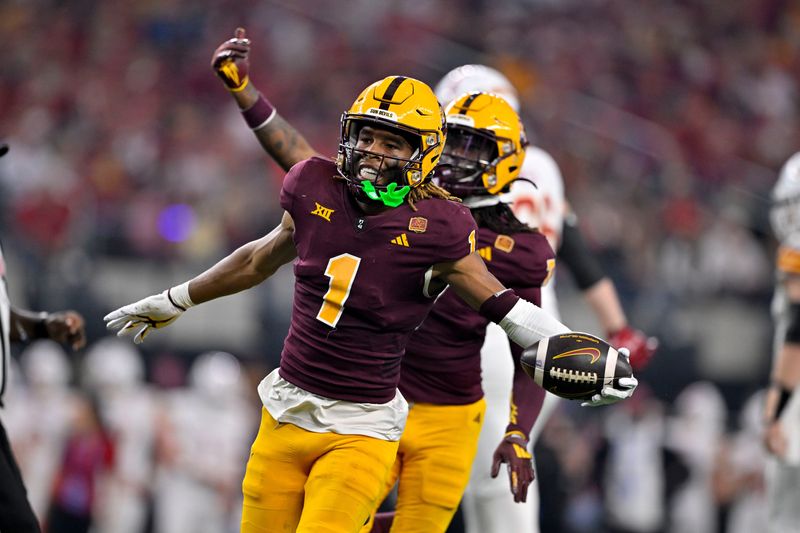
Keith Abney II (Arizona State, Round 5), the steal of Detroit’s draft haul, was projected to be a Day 2 player but fell all the way to Detroit at pick No. 157. He has as good a chance as anybody to win the starting nickel job in camp. He’ll compete with Ennis Rakestraw, Roger McCreary and Christian Izien. Whatever the secondary’s configuration ends up being, there should be a high degree of confidence that a healthy group can rebound in 2025, given the level of competition Detroit has built through free agency and the draft.
“He’s another instinctive guy that he could find the football, he could trigger, he can tackle, he’s pretty sticky,” Holmes said of Abney. “I was just — he was just a simple one because we had him ranked a couple rounds higher than where he was, so that was a no-brainer for us.”
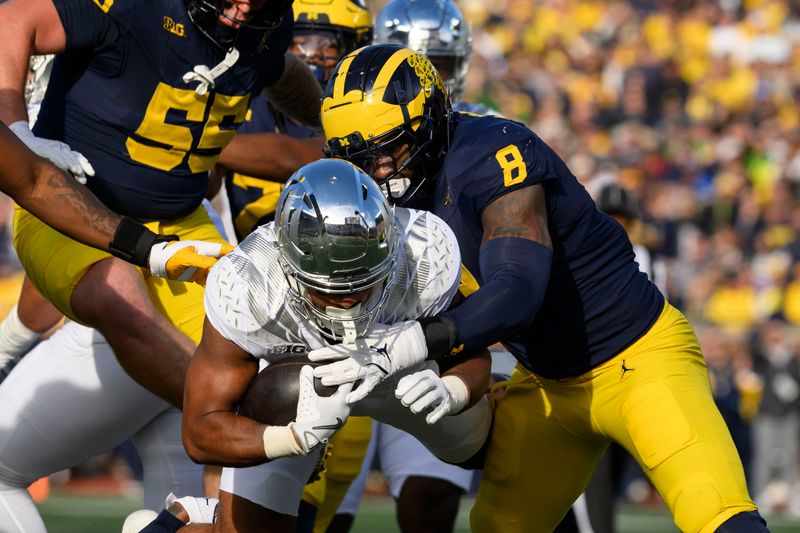
And then there’s linebacker Jimmy Rolder (Round 4, Michigan). While his lack of experience might not allow him to contribute immediately on defense in the passing game, a handful of scouting reports note Rolder has great field awareness and “athletic upside in coverage” (The Athletic), meaning the selection could also eventually help fill the role left by departing Alex Anzalone.
“He was very instinctive, was a really good tackler. … He just plays with his hair on fire,” Holmes said. “He’s stronger than you think. He could actually set edges if you put him on the edge. If you don’t know where you’re going and you don’t have high level processing and instincts, it can be tough for you.”
It’s always important not to overproject the impact of rookies, and we’ll admit it might take all of their draft picks some time to become true difference-makers, if there are any in the class.
But draft picks are also not made with just rookie seasons in mind. This year’s draft gives the Lions a chance of finding long-term solutions to defensive problems they’ve previously had to fix annually, particularly in the passing game.
nbianchi@detroitnews.com
@nolanbianchi
This article originally appeared on The Detroit News: Did Detroit Lions find difference-makers in defense-heavy NFL Draft haul?
Reporting by Nolan Bianchi, The Detroit News / The Detroit News
USA TODAY Network via Reuters Connect