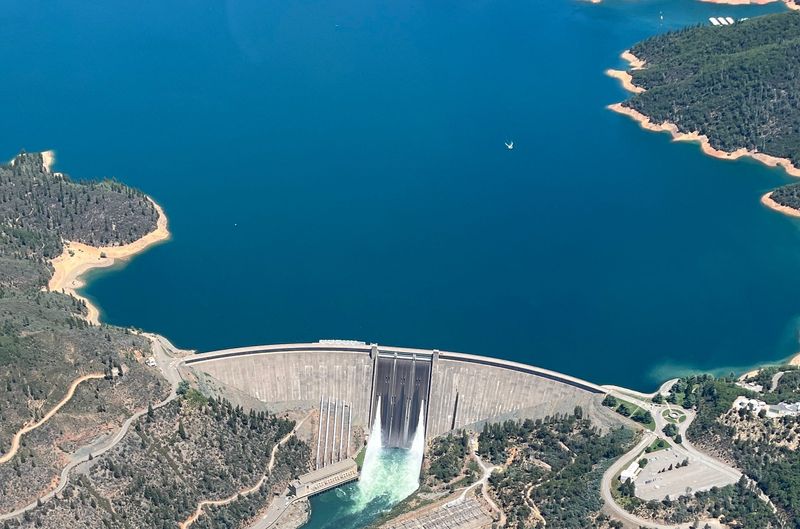
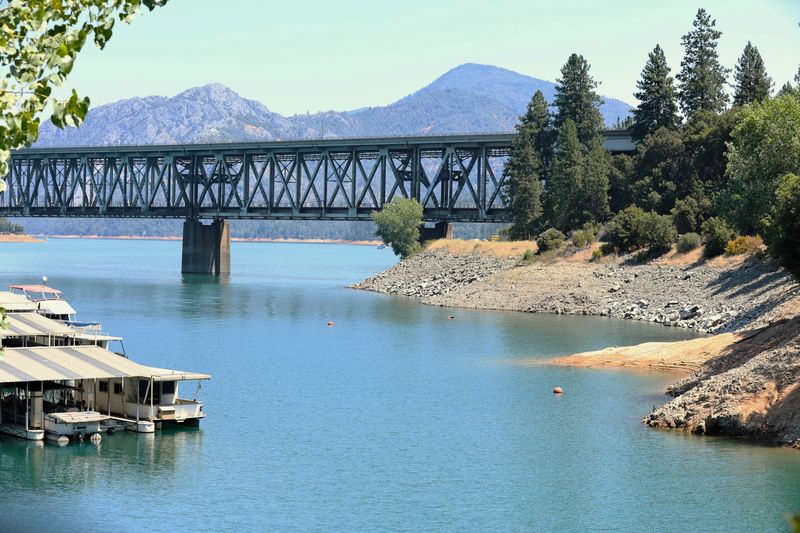
In spite of a dry spring and a June heat wave, Lake Shasta waters are right where they should be, historically speaking, thanks in part to powerful wet winter storms and their runoff that filled the reservoir.
The U.S. Bureau of Reclamation reported the rain-dependent reservoir, which is California’s largest, was 73% full as of midnight on Thursday. That’s the lake’s historic average for that date over the past 30 years.

Each year, 90% of the water that fills Lake Shasta comes from rain.
Lake Shasta’s surface lapped a little more than 45 feet from the top on July 16, according to the California Department of Water Resources.
“The water stored in the reservoir represents about 41% of the stored water in the CVP (Central Valley Project),” said the bureau of reclamation. The Sacramento, Pit and McCloud rivers and Squaw Creek feed the lake.
Could Lake Shasta be headed for drought?
After a warmer, dryer-than-usual start to the year, drought monitors predicted a very dry August and autumn for Shasta County. However, lake levels may not show signs of drought right away, climate scientists said.
Some of the rain that did fall in spring washed away much of California’s snow pack that accumulated over past years, according to the weather service’s and U.S. Forest Service’s monthly spring snow depth measurements. Snow levels dropped to zero in parts of Northern California.
Both the Sacramento River and Squaw Creek rely heavily on melting snow to feed them, according to the Northern California Water Association, a consortium of water district managers and providers, rural politicians and landowners.
Note to readers: If you appreciate the work we do here at the Redding Record Searchlight, please consider subscribing yourself or giving the gift of a subscription to someone you know.
How Lake Shasta’s 2026 water level compares to past water years
It takes time for the lake to recover from a drought, according to weather service.
Here’s how full Lake Shasta was compared to its historic average on July 15 during the past nine years, which includes the 2020-2022 drought. Earlier years show the lake recovering from sporadic drought during 2012–2016.
(This story was updated to add new information.)
Jessica Skropanic is a features reporter for the Record Searchlight/USA Today Network. She covers science, arts, social issues and news stories. Follow her on Twitter @RS_JSkropanic and on Facebook. Join Jessica on Record Searchlight Facebook groups Get Out! Nor Cal, Today in Shasta County and Shaping Redding’s Future. To support and sustain this work, please subscribe today. Thank you.
This article originally appeared on Redding Record Searchlight: Despite heat waves, Lake Shasta water level is where it needs to be
Reporting by Jessica Skropanic, Redding Record Searchlight / Redding Record Searchlight
USA TODAY Network via Reuters Connect
By Jessica Skropanic, Redding Record Searchlight | USA TODAY Network