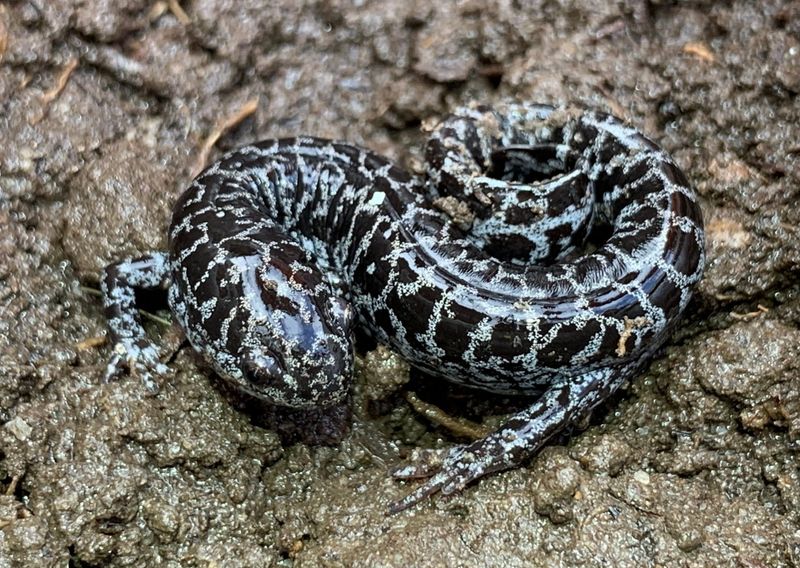
FLORIDA PANHANDLE AND GEORGIA – More than 1,600 young Threatened frosted flatwoods salamanders reached the landscape this year despite one of the most severe droughts on record in parts of the Southeast. With seasonal wetlands failing to fill and natural reproduction largely disrupted, biologists implemented innovative recovery strategies that helped salvage a breeding season that otherwise may have largely failed.
The Amphibian and Reptile Conservancy (ARC), a national nonprofit dedicated to conserving imperiled wildlife, led the effort in Florida and Georgia, adapting recovery strategies as drought conditions intensified this spring.

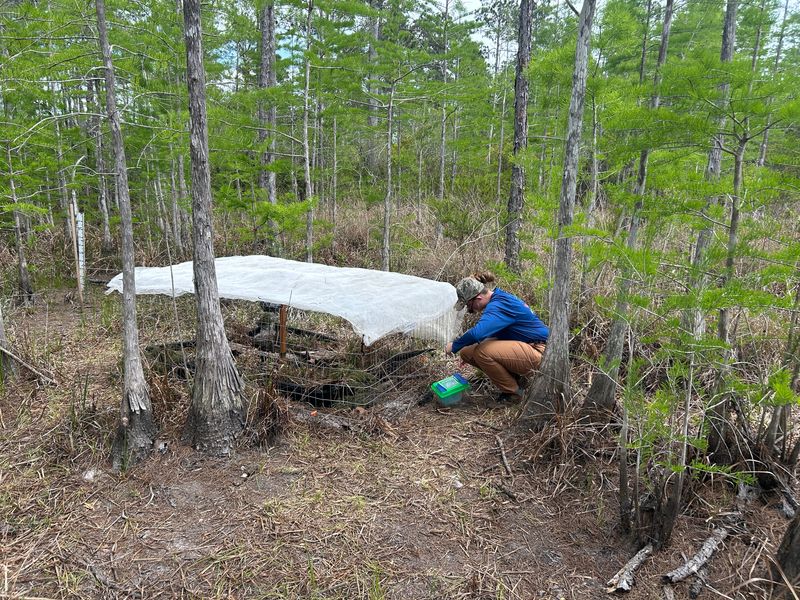
In preparation for a prescribed burn, ARC team recently removed the final soft-release pens from the wetlands in the Florida Panhandle.
The frosted flatwoods salamander once occurred across much of the Southeast but now survives in only a handful of populations in Florida and Georgia. The species depends on seasonal wetlands within longleaf pine ecosystems to reproduce.
“This year underscored how quickly things can go sideways for species that depend on rainfall,” said JJ Apodaca, ARC Executive Director. “When drought threatened to derail an entire breeding season, our teams and partners innovated to make sure these federally-listed salamanders didn’t lose an entire generation.”
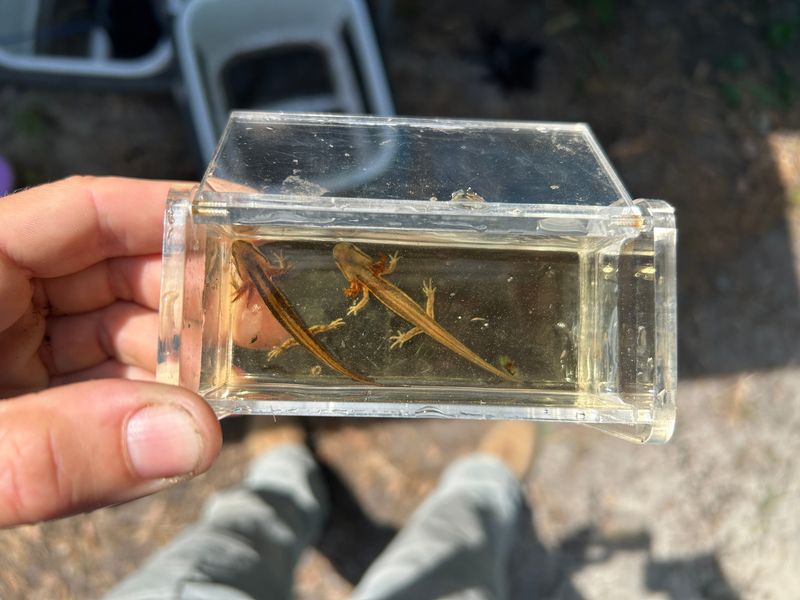
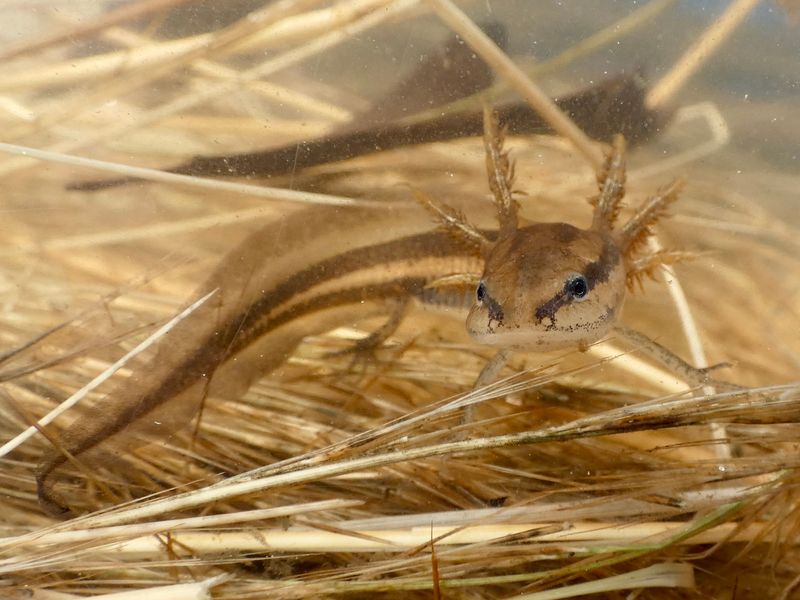
In Florida’s Panhandle, seasonal wetlands never filled with water, which precluded traditional releases of headstarted salamander larvae (like tadpoles). These larvae started as eggs collected from the wild and were raised in protected environments until they were larger and more likely to survive.
Larval salamanders likely pick up important environmental cues during their development, and releasing recently metamorphosed (developed) land-dwelling animals directly into dry wetlands seemed risky during such an extreme drought.
ARC Biologists and partners responded by creating soft-release pens within dry wetland basins. Using water-filled cement mixing trays, native vegetation, bark, branches, and wire enclosures, the team constructed small, controlled habitats where larvae could continue developing until they metamorphosed.
“These soft-release pens are basically a bog garden in a kiddie pool,” said ARC Project Coordinator Nicole Dahrouge. “We’re essentially trying to recreate a wetland in a six-by-six space because that’s all we’ve got right now.”
More than 600 larvae were released via the soft-release pens in the Sunshine State, but the drought’s impacts extended well beyond Florida.
In southeast Georgia, where the species’ only other remaining populations occur, breeding wetlands dried before many larvae could metamorphose. At Fort Stewart, adults still migrated to breeding sites and laid eggs, but prolonged dry conditions prevented most larvae from surviving to metamorphosis.
“A December rain flooded the wetlands enough for some eggs to hatch, but there was not enough water for the larvae to develop and morph out,” said ARC Project Coordinator Rob Tiffin. “Most didn’t survive. We rescued around 300 but couldn’t reach them all in time.”
Despite the challenging conditions, ARC and partners were able to release more than 1,000 headstarted larvae into the only nearby wetland that retained water long enough to support development. When even that remaining wet area eventually dried, the last 35 larvae were held through metamorphosis and later released into the dampest habitat available.
“Headstarted larvae are normally released into ponds where food is visibly swimming around and vegetation provides cover,” said Tiffin. “By contrast, a metamorph was swimming around as a larva just days earlier. Now it has to figure out how to be a terrestrial animal while finding shelter, hunting, and avoiding predators. All of this will keep you up at night.”
Across both states, the recovery effort helped ensure that at least some young salamanders successfully entered the population during a year when natural reproduction would otherwise have been severely reduced.
“What this season demonstrated is the importance of flexibility,” said Apodaca. “We can’t only focus on helping populations grow during good years. Recovery also means finding ways to help at-risk species persist through difficult years.”
To learn more, visit ARCProtects.org.
This article originally appeared on Tallahassee Democrat: Innovative efforts salvage breeding season for threatened salamanders
Reporting by Stephanie Haan-Amato, Special to the Tallahassee Democrat / Tallahassee Democrat
USA TODAY Network via Reuters Connect
By Stephanie Haan-Amato, Special to the Tallahassee Democrat | USA TODAY Network