A deep dive into several Department of Corrections and Community Supervision facilities across New York revealed oversight, discipline and accountability issues in the state’s prisons, prompting calls for an overhaul of the system.
Following the death of Robert Brooks at Marcy Correctional Facility in December 2024 and through the death of Messiah Nantwi at Mid-State Correctional Facility in March 2025, DOCCS hired a law firm to conduct a review of its operations “to identify any potential systemic issues.”

The probe revealed striking problems in New York prisons, ranging from misuse of force and insufficient training to a lack of discipline and mental health support.
WilmerHale interviewed several currently and formerly incarcerated individuals, current and former DOCCS staff, facility leadership and executive leadership, surveyed hundreds of incarcerated individuals and staff at Marcy, Mid-State, Sing Sing and Gouverneur correctional facilities and made multiple visits to Marcy and Mid-State throughout the review process.
“It is important to recognize that meaningful change will require sustained leadership, additional financial, technological, and staff resources, and an executive and legislative commitment to achieving long-term safety, dignity, and accountability for both incarcerated individuals and staff,” the report states.
“The task ahead is substantial,” the report continued, “but it is also an opportunity to build a correctional system defined not by its past failures, but by its commitment to safety, transparency, and human dignity.”
Here’s what to know.
How two deaths inside New York correctional facilities point to deeper issues
Since WilmerHale was brought in due to the killings of Brooks and Nantwi, the more than 270-page report focused mainly on their deaths, which were said to have “demonstrated systemic shortcomings in oversight, accountability, and culture within DOCCS facilities.”
“Both incidents involved misuse of force and efforts to conceal misconduct, revealing deep cultural and procedural deficiencies at Marcy and Mid-State,” the report stated.
More must be done to combat these issues, the report adds, as a review of several prior incidents show systemic problems at both facilities. For example, several of the officers involved in the two deaths had a “substantiated history of misconduct,” but “they were allowed to remain on the job.” And other incidents included several officers not involved in either death, which the report says indicates these weren’t isolated events.
Between 2015 and 2025, incidents of force reported in DOCCS facilities have more than tripled, the report outlined, even though the incarcerated population has been declining over the decade-long period. Mid-State saw the highest number of complaints last year for alleged staff assault or excessive or unnecessary use of force; Marcy was the 10th highest.
This could be due to lower staffing levels and an increased proportion of incarcerated people convicted of violent offenses being housed in these facilities, according to the report.
DOCCS defines use of force as “any instance in which physical action is taken to resolve an incident.” They also require reporting of “all instances where physical force is used.”
What did review of NY prisons uncover?
Both the majority of incarcerated people and staff in these facilities that responded to the firm’s survey say they don’t feel safe from violence by the opposing party, and the vast majority of incarcerated individuals believe the force used against them was unjustified.
Additionally, the report found only a small number of reported uses of force are referred to the state Office of Special Investigations for probes into excessive force, and even less are substantiated.
These issues don’t come as a surprise to members of the state’s Correctional Officers and Police Benevolent Association.
“Our members have been sounding the alarm for years,” NYSCOPBA President Chris Summers said. “Instead of listening to the correction officers who work inside these facilities every day, DOCCS and New York State policymakers dismissed their concerns.”
“(New Yorkers) deserve accountability, transparency, and leaders who are willing to acknowledge the mistakes that were made, accept responsibility for the policies that contributed to this crisis, and take meaningful action to restore safety inside our correctional facilities,” Summers continued.
Families of Brooks and Nantwi respond to report’s findings
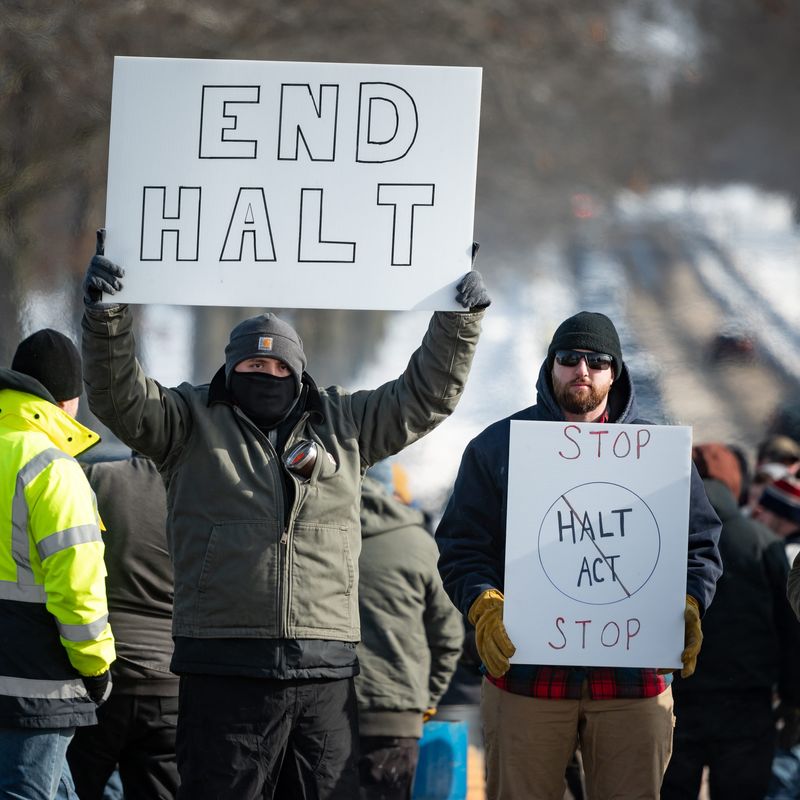
Brooks died after being beaten by correction officers at Marcy Correctional Facility in 2024. His death was ruled a homicide two months later, and eight of ten officers charged in the incident have received sentences in connection with his death.
Brooks’ son, Robert Brooks Jr., echoed NYSCOPBA’s thoughts in a statement shared with the USA TODAY Network after the report was released:
“We question why the State hired an expensive law firm to write a report that says what everyone already knows: New York prisons are dangerously unsafe and the system is broken,” Brooks Jr. said. “It does not take a $9.3 million report to see that. Advocacy organizations, journalists, and incarcerated people have been telling DOCCS about these problems and proposing reforms for years. The need for change was obvious before my father was killed.”
During correction officers’ illegal strike that took place at several facilities across the state in March 2025, Nantwi was beaten to death by a Correction Emergency Response Team at Mid-State. Fourteen officers have received sentences in connection with his death.
“This report lays bare the horrific violence my son endured and the efforts to cover up what happened to him,” Nantwi’s father Patterson Nantwi said in a statement. “Messiah was only 22 years old, and he deserved to be treated with dignity and respect, not beaten to death by the very people responsible for his safety and care.”
“Nothing can bring my son back, but I will continue fighting to make sure that everyone responsible for his death is held accountable and that no other family has to suffer the pain our family lives with every day,” Nantwi added.
Is DOCCS responsive to changing its shortcomings?
The report includes 57 reform recommendations, including strengthening oversight, updating training, ensuring accountability, modernizing records and prioritizing mental health.
“Our recommendations are by no means an end point; there is no quick fix here,” the report stated. “Many of our recommendations will take years of dedicated effort, operational innovation, and financial commitment, along with potential legislative action and updates to collective bargaining agreements.”
DOCCS Commissioner Daniel F. Martuscello III thanked those who reviewed the system and says they’re already working toward making some of these changes.
“These reports reflect both the important work already underway to strengthen safety, accountability, and professionalism across DOCCS, and the significant work that still lies ahead,” said Martuscello.
“We remain committed to instituting meaningful reforms, implementing the requirements of the Corrections Omnibus Reform Act, and working closely with external partners, service providers, and stakeholders to strengthen transparency, improve operations, and advance safer conditions for everyone in our facilities and communities,” he added.
Of the recommendations, Martuscello says DOCCS has completed more than a dozen of them and many more are in the works, including the following:
How lawmakers are responding to the report’s findings
Assemblymember Michaelle Solages, chair of the state’s Black, Puerto Rican, Hispanic and Asian Legislative Caucus and a Long Island Democrat, as well as the Senate’s Committee on Crime Victims, Crime and Correction Chair Julia Salazar, D-Brooklyn, say the reports confirm “what many of us have feared” since the deaths of Brooks and Nantwi.
“These were not isolated acts by a few bad actors,” the legislators said in a statement on July 3. “They were the predictable result of a system with insufficient training, weak accountability and staffing levels that have collapsed even as reported uses of force have tripled over the past decade.”
The two called the report’s release “an important step” and say they’ll be reviewing the report’s recommendations amid their push for broader reforms.
“These reports are direct about what comes next,” the statement added. “Real accountability will require us to act legislatively, and our caucus intends to take it seriously.”
And Sen. Joseph Griffo, a Republican who represents the district both facilities are located in, says he’s also reviewing the report.
“The recommendations outlined in the report are worthy of consideration, and I am encouraged that DOCCS has taken steps and is considering additional actions to improve conditions at the state’s correctional facilities,” Griffo said.
“There is no doubt that systemwide reform is needed to better protect the safety, health and wellbeing of corrections officers, civilian staff and incarcerated individuals,” he added.
Emily Barnes covers state government for the USA TODAY Network-New York with a focus on how policy and laws impact New Yorkers’ taxes, communities and jobs. Follow her on Instagram or X @byemilybarnes. Get in touch at ebarnes@usatodayco.com.
This article originally appeared on Rockland/Westchester Journal News: Systemic oversight failures at NY prisons laid bare in report
Reporting by Emily Barnes, New York State Team / Rockland/Westchester Journal News
USA TODAY Network via Reuters Connect

By Emily Barnes, New York State Team | USA TODAY Network