Contrary to the belief that America’s best days are behind us, I remain deeply optimistic about the future awaiting my children, grandchildren and generations yet to come. History reminds us that progress is rarely linear yet consistently forward.
I was born in the 1950s when polio, measles and other diseases shaped daily life. In school, we practiced fire drills and ducked under desks for nuclear threats. Fear existed but so did resilience.

A friend slightly older recalls growing up in Wichita Falls with weeds pushing through cracked wooden floors, heating with a wood stove and winter walks to an outhouse. These were real conditions — not distant stories.
My father moved to Dallas to pursue aviation in the mid-1950s, taking a materials engineering role building A7 aircraft for Vietnam at $6,000 a year. His parents had grown up in the Ozarks in two-room homes without plumbing. My grandfather served in World War I, used an early GI Bill and became a one of the first 24 teachers at Stephen F. Austin University.
Family stories reveal grit. Bonnie and Clyde once stole my grandparents Model T. During the Depression, my father raised a pet chicken. One day it became dinner, and he never ate chicken again.
My career spanned over 45 years across engineering and technology marketing. I worked with leading companies worldwide, helping bring microprocessors to market. I traveled over 7 million miles, visited more than 20 countries and built lasting global relationships.
These experiences showed how fortunate Americans are. In parts of Europe, families approached buying appliances with the caution Americans used for cars while homes often felt unattainable.
The 20th century economy was driven by oil and manufacturing, strengthened during World War II. The Cold War accelerated innovation, and the space race helped create semiconductors and personal computing.
Today, we are firmly in the information age. Artificial intelligence is reaching most Americans through smartphones and expanding globally.
Investment levels are enormous. Hundreds of billions of dollars are flowing into data centers, representing roughly 2% of the gross domestic product. History shows this scale is familiar as railroad expansion once exceeded 5% of GDP.
The transformation today is digital. People use AI to build websites, analyze data and accelerate discoveries. Earlier generations relied on slide rules to achieve similar breakthroughs.
A smartphone now exceeds the computing power of Apollo systems that reached the moon.
Companies already see results. By 2025, JPMorgan deployed AI tools to over 200,000 employees, generating significant value across operations and decision making.
Virginia leads in data centers, with Texas close behind. Texas grid is guided by the Electric Reliability Council of Texas, enabling faster decisions than multi state systems that require consensus of other states and federal agencies.
State leaders are balancing growth with responsibility, ensuring expansion does not burden residents or strain water resources as Gov. Greg Abbott published guidelines earlier this June.
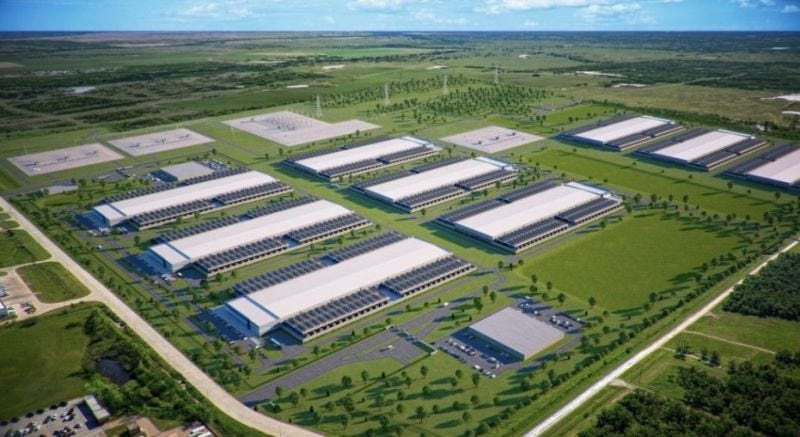
In Wichita Falls, planned data centers represent major investment. From a $7.5 billion dollar tax base, growth in the tax base can fund projects that drive renewal, improve infrastructure and create jobs without raising taxes.
Beyond infrastructure growth, new jobs bring economic momentum. Once ranked the 11th largest city in Texas, Wichita Falls now ranks in the 40s. The future remains full of opportunity. Like our community, America needs skilled people ready to learn and adapt.
As President Kennedy said, “Ask what you can do for your country.”
AI is this century’s defining race.
The opportunity ahead is not automatic, and it will require discipline, investment and a commitment to education and workforce development.
Communities must align schools, local leaders and employers to prepare people for technical roles that did not exist a decade ago. Skills in data, cybersecurity, infrastructure and advanced manufacturing will define the next generation of jobs.
At the same time, character, curiosity and accountability remain timeless advantages. Technology changes, but human drive still determines outcomes. If we stay focused on building talent and strengthening communities, places like Wichita Falls can participate fully in this new economy rather than watching from the sidelines.
The path forward is within reach, and it is worth the effort.
With thoughtful leadership, public private partnership and a willingness to act, progress can accelerate.
Each generation has faced uncertainty yet chosen to move forward. Ours is no different. The tools are stronger, the reach is broader and the potential is greater.
What matters now is execution and belief in what comes next. Let us move with purpose, invest with confidence and build a future worthy of those who follow us all.
America’s best days are not behind us. They are still unfolding.
Jack Browne is a community activist and former technology executive who believes in the power of connection, service and lifelong learning.
This article originally appeared on Wichita Falls Times Record News: America’s best is yet to come | Opinion
Reporting by Jack Browne, Wichita Falls Times Record News / Wichita Falls Times Record News
USA TODAY Network via Reuters Connect
By Jack Browne, Wichita Falls Times Record News | USA TODAY Network