New York residents, what was on the American menu in 1776?
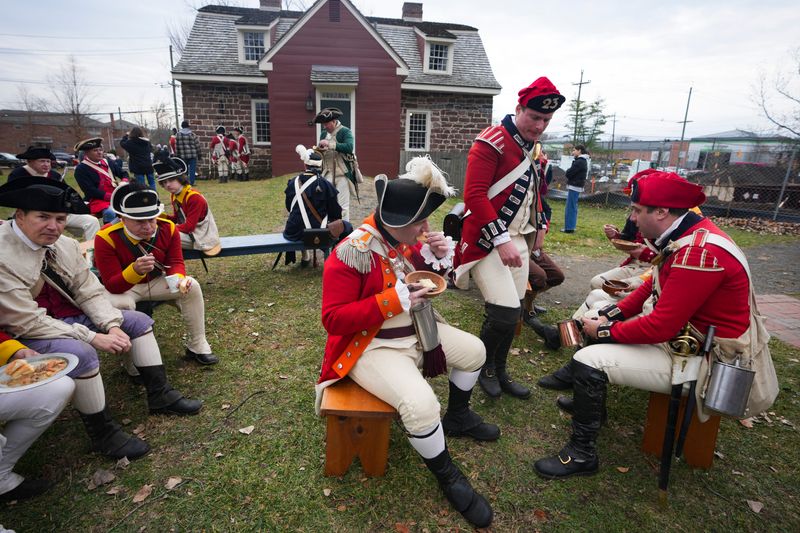
You don’t kill Hessians, draft a declaration and capture Yorktown on an empty stomach. Just what did the founders eat?

“I think it would strike us as bland,” said Charles Ludington, a former associate professor of food studies at New York University and the author of several books on the history of food.
“Partly because of the lack of spices,” he said. “But partly also because it was basically the British and Dutch who were the biggest influence on colonial taste.”
Yesterday’s specials
The American diet of 1776 is a mixed bag — some of it odd to modern tastes, some of it strangely familiar.
Turtle soup — if you could afford it — was a great favorite.
“Green sea turtle would have been really big then, and later Maryland terrapin,” Ludington said. “That was considered a really elite thing. And, of course, the sea turtles were brought in from the deep sea, but they can survive for a long time, and they would then be ritually slaughtered, in a two-day process.”
Pheasant, peacock and other game birds were favorite entrees among the well-to-do. Also venison.
“It was using meat as a sort of way to express your wealth and magnanimity to others when you’re serving them,” Ludington said.
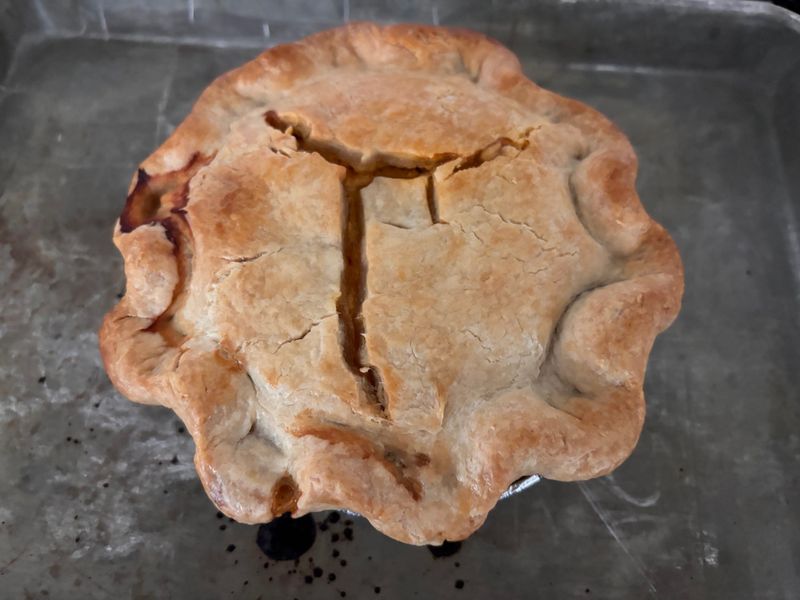
Pie was a favorite. Not dessert pie — although they had that as well. Savory pie. Meat pie.
“The remnant of that you might remember from your childhood is chicken pot pie,” Ludington said. “It’s kind of disappeared from the American repertoire.
“You could have a meal that was entirely of pies. A meat pie with some vegetables in it for your main course, and then a sweet apple pie or peach pie for dessert. We might think of that as heavy, because it’s pie pie pie. But it was a way of getting carbs.”
No burgers, no dogs
What wouldn’t you find? No hamburgers (brought by German immigrants of the later 19th century) . No hot dogs (ditto). No sandwiches, really — they had just been invented in England in the 1760s and had yet to make their way over here.
Few “dishes,” for that matter, as we understand them today.
You would serve a chicken, or a lobster. You would not serve chicken Française or lobster Newburg. Signature recipes, as such, were a French idea, and didn’t come over until later.
Salads were suspect. The colonists mostly didn’t like their fruits and vegetables raw. “They thought green salads were a little bit dainty,” Ludington said. Boiled green beans, cabbage and brussels sprouts were more to their taste.
Spices and refined sugar were expensive, and used sparingly. Molasses was the poor man’s sugar.
Our national dish?
So far, so unfamiliar.
But among these bygone favorites are a few old friends. Including the mother of all American comfort foods.
Mac & cheese! Every kid’s favorite. And, it turns out, Thomas Jefferson’s, too.
“It’s basically an Americanized version of an Italian dish, because macaroni is obviously of Italian origin,” Ludington said.
At Monticello, Jefferson’s country seat, macaroni and cheese was the house special. His chef, the enslaved James Hemings (brother of the much-discussed Sally Hemings, Jefferson’s slave mistress), had traveled abroad with his master and no doubt picked up some culinary tricks from his time in France and Italy.
“It was sort of a version of an Italian dish that probably Hemmings didn’t invent, exactly, but certainly Jefferson seems to have loved the dish,” Ludington said. “[Hemings] was a very good chef and figured out how to make it with inexpensive American cheese that could survive in the South, and also cream and dried pasta. Later on, of course, Kraft would make it easy for all of us.”
Back then, mac & cheese was an elite dish. “It was slightly rarefied,” Ludington said. “And it obviously over time becomes this sort of national dish.”
High class, low class
As mac & cheese sank in class, certain other favorites of the period rose on the social scale.
Oysters and lobster were working man’s food. In succeeding centuries, as oyster beds became polluted and shellfish more scarce, they took on new prestige.
“There used to be oysters all over New York harbor. They were all over Chesapeake. They were all over New Haven harbor,” Ludington said. “Baltimore was a huge producer of oysters. As industrialization occurred in the 19th century, oyster beds were destroyed by the pollution. The next thing you know, oysters become rare, and consequently they move upscale.”
As the genteel ate their pheasant, their gourmet macaroni and cheese, and topped it off with a trifle or syllabub (a layered dessert with fruit and cream or sponge cake, served in a dessert glass), what did the poor folks eat?
As a general thing, whatever they could get.
Catch as catch can
Stews were commonplace — one-pot meals that required just a fire, vegetables and whatever meat papa had shot that day.
“If you had the means, you would have beef or pork,” Ludington said. “If you had less means, you would have chicken, squirrel, raccoon or pigeon.”
Basically, the pot pies of the better-off, without the crust. But that was a telling difference.
Pies require baking. Baking requires ovens. And ovens, then, were the province of the well- to-do — the folks who could afford a bake house. Which is another reason macaroni and cheese — always baked, then — was an upper-class dish.
“To have a pot over a fire is cheap compared to an oven,” he said. “Anything that required baking would have been more for the elites.”
But the downscale folks had tricks of their own. Frying in oil was one of them.
Finger-licking good
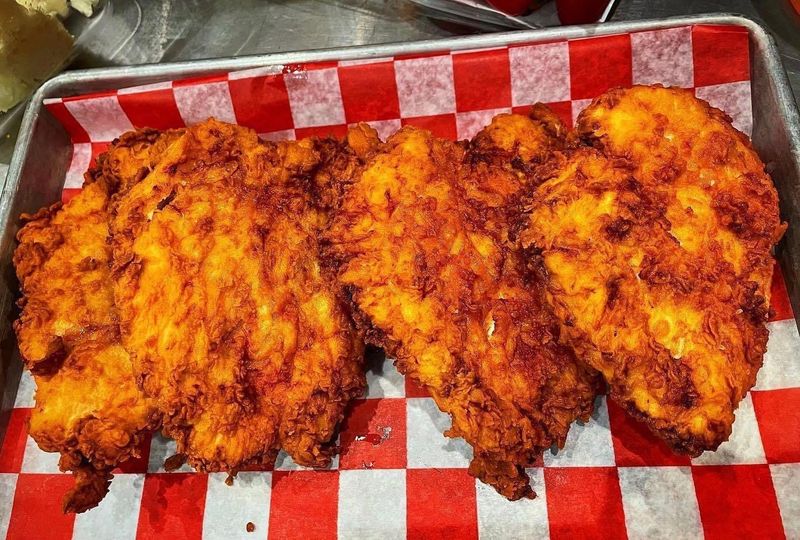
The well-to-do roasted. The poorer folk fried. And one of the great American dishes, already known to the colonists, was fried chicken.
It was a West African tradition, brought by enslaved people. There, they fried guinea fowl. Here, they fried chicken. It was a dish that was equally loved by White and Black Americans — though that didn’t prevent White folks from stereotyping it as a “Black” thing, later appropriating it for their fast-food franchises. “That’s a huge part of our cuisine,” Ludington said.
From Africans, too, came rice, and various kinds of boiled leafy vegetables: collards, kale and so on.
Indigenous Americans, meanwhile, provided America with pumpkins, squash and our national staple: corn. This the well-to-do mixed into their succotash, while the poorer folks ground it into grits and “Johnnycakes” — a kind of corn pancake that was known to travel well. The name may derive from “Journey Cake.”
“If you could cook them hard enough, you could bring them along as snacks in your leather pouch,” Ludington said.
And to drink?
How to wash it all down? Cider (apples, brought from overseas, were a signature crop of the colonists). Madeira, if you could afford it. And, after 1773, coffee. Never tea.
“Tea was the preferred stimulant up until 1773,” Ludington said. That was, of course, the year of the Boston Tea Party — when taxation of the beverage became a flashpoint in the escalating conflict with Britain. Overnight, Americans became coffee drinkers. As we remain to this day.
“For someone on the rebel side after 1773, tea was considered a Royalist drink,” Ludington said. “Coffee would have been a way to make a statement.”
This article originally appeared on NorthJersey.com: Menu of 1776: turtle soup, meat pies and mac & cheese
Reporting by Jim Beckerman, NorthJersey.com / NorthJersey.com
USA TODAY Network via Reuters Connect

By Jim Beckerman, NorthJersey.com | USA TODAY Network