

By Nora Eckert
DETROIT, June 29 (Reuters) – When Ryan Rodriguez landed a great deal on a model year 2024 Polestar earlier this month, he did not anticipate the brand would soon be in trouble in the United States.

Last week Polestar, which is majority-owned by China’s Geely Holding, said it was denied an authorization to sell new models in the U.S. under a federal rule that restricts cars with Chinese-linked connected-vehicle technology, beginning with the 2027 model year.
The news shocked Polestar drivers and dealers, prompting concerns over the resale value of their models, and the future viability of the brand’s service network in the U.S.
“I’m trying to stay optimistic,” said Rodriguez, who said he might have considered purchasing a different model had he known about the ban. He’s excited to drive the Polestar when he receives the EV this week, but worries about future warranty-related issues. “Five years down the road, what’s the plan?” he said.
The connected-vehicle rules were adopted in January 2025 under President Joe Biden, based on national security concerns linked to the ability of vehicles to collect sensitive data on American owners, and have been kept in place under the Trump administration. Other automakers are seeking exemptions for a small handful of models, including Ford Motor, which imports a Lincoln SUV from China.
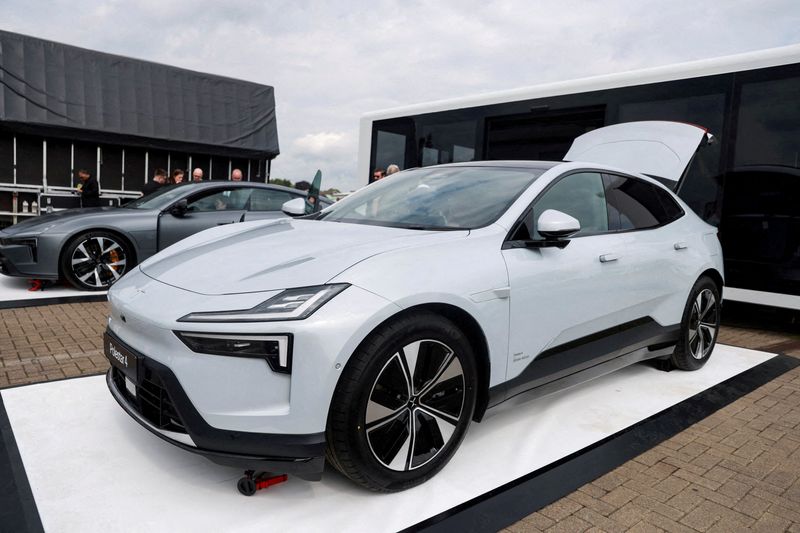
Polestar said it will continue to sell pre-2027 models in the U.S. and will also provide access to its service network. The company had planned to sell a 2027 model year Polestar 4 SUV and Polestar 7 compact SUV, a spokesperson said.
The ban surprised dealers, partly because Polestar’s sister brand, Volvo Cars, which spun off the EV brand years ago, received an authorization in May.
“It just doesn’t make sense how some brands could get a green light and we got a red light,” said Matthew Haiken, whose New Jersey Polestar dealership was among the first and largest.
Haiken, who is also a Volvo dealer, said it was a highly-competitive process to be selected as Polestar dealer, which he received in 2021. “I worked day and night to win the contest,” he said.
He had been preparing a new Polestar location in New Jersey, excited for new models to hit the U.S. market in the coming years. Now, he has to sustain his business with service and sales of used models.
On Polestar social media forums, some owners and shoppers said they were excited about the prospect of landing a better deal if resale values drop. Many likened it to the deals customers landed on EV brand Fisker when it went bankrupt in 2024, although some drivers of those EVs say they were stuck with a poor service network and experienced connectivity issues.
“I’ve been waiting for a cheap used Polestar 2, now may be my chance,” one user posted on Reddit.
Some drivers also worry whether their vehicles will continue to receive regular software updates, and whether the features available to the U.S. fleet will fall behind Polestar models in other markets.
Polestar said software updates and vehicle support will continue to be provided in accordance with product and service plans.
Drivers will likely be able to lean on the resources from Volvo’s existing U.S. network, said Karl Brauer, executive analyst at .
“I think having the other brand that is still in the country really blunts a lot of the otherwise negative effects,” he said.
Bill Baird and his wife have been thrilled with their 2024 Polestar, and want to drive it for years to come. He had considered upgrading to a newer model in the future, but the ban complicates things.
“I’d be a little wary of that, just for long-term support,” he said. He worries about what would happen if Polestar dealers go out of business, because his attempts to get service at Volvo dealers have been difficult.
A Polestar spokesperson said it will continue to supply service through its network of 32 centers, which are based in Volvo dealerships.
(Reporting by Nora Eckert in Detroit, additional reporting by Marie Mannes in Stockholm ; Editing by Mike Colias and Nick Zieminski)
By Nora Eckert | Reuters | © Copyright Thomson Reuters 2026.
