Before the summer began, Texas lawmakers required youth camps to comply with new rules aimed at protecting children.
Last July 4, devastating flooding swept through the Texas Hill Country. Nearly 140 people were killed along the Guadalupe River, including 28 at Camp Mystic, a 100-year-old summer camp.

The Texas Legislature’s report on the tragedy at Camp Mystic was released June 18, just weeks short of the first anniversary. The flood victims included 25 campers, two young adult counselors — both only 18 — and a camp leader.
After the flood last year, state lawmakers introduced new emergency planning and communication requirements for youth camps.
The Caller-Times spoke with leaders of Coastal Bend youth camps about how they have implemented these requirements. There are no youth camps with active licenses in Nueces County. However, Aransas County is home to Camp Aranzazu and San Patricio County is home to Scouting America South Texas Council’s Camp Karankawa.
“The new state regulations are well intended, and they are important for everybody to take seriously,” South Texas Council CEO Marty Sepulveda said. “I think those of us in the Scouting world have been taking the emergency action plans very seriously for a very long time, and to have the state now mandate that, I think, is welcome.”
What aspects of inadequate emergency planning were identified at Camp Mystic?
According to the Texas Legislature’s report, though Camp Mystic had a license to operate and had passed state inspections, it did not provide adequate training for staff in emergency situations and did not provide written emergency plans that specified how each occupied building would be evacuated in the event of flooding.
Camp Mystic’s plans directed campers to shelter in place and await further instruction during flooding. Though the camp had a public address system that was regularly used, the system was not used to deliver evacuation instructions to campers and counselors. Walkie-talkies were not issued to individual cabins or cabin counselors, and both campers and counselors were prohibited from having mobile phones in cabins, according to the report.
Though the camp had access to weather updates available to the general public, senior leaders went to bed unaware of the potential for extreme weather, according to the report. As adult camp staff became aware of the severity of the storm, they hadn’t been assigned specific responsabilities to assist with evacuation.
The details in the report are harrowing, describing how late, uncoordinated evacuation efforts left teenage counselors to decide how to protect the young children in their care without adult guidance. Some cabins were evacuated by senior leaders by vehicle — to a 100-year-old structure where they had to climb to a second-floor internal balcony just inches above the peak of the flood water — while other counselors evacuated their campers on their own initiative on foot.
Others continued to shelter in place, “awaiting instruction as instructed by the camp’s written emergency plan.” In one cabin, campers and counselors, along with the night watchman, survived by floating on mattresses into the rafters. In two cabins, “the counselors were left with no choice but to push the cabins’ 8- to 9-year-old campers underwater and out the door and windows in hopes they could find safety.”
According to the report, “available evidence strongly suggests” that the campers and counselors of the Bubble Inn cabin perished with the camp director after loading into a vehicle that swept into the Guadalupe River.
In the aftermath, the families of campers “were traumatized by incomplete and conflicting information while waiting to learn whether their loved ones had survived.”
How did Camp Mystic influence state policy?
The Texas Legislature passed two statutes related to youth camp safety in fall 2025: the Youth CAMPER Act and the Heaven’s 27 Camp Safety Act, named for the Camp Mystic campers and counselors who perished.
The Youth CAMPER ACT requires youth camps to develop, implement and annually update a written emergency plan; train each staff member and volunteer on that plan every year’ orient campers on their roles; notify parents or guardians if any portion of the camp is within a floodplain; and share the emergency plan with local emergency-management personnel.
The Heaven’s 27 Camp Safety Act bars the state from licensing youth camps that operate cabins within a floodplain and requires camps to maintain an operable radio capable of receiving real-time National Weather Service alerts; install emergency warning systems; monitor alerts issued by NWS and local river authorities; and submit emergency plans to the state for approval annually.
It also initially required youth camps to maintain redundant internet connectivity, including an end-to-end fiber optic broadband connection. However, the Department of State Health Services later announced it would not deny or revoke youth camp licenses for not meeting the fiber optic requirement so long as the camp maintained a redundant broadband connection.
How have Coastal Bend camps responded?
Both Camp Aranzazu and Camp Karankawa leaders say their camps have long practiced emergency planning.
Both camps are very different from Camp Mystic in terms of their operations and locations.
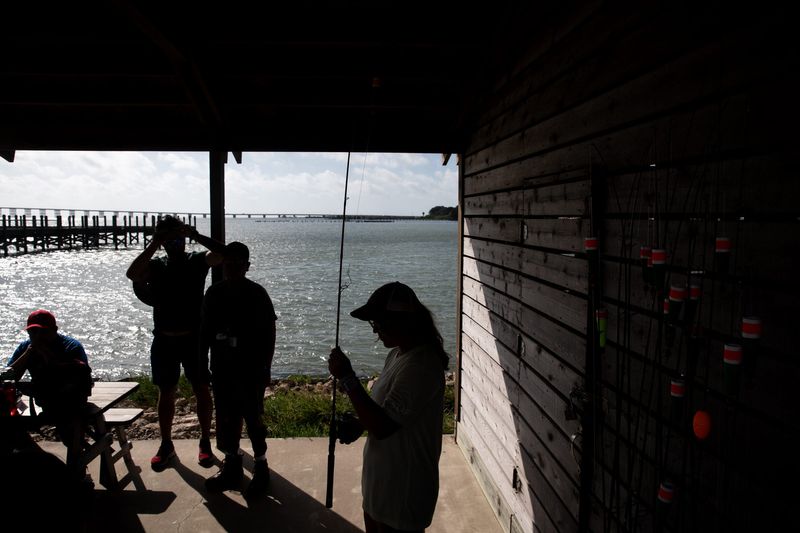
Camp Aranzazu is a nonprofit that hosts groups of campers with disabilities, medical diagnoses and unique challenges through partnerships. One of its biggest partners is Driscoll Children’s Hospital.
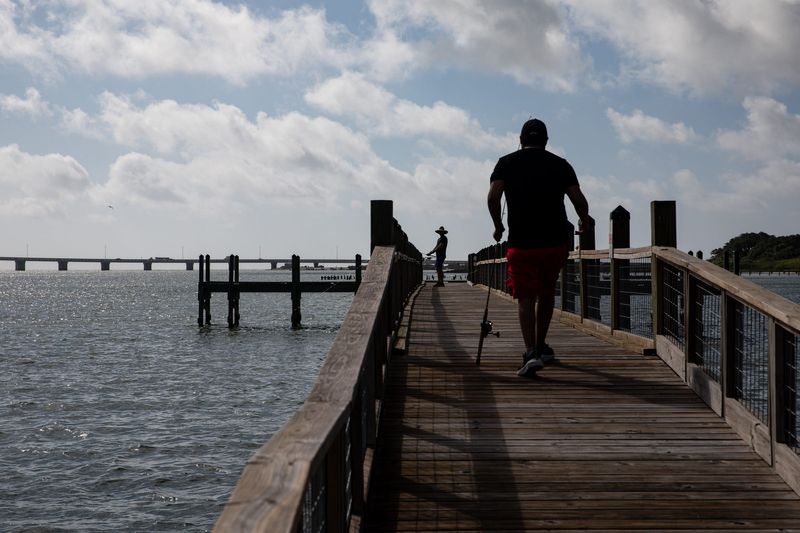
Though the camp is located on the shores of Copano Bay, Federal Emergency Management Agency floodplain maps show that none of its cabins are located in a floodplain.
Camp Aranzazu has been accredited by the American Camp Association since 2006.
“We started from a spot of already having a lot of the things in place prior to these new regulations,” Camp Aranzazu President and CEO Kurt Podeszwa said.
The camp was able to add high speed fiber optic internet, he added. The camp also added solar lighting to pathways, which are already paved or deck walkways. Another new element is a PA system reaching every cabin.
“It there was an evacuation or if people need to make it to a muster point and it was at night, they’d be able to see the lighted pathways,” Podeszwa said.
Every year, Camp Aranzazu brings the local emergency response team on site for training, also hosting an EMS-appreciation luncheon to foster a close relationship.
The camp’s emergency actions have historically been shared with local first responders in addition to American Camp Association accreditors. Part of this plan includes evacuation plans for individuals with mobility issues — Podeszwa said that partner organizations often come with accessible buses or vehicles, but the camp also has connections with local emergency responders to have accessible vehicles ready if needed.
“We train our staff on those emergency action plans and then rehearse with them so they know what to do in case there is some sort of emergency,” Podeszwa said.
Campers and counselors are also trained. Emergency action plan flip books have been placed in each cabin. Each cabin leader also has a radio.
Camp Karankawa, operated by Scouting America, is located on the shores of Lake Corpus Christi. It features campsites. Despite its proximity to water, none of the campsites are located in a floodplain.
The camp’s emergency action plan outlines exactly who is responsible for each aspect of emergency response, outlining prompt training requirements for campers and staff.
The plan is submitted to San Patricio County Emergency Management, as well as to local first responders. The camp is accredited by the National Camp Accreditation Program.
The plan is also shared with parents and posted online.
The plan lays out protocols for flash flood, fire, dangerous wildlife, hazardous material exposures, medical emergencies, missing person incidents, active shooters, shooting sports incidents, epidemics, tornadoes, hurricanes and earthquakes.
“Scouting America camps across the country have always been in the forefront of safety and emergency planning,” Sepulveda said.
Camp Karankawa was one of the Texas camps that struggled with the state’s fiber optic requirement. Sepulveda said that it was too expensive for the organization to install quickly as a result of the rural location of the camp.
Camp Karankawa did add satellite Internet service through Starlink in addition to existing non-fiber optic internet service. Staff members and scout leaders have radios and the camp has a siren system.
“I think the biggest threat to any camp in the Coastal Bend or South Texas is always a tropical storm or hurricane,” Sepulveda said. “When you have a hurricane, you’re days out, so you can plan and prepare.”
Camp Aranzazu canceled a planned camp before campers arrived due to Hurricane Beryl. The camp was directly hit by Hurricane Harvey, with no campers or staff on site.
Both Camp Aranzazu and Camp Karankawa monitor hurricane risk and cancel camp if one is coming.
Olivia Garrett reports on education and community news in South Texas. Contact her at olivia.garrett@caller.com.
This article originally appeared on Corpus Christi Caller Times: How Coastal Bend camps applied new safety rules after Camp Mystic tragedy
Reporting by Olivia Garrett, Corpus Christi Caller Times / Corpus Christi Caller Times
USA TODAY Network via Reuters Connect
By Olivia Garrett, Corpus Christi Caller Times | USA TODAY Network