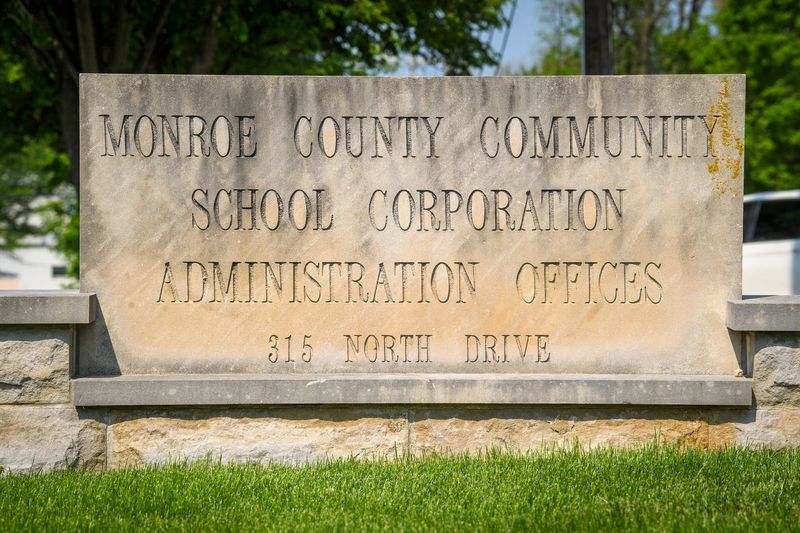
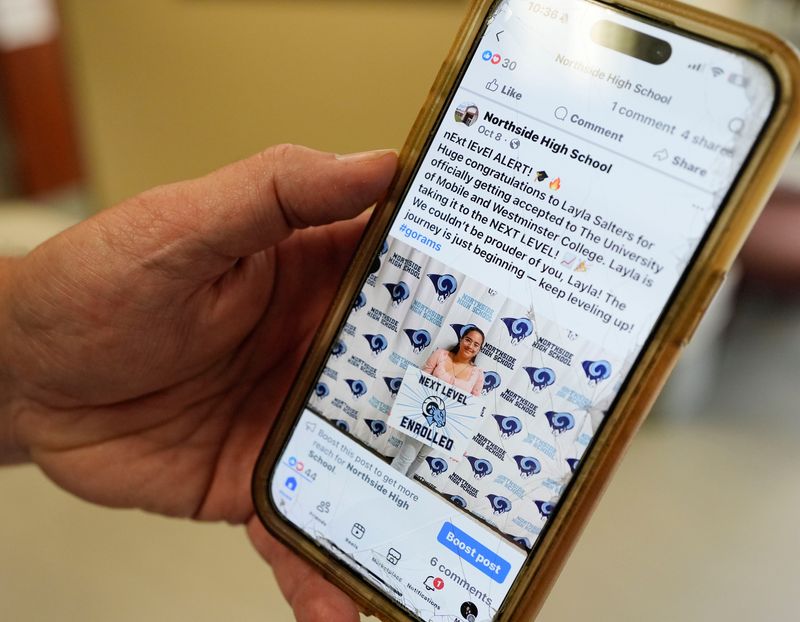
When Monroe County Community School Corp. students go back to school this fall, they will no longer be allowed to have personal cellphones, laptops, smart watches and other wireless electronic devices with them during the school day.
On Tuesday, June 23, the MCCSC school board voted 5-1 to update the school corporation’s policy on wireless communication devices (WCD) as required by Senate Enrolled Act (SEA) 78 passed this year by the General Assembly. SEA 78 requires public and charter schools to prohibit students from using personal WCD during the school day and goes into effect on July 1.

One person, a parent of two MCCSC students, spoke during the public comment portion of Tuesday evening’s meeting. Susan Ellenwood expressed concern about what would happen at schools during an emergency situation. She said that after receiving texts about school issues, she often checks on her children by texting them.
April Hennessey, who was the sole board member to vote against the policy update. She also asked the board’s attorney, Tom Bunger, what would happen if the board did not pass the policy update to comply with SEA 78. He replied, “I’m sure Todd Rokita would take action,” filing a lawsuit. “He would love that opportunity. That’s what would happen.”
Board member Ross Grimes, who made the motion to approve the policy, stated he did so “reluctantly.” Board member Erin Cooperman said she voted yes so the school corporation would be in compliance, with the other board members agreeing.
What’s included in the new policy
When introducing the MCCSC proposed update to the policy, Alexis Harmon, director of technology and communications, explained SEA 78 requires a “bell-to-bell” prohibition of using personal wireless communication devices by students. The devices must be powered off and stored in an approved area during the school day. Audio-only devices for notetaking can be used by students but there are specific limitations on the audio and its use.
Students’ WCD are allowed to be used before and after school, while they are on buses, with an order from a licensed health care provider for a student’s medical condition and if the student has special individualized accommodations. In the event of an emergency, students will be given access to their personal wireless devices, Harmon said.
The storage area will be determined by the school principal. The storage area will differ for elementary, middle school and high schools and could include lockers, backpacks or other areas. Harmon said there will be training for all principals and teachers dealing with the new policy.
The first offense for students not complying with the policy will result in a warning and confiscating the device during the school day and returning it after school ends, Harmon said. Second offenses will include confiscating the device and additional developmentally appropriate consequences. A third offence will add the potential loss the device privilege.
Hennessey acknowledged that there are problems with cellphone use in schools. She said her primary concern about the new policy is inconsistent “application,” with different storage locations, access and potentially varied disciplinary action leading to inequitable disciplinary response.
Harmon said the administration has already “done a lot of the work and thinking” about the new policy. She said for the past few years middle school administration and teachers have had a policy dealing with students’ personal electronic devices that have helped in forming the updated policy. They will share with what has worked and apply that with this new policy.
Hennessey said she would like to see data tracked as the policy is enforced, to ensure there is no disparity in its enforcement. Superintendent Markay Winston said that is something that can be done, providing updates on a quarterly basis.
Hennessey also spoke about the fact that the new policy will “drain” both administrators and teachers, taking time and costing MCCSC more money. The new policy also gives parents “more fodder” to place their students in other schools, she said.
What devices will be allowed in MCCSC?
The school-issued laptops and other electronic devices will be allowed during the school day. Those devices have filters that limit what students can access, according to Harmon.
Contact Carol Kugler at ckugler@heraldt.com.
This article originally appeared on The Herald-Times: MCCSC board OKs policy to prohibit student use of wireless devices
Reporting by Carol Kugler, The Herald-Times / The Herald-Times
USA TODAY Network via Reuters Connect
By Carol Kugler, The Herald-Times | USA TODAY Network