

Florida’s summer heat slapped much of state over the weekend.
It’s not over.

A heat advisory was in place June 15 in South Florida, and all residents need to be prepared for what’s ahead.
➤ Weather alerts via text: Sign up to get updates about current storms and weather events by location
Think only South Florida has to worry about the heat and humidity? Some areas in the central Panhandle experienced a heat index of 112 over the weekend, according to the National Weather Service Tallahassee.
But which is worse: hot, humid conditions like Florida is known for, or dry heat most often associated with the southwestern United States?
Shop at Home Depot to stay cool in Florida heat
Why is Florida so humid?
Look at a map and you’ll understand why Florida is so humid.
“Florida is a peninsula surrounded by water on multiple sides,” said meteorologist Zach Law with the National Weather Service Melbourne via phone June 15.
➤ Heat myths vs facts as Florida residents face summer temps
“There’s warm water in the Gulf and warm water in the Atlantic. We get a lot of moisture, which causes high humidity in the summer.”
Don’t count on sea breezes making you feel cooler. Some compare the experience to a breeze in a sauna.
Is Florida the worst state in US for humidity?
Any area along the Gulf or Atlantic can experience humid conditions; it just depends on the wind direction, Law said.
➤ What’s the best temperature to set your AC in Florida heat wave?
“What makes Florida unique is all the conditions that exist that can bring high moisture.”
Shop Lowe’s for air conditioners
What are worst months for humidity in Florida?
Florida’s humidity starts to increase in late May and generally continues through July and August and even into September, Law said.
What does heat index mean?
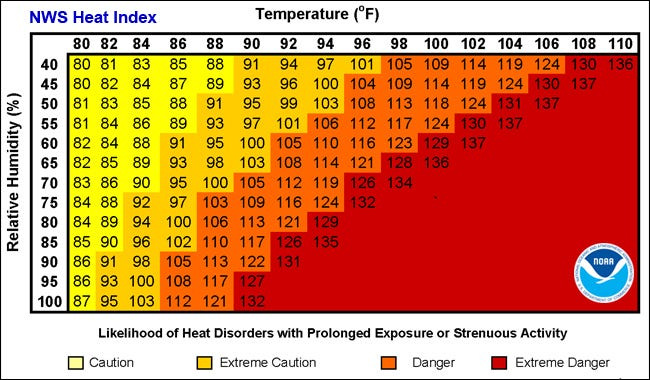
Heat index or the “feels-like” temperature is the combination of humidity and air temperature.
➤ How hot is too hot to exercise?
Also known as the apparent temperature, the heat index “is what the temperature feels like to the human body,” according to the National Weather Service.
It’s important to note the heat index chart calculates the apparent temperature based on conditions in the shade.
In direct sunlight, the “feels-like” temperature could be up to 15 degrees higher, according to the National Weather Service.
What does heat index above 100 really mean?
The National Weather Service said a heat index equal or greater than 103 “can lead to dangerous heat disorders with prolonged exposure and/or physical activity in the heat.”
Here’s what those heat index numbers really mean: according to the National Weather Service:
Why is high humidity dangerous?
To understand why high humidity is dangerous, it’s important to understand how the body tries to stay cool to keep the body safe.
“When the body gets too hot, it begins to perspire or sweat to cool itself off. If the perspiration is not able to evaporate, the body cannot regulate its temperature,” according to the National Weather Service.
“When the environment is very humid, it is harder for the sweat to evaporate and cool you down,” said AccuWeather meteorologist Alex DaSilva via email.
“The sweat stays on you for longer periods of time. This is why you get much sweatier on days that are more muggy out. When its hot and dry, the sweat evaporation process is more efficient and allows you to better cool yourself off.
“In other words, the human body feels warmer in humid conditions. The opposite is true when the relative humidity decreases because the rate of perspiration increases. The body actually feels cooler in arid conditions.”
Which is worst: Florida humidity or dry heat?
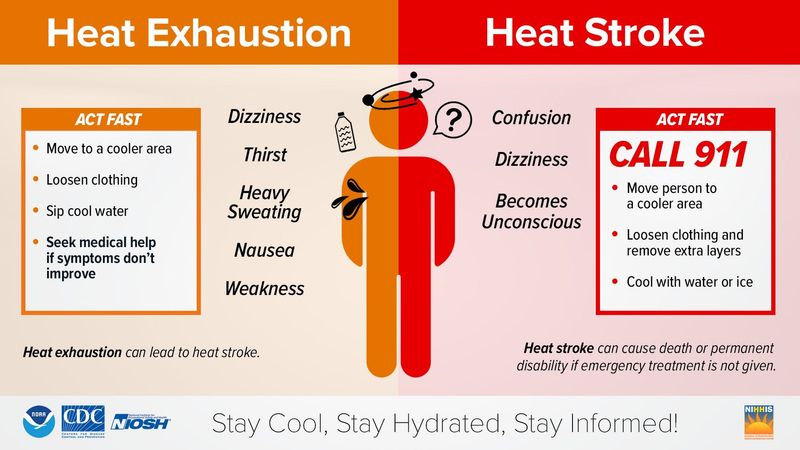
Understand this: Both can be dangerous. If your body cannot cool down, heat exhaustion or deadly heat stroke can occur.
When conditions are extremely humid, the body can’t cool itself through sweat evaporation.
Dry heat brings a high risk of becoming dehydrated without realizing its happening, Law said.
But whether humidity is more dangerous is up for debate among experts.
“When extreme heat is combined with high humidity, the health risks multiply,” according to Climate Central.
“Humid heat feels more oppressive than dry heat, and it stands to reason that it would be more be deadly, but analyses of population-wide mortality rates suggest otherwise,” according to science.org.
“Epidemiologists … have concluded that temperature alone accurately predicts heat-related death rates; adding humidity does little to improve their predictions.”
AI comparison: ‘Wet blanket’ vs ‘The furnace’
Here’s an AI comparison between Florida heat (humid) and Arizona heat (dry):
Florida heat, the “wet blanket”:
Arizona heat, the “furnace”:
Bottom line:
Many heat-related deaths preventable
A lot of heat-related deaths are preventable. Plan around the heat, Law said. Schedule events in the morning or late in the day.
➤ Florida’s excessive heat is deadly to dogs. How to keep them safe
If you have to be outside, hydrate and take frequent breaks in the shade or air conditioning.
“Whatever you do, don’t leave children and pets in unattended vehicles, not even for 5 minutes,” Law said.
Criteria used in Florida for heat advisories, extreme heat warnings
Initial signs of heat illness
The initial signs of heat-related illness are muscle cramps and thirst, according to the National Weather Service.
Symptoms of heat exhaustion
The initial signs of heat-related illness can progress to heat exhaustion, which has symptoms that look like:
“If you’re experiencing heat exhaustion for an extended period of time, it can lead to heat stroke. Heat stroke can come on quickly if it’s very hot or you’re overexerting yourself,” Healthline said.
Symptoms of heat stroke
According to the CDC, heat stroke is the most serious heat-related illness. The symptoms of heat stroke include:
How do you know if you’re dehydrated?
“Dehydration is a condition in which you lose so much body fluid that your body can’t function normally. It occurs when you lose more fluids than you take in,” according to Cleveland Clinic.
“Water is important to your body, especially in warm weather. It keeps your body from overheating.”
A simple way to see how well hydrated you are is to check your urine.
According to Dartmouth Health, pale, light yellow, or mostly clear urine that is relatively odorless usually means you are well-hydrated.
If your urine is a dark or medium yellow, or if you urinate infrequently, it is a sign you are becoming dehydrated and need to increase your fluid intake.
What’s the fastest way to cure dehydration?
The fastest way to cure dehydration is to drink water, according to Cleveland Clinic.
Should you ‘pre-hydrate’ if you’ll be outside in Florida heat?
“Thirst is a signal, but it’s not instantaneous,” according to Laura Acosta, instructional associate professor of food science and human nutrition at the UF/IFAS.
➤ Heat myths vs facts as Florida residents face summer temps
“By the time you feel thirsty, your body may already be slightly dehydrated. This is especially true in certain situations, such as prolonged exercise (60 to 90-plus minutes), hot or humid environments and heavy sweating or fluid loss.
“Waiting when you are in these situations until thirst kicks in can be dangerous, as dehydration can escalate quickly. Athletes and people working or exercising in the heat are often advised to begin activities well hydrated and continue drinking fluids at regular intervals.
“Pre-hydrating is a wise idea when you’re planning to exercise or spend time in the heat.
“Drinking a cup or two of water ahead of time, and taking regular hydration breaks throughout, can help you feel and perform your best and prevent complications from dehydration.”
Stay informed. Get weather alerts via text
What’s next?
We will provide weather coverage as conditions warrant. Download your local site’s app to ensure you’re always connected to the news. And look for our special subscription offers here.
Cheryl McCloud is a journalist for the USA TODAY Network-Florida’s service journalism Connect team. You can get all of Florida’s best content directly in your inbox each weekday day by signing up for the free newsletter, Florida TODAY, at news-journalonline.com/newsletters.
This article originally appeared on Palm Beach Post: Wet blanket or furnace? Is Florida humidity more dangerous than dry heat?
Reporting by Cheryl McCloud, USA TODAY NETWORK – Florida / Palm Beach Post
USA TODAY Network via Reuters Connect

By Cheryl McCloud, USA TODAY NETWORK – Florida | USA TODAY Network
