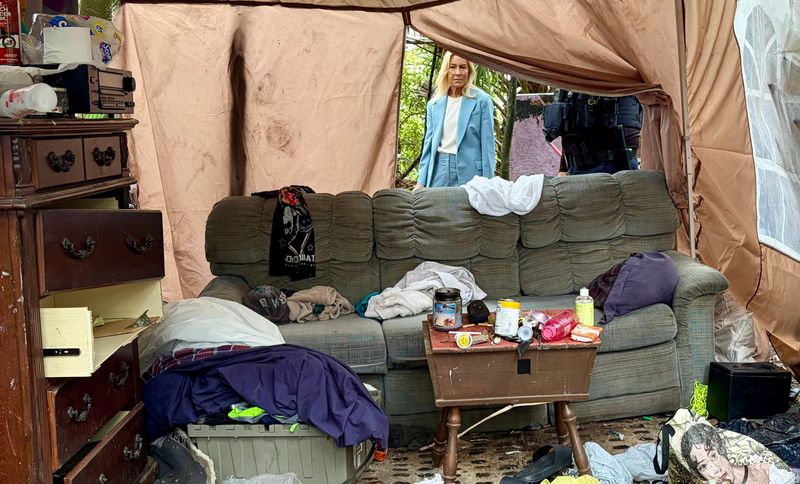
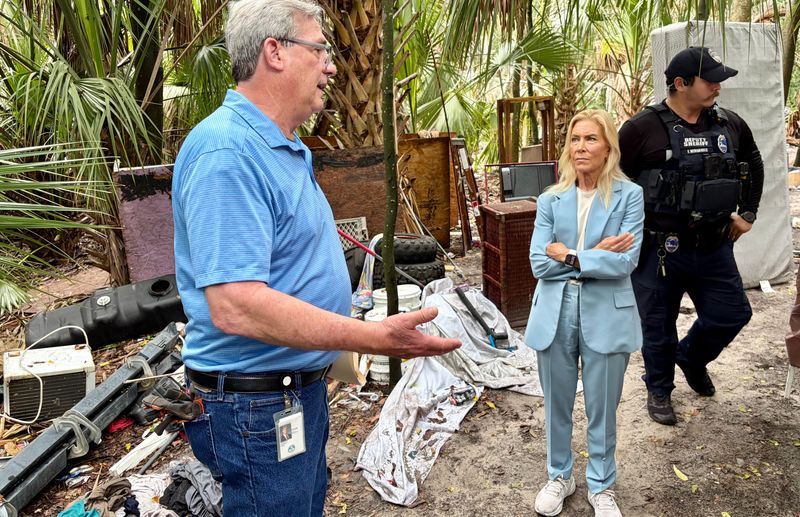
Al Ferraro started the morning at a debris-filled homeless camp where a tattered tent covered a small sofa and a wooden dresser just across the fence line of a North Main Street subdivision and a short walk from the city’s S-Line recreation trail.
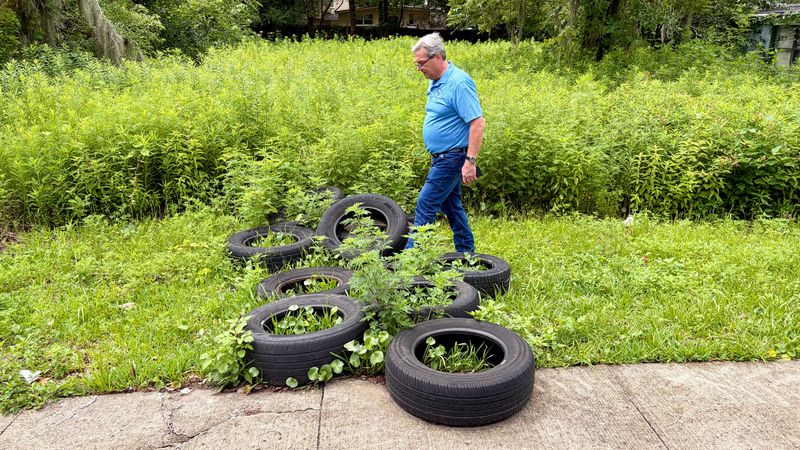
Then Ferraro, manager of the city’s blight initiatives, went to an overgrown lot on Clyde Drive where someone had dumped 13 used tires on the grassy roadside.

His third stop before lunch was off 103rd Street where a homeless woman had created a makeshift shelter next to a drainage ditch in the woods behind a medical office.
“They’re all over the place,” a resident of a neighborhood on the other side of the ditch said after telling Ferraro where to find the site.
Ferraro, who deals with such incidents across the city, said he hopes a new tool in the strategy for fighting blight will help the city go on offense instead of just reacting.
The city has purchased surveillance cameras for installation at hot spots where illegal dumping keeps happening even after crews have cleaned them up.
Mayor Donna Deegan said the cameras will help the city work with the Jacksonville Sheriff’s Office to bring charges against offenders who otherwise go undetected.
“The bottom line is if we can’t see these people in the act where the police can hold them accountable, when they go off and just repurpose in another place or re-dump again in another place, it’s just whack-a-mole,” she said. “But if the police can have some hard evidence against them, that’s why we have the cameras.”
Ferraro said some offenders are so brazen that they dump tires and other items were the city installed signs warning illegal dumping carries fines up to $5,000.
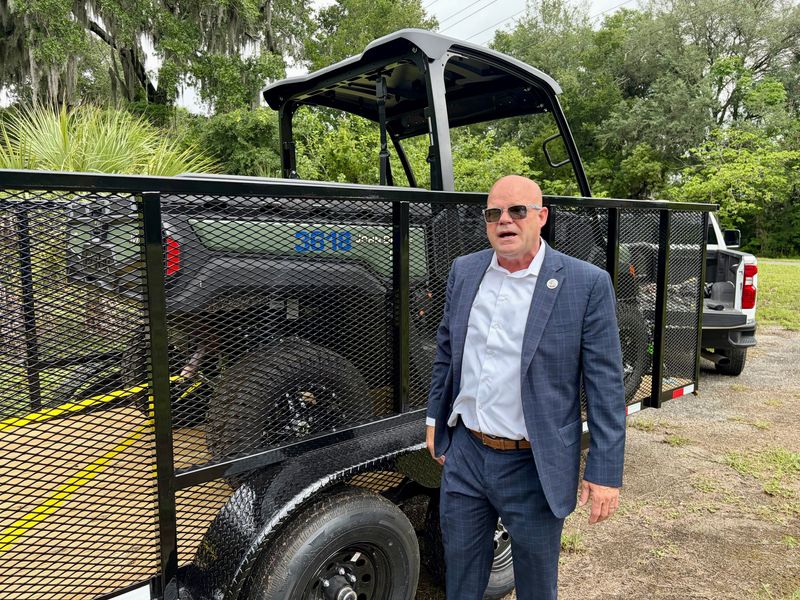
The city used a $400,000 addition to this year’s budget for purchasing the cameras, two side by side off-road vehicles and two trailers. The new equipment will increase the pace of cleanups. The money also paid for wrapping a trailer and purchasing supplies such as gloves for volunteers in the city’s Keep Jax Cute, Don’t Pollute campaign and after-hours and weekend cleanups by private contractors.
A year ago, Deegan proposed adding $1 million to this year’s budget but City Council cut that request. When she did town hall meetings earlier this year, people repeatedly come forward to complain about litter along roadsides, illegal dumping and homeless camps. Deegan sought the $400,000 as a mid-year budget addition and won council support for it.
“To me, it’s a core service,” she said. “It’s like garbage pickup. You’ve got to pay attention to blight if you’re going to have a world-class city or if you’re going to have a city where people feel safe.”
The city rolled out the new equipment to help clean up debris at a homeless camp in woods off North Main Street. The camp was set up near the S-Line recreational trail and just across the fence from a subdivision whose backyards were in view of the camp where outdoor burning had occurred.
If the fire had spread to the woods during the drought conditions, Deegan said, “All those homes would have been at risk.”
Ferraro, who served eight years on City Council and ran for mayor in 2023 before joining Deegan’s administration, said the city gets calls about blight across the city
Over a roughly two-year period, the city responded to 1,202 complaints. The biggest share of complaints was in City Council district 7, which runs from Avondale through downtown into northwest Jacksonville with 307 incidents.
District 1 covering Arlington had the second-highest number with 201 complaints followed by District 2, spanning a chunk of the Northside and part of East Arlington, with 161 complaints.
The fewest complaints were in District 6 in Mandarin with 11 complaints and District 13 at the Beaches with 13 complaints, according to figures compiled by the city.
The calls involve graffiti, vandalism, illegal dumping of tires and furniture and appliances, and homeless camps that are tied to the bigger problem of finding ways to reduce the number of people who are homeless and create their own shelters in woods.
Ferraro said the $400,000 on top of $250,000 already in the budget will help respond faster to those complaints and do the clean-up. But he said it’s still less than the $2 million budget the city had 20 years ago for blight-fighting programs when Jacksonville had several hundred thousand fewer residents.
“We’re tapping into every resource we have but people still have got in their minds that they can come out there and do stuff like this with no consequences,” he said.
The surveillance cameras will put some teeth into the city’s enforcement, said Richard Reichard, director of administrative services for the city.
He said the city will be able to move the cameras to different hot spots and connect them to the Sheriff’s Office camera network.
“So they’ll be able to look at this stuff, see who’s doing it, catch these people, arrest these people and hopefully keep them from coming back,” Reichard said. “We didn’t have any of that before. In six months, you’re going to see a huge impact, huge difference.”
This article originally appeared on Florida Times-Union: Jacksonville using surveillance cameras to catch people blighting city
Reporting by David Bauerlein, Jacksonville Florida Times-Union / Florida Times-Union
USA TODAY Network via Reuters Connect