Thousands of Milwaukee children are growing up with poison in their blood.
It courses through their veins, cements in their bones and threatens to rob them of impulse control, learning ability and physical health.

The insidious toxin lurks where kids are supposed to be the safest, at home.
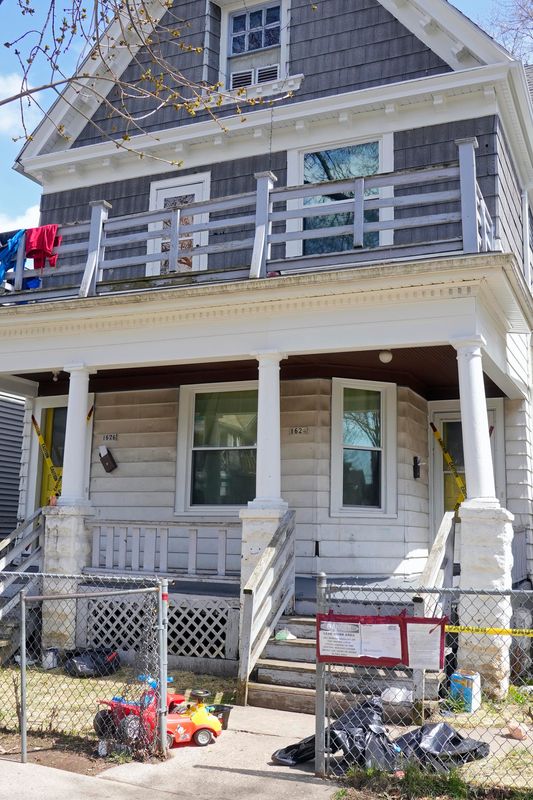
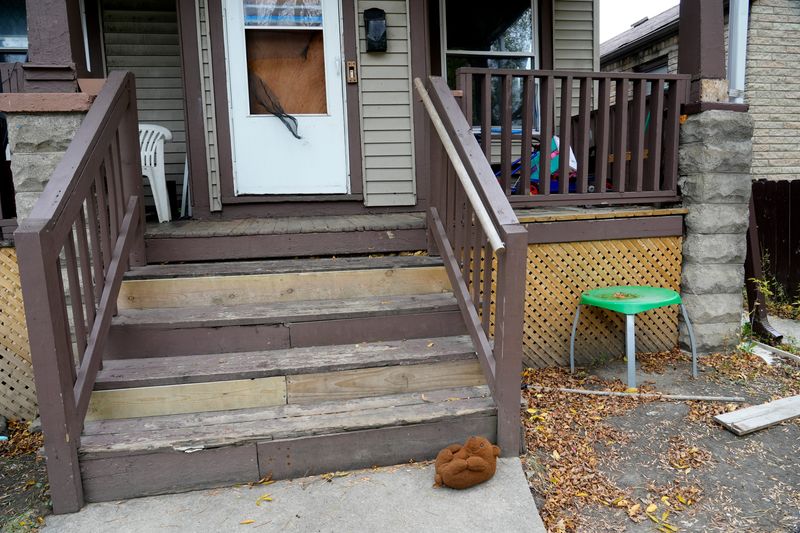
It flakes off front porches where families gather, collects on sills after an old window is opened and burrows under fingernails as children play in yards.
Lead, a heavy metal once used in paint, pipes and gasoline, causes devastating effects to the human body, particularly for children.
Lead poisoning can be prevented – and Milwaukee once showed the country how to do it.
The city was a national leader for its approach in educating residents, fixing lead hazards and holding property owners accountable. But the program fell apart when leadership changed and community relationships withered.
The fallout did not land equally across the city.
That’s because lead, as the saying goes, is a health problem with a housing solution. And in Milwaukee, housing cannot be untangled from the city’s history of racial segregation.
Black children growing up in properties, often rentals, in the central and north side of the city have higher rates of lead poisoning than White children in other parts of the city, even though the ages of the homes are comparable. A similar disparity appears in the city’s predominantly Latino near south side.
Fewer children in Milwaukee today have the extraordinarily high lead levels seen in the last century and early 2000s, but the neighborhoods where children are most likely to have high lead levels remain largely the same.
While many worry about the risk of lead pipes, data shows children have lower lead levels in neighborhoods with the highest concentration of lead service lines, such as Bay View. The data points to housing and deteriorating paint as the most likely source of poisoning.
“A kid being poisoned by lead is heinous,” said Richard Diaz, chairman of the Coalition on Lead Emergency, a resident-led advocacy group.
“I don’t want to see any kids poisoned anywhere, but there’s just data that show where kids are poisoned the most,” Diaz said. “And we need to focus on those areas.”
The three-decade arc of Milwaukee’s lead program – from the “strongest in the nation” to a spectacular fall from grace to the current period of rebuilding – makes clear that leadership and accountability matter for the wellbeing of the city’s most vulnerable children.
The city’s Health Department – the main agency tasked with responding to children with lead poisoning – squandered at least 15 years of work and allowed the nationally lauded program to devolve into chaos, a Milwaukee Journal Sentinel investigation found.
After a series of new commissioners and $24 million in federal pandemic aid, the Health Department has stabilized the lead program, for now. But the money runs out this year, and department staff and the community partners they’ve come to rely on are facing a tipping point – and they don’t want to repeat mistakes of the past.
Milwaukee once led the nation in protecting kids from lead. Can it do so again?
Milwaukee was once a national leader in helping solve the nation’s lead-based paint problem
In February 1999, parents of lead-poisoned children crowded into City Hall to push for Common Council action.
“Stop using children as lead detectors,” read the yellow armbands worn by supporters of new lead legislation.
The proposed three-year pilot ordinance required the cleanup of about 1,000 pre-1950 rental homes in two high-risk neighborhoods, one on the north side and one on the south side. Homes built in that era typically have paint with the highest concentrations of lead.
With the ordinance, Milwaukee would become one of the first cities in the country to try to clean up homes before a child was poisoned instead of in response.
In all, about 100 people made their way downtown.
Detractors raised concerns about the repair costs, despite a $3 million federal grant to support the work. Several said the city should sue lead manufacturers to pay for some of the cleanup costs instead of putting the burden on landlords.
The measure passed through committee, and days later, received unanimous support from the full council.
Mayor John O. Norquist signed the legislation. He agreed the industry should help pay for the costs but said the issue needed to be addressed faster than a lawsuit would allow.
To lead program leader Amy Murphy, the turnout at the hearing was the culmination of years building bonds between the Health Department and community groups. A lawsuit against paint companies also eventually grew from that community advocacy.
“The secret sauce for community-level action is to have an engaged community that is most affected and asks for what it needs,” Murphy said.
When she joined the department seven years earlier, it was clear lead was a pressing problem.
A door-to-door initiative had found 80% of children in the north side Metcalfe Park neighborhood had concerning lead levels. The ensuing outcry led to a local lead poisoning prevention and control ordinance.
The Health Department, along with advocacy group Citizen Action of Wisconsin, built partnerships with organizations that could reach Milwaukee’s diverse communities.
“I would say that would be the Golden Age of lead, to try to educate people,” said Lo Neng Kiatoukaysy, executive director of the Hmong American Friendship Association.
The association helped overcome language, cultural and trust barriers to reach Hmong, Thai and Lao families whose children had been poisoned by lead. It promoted lead education at its back-to-school health fairs and community garden plots.
By 2000, the association landed contracts with the city for community engagement and the removal of lead hazards from homes. About a dozen staffers trained up to do the lead removal or serve in a support role.
Hmong clan leaders invested in the effort and turned out residents to push for action at City Hall.
Others took a dimmer view of the department’s action.
Many landlords thought the system in the early 1990s left them to fund costly remediation, said Tim Ballering, past president and a current director at the Rental Property Association of Wisconsin.
City rules and incentives to address lead hazards changed frequently, he added.
“It was kind of all over the place,” Ballering said.
Even a federal evaluation found mixed results. The pilot ordinance that drew so many to City Hall had lowered the lead dust on window sills and troughs, but did not lower children’s lead levels as expected.
Still, measuring what worked, and what did not, was a core tenet of the Health Department at the time.
“We never – at least I never – took the approach that we had the answer, and it was done,” Murphy said.
Milwaukee gathered momentum on lead, and its efforts were dubbed ‘strongest in the nation’
Today, it’s widely understood that no amount of lead is safe, and that lead poisoning is preventable, even in cities with old housing stock.
Exposure, even at low levels, can stall learning and lead to other behavioral challenges. Studies in Milwaukee have found links between childhood lead poisoning and school discipline, and the risk of becoming a victim or perpetrator of gun violence.
But three decades ago, public health officials and researchers were untangling the primary sources of lead poisoning and how best to control them.
In 1992, a new federal regulation known as Title X ushered in changes across the country and sent money to states and municipalities to respond to lead poisoning.
The law also mandated a groundbreaking evaluation of new methods to address lead hazards from deteriorated paint, dust and bare soil. Milwaukee and Wisconsin were two of just 14 cities, counties and states to take part.
Murphy’s team in Milwaukee had the buy-in from Health Department leadership to try new tactics. The city became known for its work on windows, correctly identifying the area as the most common lead exposure point. It focused money there, knowing that removing all lead from a low-income rental would quickly exceed the value of the property.
Murphy estimated the budget increased from about $1 million to $8 million over her 15 years and that the staff multiplied to dozens of people.
The expanded team included nurses who made sure kids were tested and then retested to track their lead levels. They also kept tabs on whether the exposure source had been removed.
Outreach workers, who often lived in the same neighborhoods where they worked, talked to families about managing lead hazards and reducing the severity of lead poisoning through nutrition.
The department hired more inspectors and gave them detailed training on writing orders for property owners to clean up hazards and to make sure the owners followed through.
The department also boosted its laboratory’s capacity to analyze blood, dust and paint for lead.
“We were so passionate and so aggressive,” Murphy said.
Others around the nation took notice.
From Cleveland, soon-to-be Milwaukee Health Commissioner Seth Foldy was watching.
“That was a period of several years when lead programs across America were looking to Milwaukee and asking, what’s next?” said Foldy, who was commissioner from 1998 to 2004 under Norquist.
During Foldy’s tenure, U.S. Centers for Disease Control and Prevention officials visited Milwaukee to learn how to replicate the program they dubbed the “strongest in the nation.”
Given the city’s momentum, Murphy had seen a 2010 federal deadline to eliminate childhood lead poisoning as a “realistic and achievable goal” for Milwaukee.
But much changed in the mid-2000s.
Congress cut funding for lead programs at major federal agencies that had paid for work in Milwaukee and other cities.
In 2004, Milwaukee’s new mayor, Tom Barrett, chose not to reappoint Foldy. Instead, he nominated Bevan Baker, the department’s health operations director, to serve as commissioner.
At the lead program, Murphy now found that Baker was resistant to new ideas. He also required her to get his permission where previous commissioners had trusted her judgment.
Her job became highly administrative, with Friday afternoons spent writing detailed reports about what the team had done during the week.
So, in 2006, she left.
Milwaukee Health Department lead program became ‘something no one would recognize’
Under new leadership, the lead program gradually collapsed.
It pulled back from the community relationships that had been so central to its work.
In one example, a contract with the Hmong American Friendship Association was not renewed a couple years after Murphy left. Without consistent funding, its lead removal team disbanded.
The Health Department’s withdrawal felt like a betrayal to Kiatoukaysy and other association members, especially when children were still being poisoned by lead.
“If you start something, finish it well,” Kiatoukaysy said.
Behind closed doors, the program had begun a descent into chaos and disarray.
In May 2013, an employee emailed Baker, the health commissioner, with the subject line, “I NEED YOUR HELP …. URGENTLY.”
In it, she warned that “the whole lead program is in jeopardy” and that problems dated back “several years.”
“I don’t believe you would want your legacy in this program to be destroyed by such low behavior,” she wrote. “This was a great program when Amy Murphy was here, now I’m afraid it’s something no one would recognize.”
Less than five years later, the depths of the problems broke into public view, prompting a reckoning that included a criminal investigation.
The employee’s email was included in more than 1,100 pages of records released by the state Department of Justice in 2022.
Within the documents, current and former Health Department employees detailed a culture of bullying, shoddy record-keeping on cases of lead-poisoned children, factions within the staff, and ever-changing verbal mandates from lead program management.
Some employees told investigators that Environmental Health Field Supervisor Richard Gaeta deemed lead-poisoned children a low priority, with one recalling him saying: “The damage is already done.”
Gaeta and one of Murphy’s successors, Lisa Lien, did not want to reward landlords for poisoning kids and denied federal funding to clean up the properties where children had been lead-poisoned, according to staff and separate program reviews.
A later review found “significant management deficiencies” from Baker on down the chain of command.
The internal problems spilled over.
Children with elevated lead levels did not receive the proper follow-up or had their cases prematurely closed, a state review found.
Some children were sent back to homes with lead hazards when they were especially vulnerable after receiving treatment to remove the heavy metal from their blood, department staff told investigators.
The program had also stopped providing the nursing, lead inspection and removal services to children at the blood-lead level required by the state, reviews later found. Some employees told investigators that Lien had made the change, citing understaffing.
The fallout included Baker’s forced resignation, Gaeta’s firing, Lien’s resignation and the discipline of other employees.
No one was criminally charged.
Reached by phone, Baker declined to comment. In the past, the former commissioner has blamed then-mayor Barrett and other departments for the lead program’s problems.
Gaeta did not respond to requests for comment. In 2018, his attorney characterized him as a scapegoat and defended his conduct. Efforts to reach Lien were unsuccessful. At the time, she, too, described herself as a scapegoat and denied the lead program had been mismanaged.
Barrett, the mayor at the time, said Baker had run the department well at first.
In a recent interview, Barrett recalled regular meetings to discuss Health Department performance metrics.
He said it had become clear there were “administrative problems” and personnel issues before 2018. He declined to elaborate and sidestepped questions about what he should have done differently in the lead-up to the crisis, but contended he took action when he became aware of problems.
He acknowledged that leadership played a role in the department’s dysfunction but argued that limited resources also contributed.
“I would not be shocked if some of the problems that occurred, occurred because the resources were not sufficient, so people were trying to figure out, ‘OK, what do we do?’” he said.
Those charged with putting the program back together said they found an “abused” staff that had lost community trust and was isolated from organizations that could help.
It would take years – and millions of dollars – to rebuild.
New Health Department leadership seeks accountability, renewed community connections
The next health commissioner wanted more accountability.
Jeanette Kowalik, a Milwaukee native, championed a Board of Health for oversight and supported a new citywide inspector general position.
The internal rebuilding – hiring and training staff, creating new processes and safeguards – took years.
More progress happened outside City Hall.
On a recent afternoon, as traffic hummed up Fond du Lac Avenue, Mabel Lamb assembled boxes and binders inside a white painted building.
The papers inside spanned decades and documented the Sherman Park Community Association’s lead prevention efforts with the Health Department.
In recent years, Lamb, the association’s executive director, has knocked on doors as part of a larger community initiative, trying to convince residents to trust the city to remove lead inside their properties.
“The conversations are really intimate, and they know [our] organization,” Lamb said. “We become more like the bridge.”
To rebuild the lead program, Health Department leaders had to renew relationships like this.
Today, staffers make regular appearances at community events. The department has leaned into those relationships as it guided Milwaukee Public Schools through its own lead scandal.
For example, the city has turned to a trusted resident-led group, the Coalition on Lead Emergency, to talk with parents and go door-to-door to collect permission slips for students to get in-school lead testing.
At the same time community ties were strengthening – emerging as a critical force as they were in the 1990s – the city got a historic infusion of $400 million in federal pandemic aid.
City leaders decided to spend about $23.7 million on removing lead paint in homes.
They had bet, correctly, that then-President Joe Biden’s infrastructure bill would pass, offering millions more to replace lead pipes. The project overseen by Milwaukee Water Works has cost about $117 million from 2017 through 2025.
With the pandemic aid, the Health Department can respond to children with blood-lead levels below the minimum threshold required by state law.
Fixing a lead hazard early can prevent a child’s lead level from rising, while making properties safer for future families who move in, officials said.
The department subcontracted with Habitat for Humanity, Revitalize Milwaukee, and, before it abruptly folded in 2024, the Social Development Commission, for the work.
A key challenge has been the cost per housing unit. The department anticipated about $25,000 would be needed, officials said. The actual amount was more than double, as staff found houses in worse condition than expected and construction costs rose during the pandemic.
With the pandemic dollars, the department could also choose to spend more on permanent solutions like replacing a porch instead of scraping paint from the boards.
So far, the city has fixed nearly 200 properties with the pandemic funds and expects to repair another 100 this summer. Most of them were owner-occupied homes.
Under this program, the work is voluntary. That means renters are at a disadvantage, since the landlord has to agree to the work.
Some landlords do participate, but others are difficult to track down.
Others simply don’t seem interested in making the fixes.
City seeks to boost enforcement, direct funding to those in need
State law limits what the city can do to prevent lead poisoning.
For instance, state law makes it virtually impossible to require properties to pass inspections before being rented.
As a result of the law and limited funding, the city serves more as an “emergency department” for lead cases, rather than a force to prevent them in the first place, said Health Commissioner Michael Totoraitis.
When a child is lead-poisoned, the Health Department can order property owners to remove lead hazards and issue a ticket if the changes are not made.
But this practice was flawed in past years: Few tickets were written and many of those were tossed for technical reasons.
For instance, citations handwritten on three-ply paper could be dismissed for misspellings or if the writer had not pressed hard enough to mark all three copies, said Michäèl Mannan, the city’s director of home environmental health.
During the prime of the city’s lead program, leaders like Murphy recognized the importance of inspectors, who wrote the citations.
Today, the department is again boosting training for those employees. There’s also a new quality-checking process and electronic system that tracks cases from a child’s blood test through orders or citations.
The changes appear to be working.
In 2023, city workers issued only 16 citations related to lead hazards, and only five got to Municipal Court.
In 2025, the department issued 160 citations, of which 91 made it to court, according to the department.
The citation carries a fine of $949, well below the cost of removing lead hazards.
The city is working to send egregious cases to circuit court or to state or federal agencies for greater enforcement.
In another change, the department has opted to issue cleanup orders for properties after a single elevated blood test instead of waiting for two tests at least 90 days apart, as outlined in state law.
“Our hope in this moment is that our compliance from landlords will get better,” Totoraitis said. “But we really have to enhance the teeth that we’re using in that space.”
Deadline to spend federal pandemic aid quickly approaching
Last year, about 1,800 children younger than 6 in Milwaukee were diagnosed with lead poisoning.
Amanda Jackson’s 2-year-old son was one of them.
Her family was renting a 115-year-old bungalow on North 36th Street, just south of West Hampton Avenue.
Whenever it rained, water cascaded through a hole in the roof and into the bathroom ceiling of the upper unit. In the basement, the foundation pitched inward, revealing sunlight.
As her son’s lead levels ticked up, her head pounded. Her feet swelled. The stress was catching up to her.
Jackson grew suspicious of the paint flaking off the porch and bare dirt lining the front walk.
“I’m lost because I’m trying to control it, but I can’t,” she said.
Her son’s lead level was not high enough for the Health Department to investigate.
Even though no amount of lead is safe, the Health Department can only offer the most help to children with the highest levels of lead poisoning. The influx of federal pandemic aid helped, but the funding is just a fraction of what’s needed to match the scale of the problem.
Jackson and her family, and many others, fall in the gap.
The funding ends this year, and the question leaders face is whether the department can sustain or improve its progress, so parents like Jackson aren’t left to navigate their child’s lead poisoning alone.
An immediate challenge? Money.
Health Department officials pointed to a new $7.7 million federal housing grant as headway toward that goal. A consultant is exploring how philanthropic organizations or health care systems could build a lead fund, similar to an effort that has raised about $92 million in Cleveland.
The lessons from Milwaukee’s own history also resonate: It will require leadership, accountability and strong community partnerships to keep the city’s children safe from lead.
In March, Mayor Cavalier Johnson highlighted the issue, saying the city plans to fix lead hazards in 250 homes this year.
“The legacy of lead paint in Milwaukee homes continues a decades-long danger for kids in our city,” he said.
That same month, Jackson and her son, now 3, moved into a newer townhouse free of chipping paint.
She hoped his lead levels would finally begin to drop.
Story has been republished to add a gallery.
This article originally appeared on Milwaukee Journal Sentinel: Inside the rebuilding of Milwaukee’s lead program – and how it could change lives
Reporting by Alison Dirr, Milwaukee Journal Sentinel / Milwaukee Journal Sentinel
USA TODAY Network via Reuters Connect