Firearm-related offenses among juveniles have trended upward in Nueces County in the past decade.
A specialty court known as juvenile weapons court, underway for about two months, aims to turn this trend around.

The participants come from across the county, living in different neighborhoods and attending different schools. Some are surprisingly young; others won’t be teens for much longer. Both genders are represented in the group.
But there is at least one thing that they all have in common: Each child was found in possession of a weapon that they should not have had.
They haven’t committed a violent crime yet. If the adults at Nueces County Court at Law 5 have their way, they never will.
How many juvenile gun-related offenses happen in Nueces County?
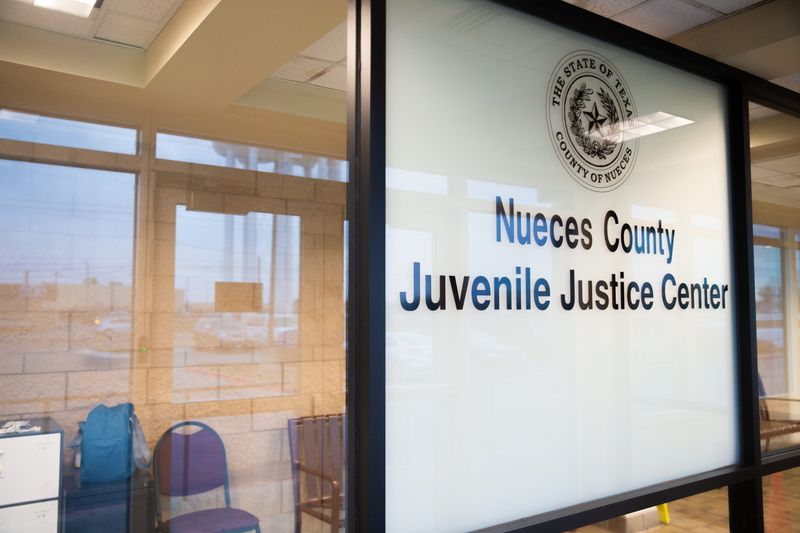
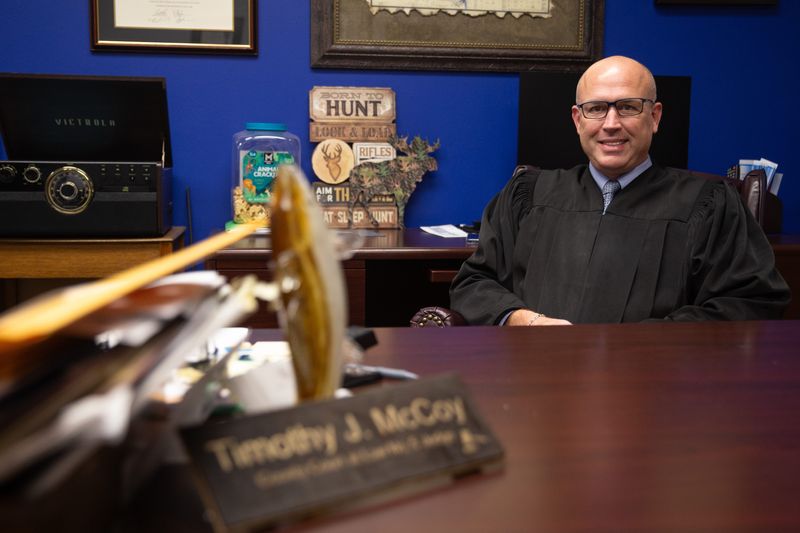
Nueces County Court at Law 5, led by Judge Timothy McCoy, handles the county’s juvenile cases, including crimes committed by young offenders, as well as guardianship and Child Protective Services cases.
In 2018, McCoy and his colleagues began to notice an increase in the number of juvenile firearm-related offenses. Between 2014 and 2017, there were 12 to 15 juvenile offenses each year in Nueces County involving handguns, rifles or other guns like AK-47 assault weapons.
The annual offense count jumped to 35 in 2018, then 52 in 2019. The number of juvenile gun-related offenses stayed high in the following years. Last year, there were 62 juvenile weapons offenses.
In the eight years between 2018 and 2024, these figures represent 368 juvenile offenders, according to data provided by Nueces County Court at Law 5 from the Nueces County Juvenile Department’s case management system.
At first, many of the cases only involved possession, McCoy said. But in the past several years, violent offenses like aggravated assaults and murders have increased, he said.
“These kids started using the weapons,” McCoy said. “It was very alarming.”
McCoy wanted to put together a specialty court, like the types of courts that exist for drugs. He’s done similar things before for other issues, including when there was a local rise in unauthorized motor vehicle cases.
Then, at a conference, he heard about a judge in Michigan who had come up with a program to address the same juvenile weapons problem.
Judge Rosemarie Aquilina presides over the 30th Circuit Court for Ingham County, Michigan. Aquilina said that 10 juveniles have completed her program so far.
Aquilina said that her specialty court catches children before they commit a violent offense. The program includes group and individual therapy and community service.
“We’re catching them at this infancy stage and teaching them a different way to live with safety, respect for others and accountability,” Aquilina said.
The Michigan court’s model
In both the Michigan and Nueces County courts, the judges have jurisdiction over the parents. Often, neglect and problems at home play a role in juvenile court cases.
Aquilina said she’s had to hold one juvenile weapons court parent in contempt of court in order to get their child glasses and medical appointments. She’s ordered several parents to couples counseling.
She recalled a set of parents who were using their child to communicate with one another, expecting the child to pass along “their venom” between each other. Aquilina put the parents in communication counseling, and the child later wrote her a letter saying that this made her feel heard in a way she never had been before.
The specialty program began in December 2023, and the first participant finished in November 2024. There were 12 juveniles in weapons court as of early April.
There has been no recidivism so far from the 10 juveniles who have completed Aquilina’s specialty court program, she said. They’re in college or have gotten jobs.
“That’s what weapons court is about: the trajectory of their lives and the safety of our community,” Aquilina said.
Three participants got back into trouble and were unable to finish the program. Succeeding in the Michigan specialty court results in a reduction from a felony charge to a misdemeanor. Of the three who failed, one volunteered to finish the program even though he couldn’t officially graduate.
“If we save even one child, we’ve done our job,” Aquilina said.
There are some challenges and limitations, Aquilina said. Drawing from her experiences as a judge in sobriety court, she knows there’s always the chance of recidivism.
Additionally, though she can address some family and education situations, some factors are beyond her control.
Some participants live in neighborhoods where shootings and gang conflict are frequent, she said. She can’t always move them out of these areas.
Sometimes participants are kicked out of school because of their history with weapons. But these kids need a sense of normalcy in their lives, Aquilina said.
She doesn’t want them feeling like they’ve been thrown away by their families and school and that gangs are the only ones left who want them.
“We’re getting through to these kids, but there’s so much more work to do,” Aquilina said.
Replicating the model in Texas
McCoy took a trip to Michigan to see Aquilina’s court in action, deciding to replicate her efforts.
It took about a year of planning, but the Nueces County juvenile weapons court has been in operation since February.
Each participant is required to complete a curriculum with lessons on conflict resolution and the risks associated with guns. They will also complete community service hours.
While on probation, many of the participants have court-imposed curfews and wear flashing ankle monitors. They take regular drug tests.
McCoy has a slate of guest speakers scheduled for both the juveniles and their parents, including health care workers who can describe the impact of a bullet on the body and two parents who have experienced both sides of juvenile gun violence — one whose child was the victim and one whose child was the perpetrator.
The approach is all-inclusive, McCoy said. To advise with the process, McCoy has looped in the district attorney’s and public defender’s offices, school officials, law enforcement and community members.
McCoy said that the court is working to set up a monitoring plan for the program to measure its success.
Weapons court strikes a balance between accountability and understanding, McCoy said. McCoy said that he has a strong history of certifying kids to be tried as adults and sending offenders to juvenile detention. If the solution to the juvenile gun program was a firm hand, the numbers would be going down, McCoy said. They aren’t.
Sitting in an office decked out with taxidermy birds and hunting-themed decor, McCoy told the Caller-Times in late March that he’s not anti-gun. He’s anti-kids-carrying-weapons-illegally.
“I’m kind of a gun guy,” McCoy said.
But it’s illegal for children to buy or own firearms in Texas. Other than lawful supervised hunting and sporting, it’s illegal to allow a child to access a readily dischargeable firearm.
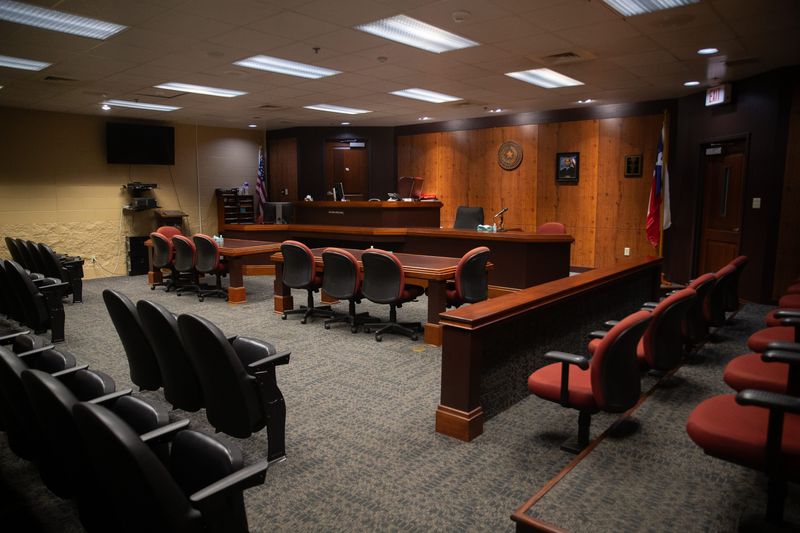
Every other Thursday, the juveniles meet in court.
On March 26, McCoy heard updates from a probation officer on the progress of each child — drug test results, whether they’re enrolled in school and if they are attending class and staying out of trouble, if they’re showing up to weapons court activities and completing community service hours, if they’ve got jobs and whether their parents are communicating with the court.
Many of the participants were in the process of switching schools, either because their living situation had changed or parents were looking for an environment they hoped would be better for their children. But several reported delays and hiccups in enrolling at new schools.
McCoy offered each child a mix of stern questions and encouragement.
“I was worried about you, but you’re doing well,” McCoy said to several of the participants. “This is a good start here.”
This article originally appeared on Corpus Christi Caller Times: How a Nueces County court is tackling rise in juvenile weapons cases
Reporting by Olivia Garrett, Corpus Christi Caller Times / Corpus Christi Caller Times
USA TODAY Network via Reuters Connect