Lansing — Michigan lawmakers have used money from political donors to rent housing near the Capitol, fund electricity bills, make car payments and bankroll repairs to their vehicles, according to a review of how state leaders wield their campaign cash.
The Detroit News analysis of the current 147 legislators’ campaign spending from the last three years also found one instance of a representative disclosing payments for the streaming services Netflix and Peacock, and another of a senator purchasing a hunting license for himself. In another situation, a lawmaker appeared to use donor money to pay parking tickets.

State policies bar lawmakers’ campaigns from using their funds for personal benefit. And multiple lawyers said some of the expenditures uncovered by The News might violate that standard. But, according to others, the transactions raised different concerns about whether state law does enough to prevent interest groups’ money from flowing into the pockets of officials who are supposed to regulate them.
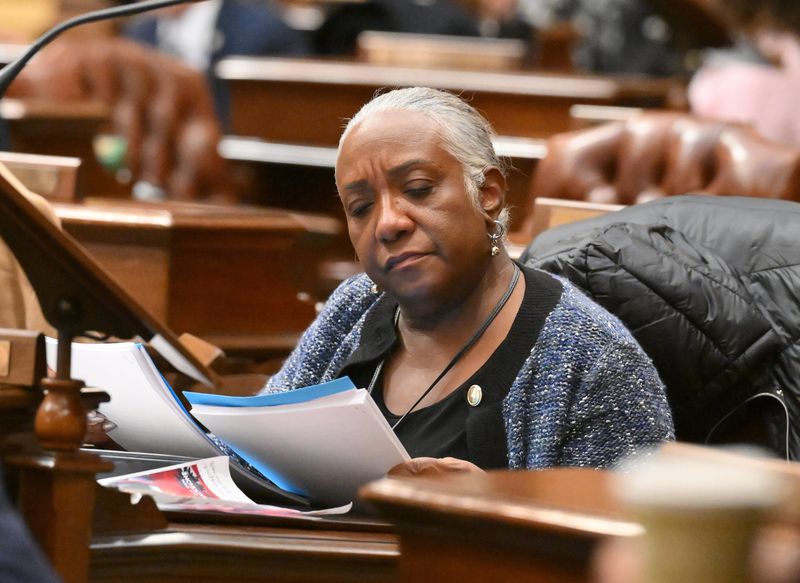
Across 2023, 2024 and 2025, state Rep. Helena Scott, D-Detroit, received $63,655 in reimbursements from her campaign committee and political action committee (PAC), according to the accounts’ disclosures. The reimbursements to Scott represented 19% of the committees’ total spending.
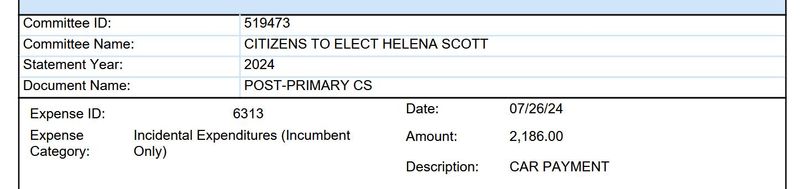
A majority of the reimbursements to Scott — about $32,119 — were for either rental payments on an apartment in Lansing or what was listed as simply “housing” in her fundraising reports. She received another $5,514 for what was described as “car payment” reimbursements, records show.
“No constituent has ever voiced a concern about that to me,” Scott said of donors paying for some of her housing and car expenses.
Asked if constituents were aware of it happening, she replied, “I guess you’d have to ask them.”
Scott was the chairwoman of the House Energy, Communications and Technology Committee in 2023 and 2024, meaning she had direct sway over proposals related to Michiganians’ electricity bills. She led the panel at a time when some lawmakers unsuccessfully pushed for legislative action to combat widespread power outages.
On Aug. 8, 2023, her campaign committee reported a single reimbursement to Scott of $14,153 for what was listed as “Lansing rental payment.” From Jan. 1, 2023, through Aug. 8, 2023, her campaign’s top donor was the political action committee of the state’s largest electric utility, DTE Energy, which gave $9,000 to the Citizens to Elect Helena Scott. Jerry Norcia, the then-CEO of DTE Energy, personally appeared before Scott’s committee on June 28, 2023.
Scott said she received advice from an accountant who told her she could use her campaign funds to rent an apartment in Lansing near the Capitol. But multiple Michigan campaign finance experts described the legal question as a difficult one to answer.
Under the law, legislators can use their candidate campaign funds for expenses related to holding office, including otherwise unreimbursed disbursements for travel, lodging and meals incurred in carrying out the business of their official duties.
State law also permits payments for a “temporary residence at the seat of government.”
Candidate committees, which are specifically allowed by law to pay for Michigan lawmakers’ office-tied expenses, are subject to limits on how much contributors can give. Donors can contribute unlimited amounts to PACs. Scott was using both her candidate committee and a PAC for her reimbursements, setting up a situation where a single donor could fund a lawmaker’s rental expenses.
On top of their yearly salaries of $71,685, all legislators already receive an annual expense allowance from taxpayers of $10,800 that’s supposed to be for food, lodging and travel. Any reimbursements from their political committees to the lawmakers would be on top of those two amounts.
Bob LaBrant, a longtime Michigan attorney who specialized in campaign finance law, noted a Dec. 11 statement from the Secretary of State’s office that said expenses are improper if the “disbursement would have occurred irrespective of the individual’s status as a candidate or an officeholder.”
The need for long-term housing, like an apartment, or electricity would exist regardless of whether someone was elected to state office, LaBrant argued.
“That’s an impermissible expenditure,” LaBrant said of the apartment rent reimbursements.
Looks bad, lawyer says
The disclosures paint a potential picture where, taken to the extreme, a lawmaker could wake up in a Lansing apartment paid for by donors with electricity paid for by donors and then drive to a breakfast meeting in a car with tires and fuel paid for by donors. The breakfast at the meeting could also be paid for by their donors.
If the lawmaker got a parking ticket during the meeting, they could pay with their campaign funds. Then, later in the day, that same lawmaker could be asked to vote on legislation that those donors have a financial interest in.
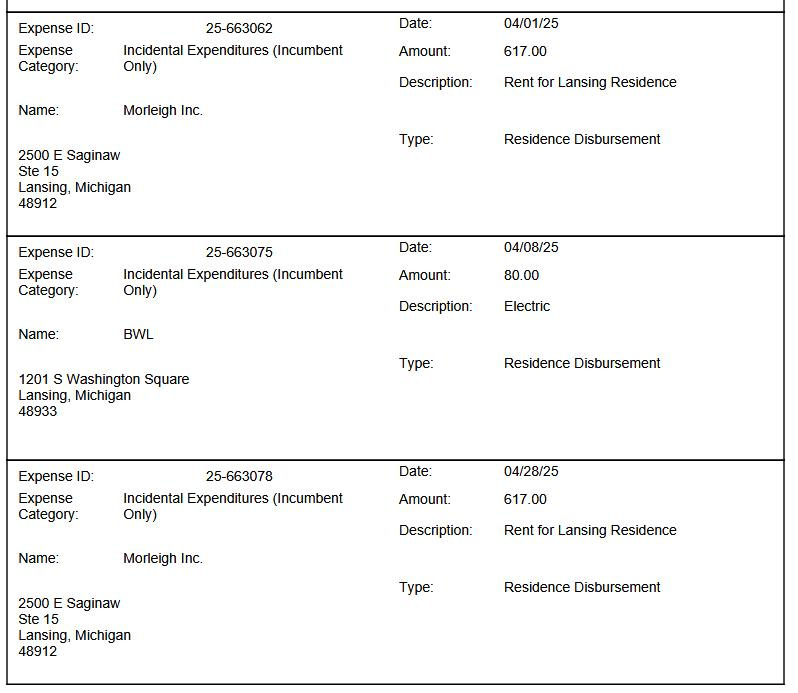
While many lawmakers used their campaign funds to rent hotel rooms on nights the Legislature was in session, only two disclosed longer-term rental arrangements in Lansing: Scott and Rep. Brenda Carter, D-Pontiac.
Carter’s campaign committee reported $3,702 in payments to a property management firm to rent a residence in Lansing in 2025. Her committee also reported paying $517 to the Lansing Board of Water and Light for electricity in 2025.
LaBrant, former general counsel for the Michigan Chamber of Commerce, said, in his view, electricity for a residence would be an impermissible expense for a House member’s campaign committee, because a person would need electricity whether or not they were in Lansing as an officeholder.
As for the housing payments, Daniel Wholihan, a Republican lawyer and a campaign consultant who advises some legislators on campaign finance filings, said renting an apartment was a gray area of Michigan law. It might depend on the lawmaker’s intent for the property, whether they were using it entirely for office-related purposes, Wholihan said.
“It’s not something that I would recommend personally,” Wholihan said.
Asked why, Wholihan said using money from political donors for rent simply looks bad.
Carter, the top Democrat on the Republican-led House Insurance Committee, didn’t respond to a message from The Detroit News requesting an interview.
Her campaign account, the Committee to Elect Brenda Carter, raised $16,850 in 2025. Nearly 75% of the money —$12,630 — came from lobbyists or political action committees, including the Michigan Beer and Wine Wholesalers Association, which gave $1,750, and Consumers Energy, which gave $500. Carter did loan her committee $3,000 in July 2025, which could be paid back later.
Currently, the group Michiganders for Money Out of Politics is pursuing a ballot proposal to establish new campaign finance standards in the state and to prohibit utilities and major government contractors from making financial contributions to lawmakers.
Asked about some of the findings by The Detroit News, Courtney Otto, campaign manager for group, said if campaign accounts are being used like personal checking accounts, that’s a sign Michigan’s campaign finance laws aren’t strong enough.
“Voters across the political spectrum want clear rules and real accountability,” Otto said. “The system shouldn’t benefit insiders — it should protect taxpayers.”
Netflix and hunt
It wasn’t clear whether the Secretary of State Jocelyn Benson’s office had independently flagged any of the expenditures examined by The News as potential violations of the personal use standard.
The Secretary of State’s office has the power to ask committees for more information about their expenditures. Also, anyone can file complaints about campaign finance reports to force an inquiry by the Secretary of State about whether the law was broken.
Penalties for campaign finance violations can range from written reprimands to criminal charges.
In April 2024, Michigan Attorney General Dana Nessel’s office charged former state House Speaker Lee Chatfield, R-Levering, with 13 felonies, including multiple counts that focused on claims that he stole or misused political committee funds. Chatfield has pleaded not guilty, and his trial is scheduled for the fall.
Chatfield was also accused of misusing funds from a nonprofit organization. Many Michigan lawmakers have nonprofits, in addition to their traditional campaign accounts, that can raise and spend unlimited money in secret, suggesting that some legislators are likely using donor money to pay for apartments and cars through channels that are undetectable.
In the review of lawmakers’ public campaign finance filings, The News found most lawmakers appeared to be following state guidelines but also identified multiple small campaign expenditures that appeared to be personal in nature.
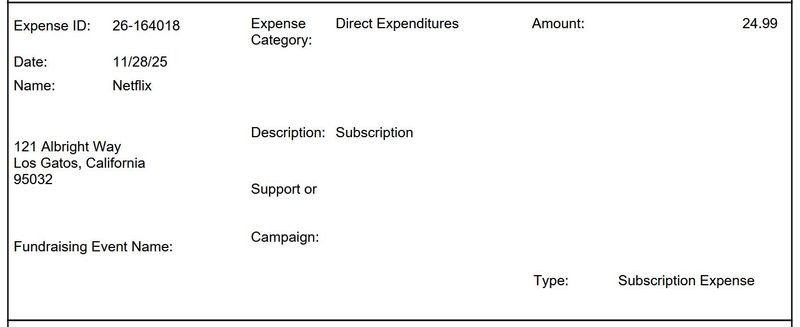
For instance, the committee of state Rep. Alicia St. Germaine, R-Harrison Township, paid $17.99 for a subscription to Netflix on Dec. 28, 2025, and $24.99 to Netflix on Nov. 28. Likewise, her committee paid $10.99 for a Peacock subscription on Dec. 1.
Asked about the expenditures, St. Germaine said they were a mistake and she would reimburse her committee.
“It was just a mistake on my end,” St. Germaine said.
The campaign of state Sen. Ed McBroom, R-Vulcan, purchased a $31 hunting license on Nov. 17, during the state’s regular firearm deer-hunting season.
McBroom said he had been advised that he could use his campaign account to pay for a hunting license, as there is occasionally media and public interest in which lawmakers have the licenses.
“I may be misinformed,” McBroom said. “I am not trying to get one over on anybody.”
The senator said he would reimburse the money to his campaign if he needed to.
Gas, repairs and a ticket?
McBroom, who represents the Upper Peninsula, was also one of a handful of lawmakers who used their campaign funds for automotive repairs that they said were connected to travel necessitated by their positions in the Legislature.
In March, McBroom’s campaign committee reported spending $498 at Liskey’s Auto in Lansing for a vehicle expense and $100 at Mr. Tire in Escanaba.
McBroom, who is in his 14th year in the Legislature, said the cost of maintaining a vehicle to get back and forth to Lansing had gone up while his pay as a lawmaker had remained the same.
In 2011, McBroom’s first year in the House, the pay for legislators was slashed by 10% from $79,650 to $71,685 and hasn’t been increased since. The $10,800 annual expense allowance for each lawmaker also was reduced from $12,000.
The campaign committee of state Rep. Kimberly Edwards, D-Eastpointe, spent $2,000 on a car-related expense with Morrie’s Grand Ledge Lincoln in July. Edwards’ campaign account paid $175 for tires in June and $126 for an unspecified “automotive repair” through Valvoline in November.
In a brief phone interview, Edwards said she believes she’s able to use campaign funds for repairs. Edwards said on Tuesday she would call a reporter back later to answer additional question but hadn’t as of Wednesday.
The Secretary of State’s official manual for candidates says they can be “reimbursed for a percentage of actual expenses incurred in operating the vehicle,” for things like tires. The percentage would be based on how often they use the vehicle for campaign or legislative business versus personal use.
Edwards and McBroom weren’t reimbursed, according to their disclosures. Instead, the payments went directly to the repair shops, according to the reports.
Also, candidates “must maintain a log to document the number of miles driven or percentage of usage of the vehicle that details the date of each trip, the number of miles of each trip the rate of reimbursement and the purpose of each trip,” the state’s candidate manual said.
“This information is required to be disclosed on a campaign statement,” the manual says.
The Detroit News couldn’t find such a report in most of the lawmakers’ public filings.
Alternatively, Michigan lawmakers can buy a vehicle through their campaign committee and use it entirely for campaign purposes, according to the state candidate manual. In 2019, a fundraising account tied to then-Senate Majority Leader Mike Shirkey, R-Clarklake, appeared to do that, reporting spending $56,611 at Jim Winter GMC in Jackson.
The Shirkey-connected Grand Lake Administrative Account, which filed its disclosures with the Internal Revenue Service, said the expenditure was for a “vehicle expense.” Shirkey left the Senate due to term limits at the end of 2022.
Making things tougher to track in Michigan when it comes to lawmakers’ reimbursements for travel is the fact that some committees simply used campaign funds to purchase gas cards that shield any mileage details.
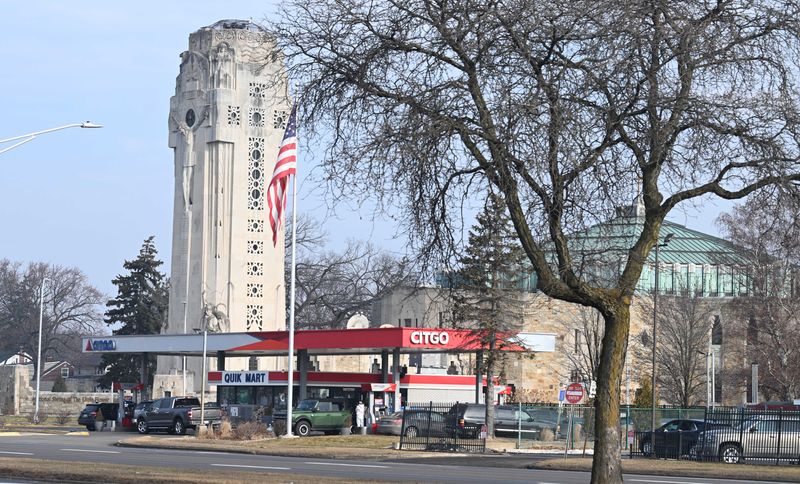
In 2024, for example, Scott’s committees reported purchasing $2,300 in gas cards from the same Citgo in Royal Oak. The committees often just described the payments as for “gas cards for travel.”
Meanwhile, in 2024, taxpayers funded Scott’s $71,685 salary and her $10,800 expense allowance, according to records released by the House Business Office. She received $5,644 in approved mileage reimbursements through the House.
Lawmakers can get reimbursements through the state for one trip to Lansing each week and for travel within their districts related to legislative business, according to guidance provided to lawmakers and reviewed by The Detroit News. The state’s reimbursement rates range from 47 cents per mile to 73 cents per mile.
Angela Benander, spokeswoman for the Secretary of State, acknowledged that broadly, state campaign finance regulators don’t have access to the House reimbursement documents to ensure lawmakers aren’t getting reimbursed for the same trips by their campaign accounts.
Of the gas cards, Scott said, “I do a lot of traveling in the district.”
Scott’s 8th District is among the smallest, geographically, of any in the state, consisting of 21.6 square miles across the cities of Pleasant Ridge, Ferndale and a section of northwest Detroit, according to CensusReporter.org.
In a different type of vehicle expense, Rep. Mike Harris, R-Waterford, a former police officer, used his House campaign account to pay for two parking tickets.
On Nov. 19, 2024, the Harris campaign account reported spending $98.80 on parking with the City of Lansing. And on Oct. 1, 2025, the Harris campaign reported spending another $98.80 on parking with the capital city.
Ingham County District Court records show Harris paid expired parking meter fines of $95 on Sept. 30, 2025, and on Nov. 20, 2024. Harris used a credit card to pay both fines, according to court records. The court requires a 4% service fee, which means $95 would amount to $98.80.
In a text message, Harris said the fines in Lansing were related to his campaign. He didn’t explain how they were connected.
cmauger@detroitnews.com
This article originally appeared on The Detroit News: Michigan lawmakers use political funds for rent, car expenses, Netflix
Reporting by Craig Mauger, The Detroit News / The Detroit News
USA TODAY Network via Reuters Connect