Just days after federal vaccine advisors voted to end a longstanding vaccine recommendation for infants, local doctors are fielding questions from confused patients and looking to organizations other than the CDC for vaccine guidance.
Since 1991, the CDC has recommended universally vaccinating all infants against hepatitis B, a virus that can cause irreversible liver damage, at birth.

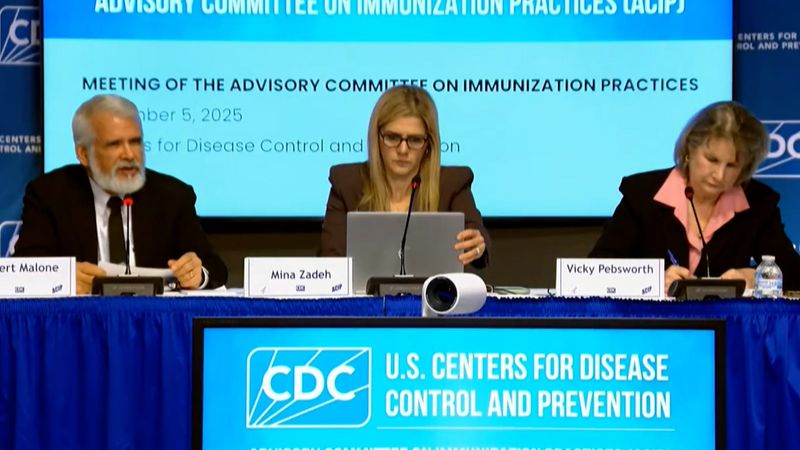
But Dec. 5, the panel appointed by U.S. Health and Human Services Secretary Robert F. Kennedy Jr. voted to delay vaccination for infants whose moms test negative for the virus by two months. The vote came after several members of the panel, some of whom have ties to anti-vaccine groups, questioned the vaccine’s safety data and the extent to which the birth dose caused a decline in hepatitis B cases.
Dr. Jason Murray, an emergency medicine physician and the medical director of Northern Kentucky Health Department, called the move “a monumental shift towards a previously faulty strategy.”
“That universal approach is what’s gotten us there and shown success over the past 30 plus years,” said Murray. “Why fix something that’s not broken?”
Dr. Liz Daniels, a pediatrician at Northeast Cincinnati Pediatric Associates in Mason, said she’s received multiple questions about the hep B vaccine from patients within the past week.
“Most of our families are just wondering if there’s something new that’s changed from a safety standpoint,” said Daniels. “And no, there is no difference in the safety data.”
Daniels also serves as president of the Cincinnati Pediatric Society, a local chapter of the American Academy of Pediatrics, a national professional group of pediatricians that firmly rejected the recommendation of RFK’s panel in a statement released last week.
“We still recommend birth dose of hepatitis B,” said Daniels, “Simply because our long term perspective is we would never want to make a recommendation that would put somebody at unnecessary risk.”
What is hepatitis B?
Hepatitis B is a virus that causes liver disease. If left untreated, the infection can lead to cirrhosis, or permanent scarring that can lead to liver failure or even death.
Daniels calls it a “sneaky little virus” because patients typically don’t show symptoms when they first become infected. “You don’t know until you have that scarring,” she said, which can be irreversible.
“We want to be able to detect it and provide vaccination really, really early,” said Daniels. “Because if you wait, then the opportunity to prevent the chronic hepatitis B infection is very, very difficult to do.”
The disease affects adults and babies differently, according to the CDC. While 95% of infected adults recover completely without developing the chronic infection that causes serious health issues, the opposite is true for infected infants: 90% remain chronically infected for life.
This is because babies “don’t have a mature immune system,” said Murray, as opposed to adults whose immune systems have developed a memory of learning to fight off different infections.
Adults usually contract the blood-borne pathogen through getting exposed to the bodily fluids of someone who has the hep B virus. Unprotected sex with someone who has the virus, or sharing needles with them for drug use, are two major modes of transmission.
Infants, usually get hep B if their mom is positive.
“It occurs from the blood exposure during labor and delivery,” said Daniels. “The baby’s not getting it when they’re in the womb. They’re getting it as the mom is delivering.”
Change undermines longstanding public health strategy, doctor says
For a long time, the falling rates of hepatitis B were regarded a success story in public health. Research from the CDC shows that over the past 30 years, reported cases of acute hepatitis B declined by 99% among minors in the U.S. following the implementation of universal infant and childhood vaccination.
Rolling back the universal hep B dose would make the U.S. a minority in the World Health Organization, where 116 out of 194 member countries recommend the birth dose to all newborns.
Traditionally, local health departments, including Northern Kentucky Health Department, rely on the CDC as “the gatekeeper of good science to help us make the best decisions,” said Murray.
But if the CDC adopts the recommendation of the panel as an official guideline, going against decades of proven research, local health departments may be torn between millions of dollars in federal funding and what they know to be best for their patients moving forward.
Murray finds the CDC panel’s recommendation to be especially difficult to understand, given that selectively recommending vaccination to high-risk babies is an approach the U.S. has tried before. Public health authorities abandoned the effort and shifted to the universal vaccination approach, which it deemed more effective, in 1991.
“Risk-based strategy, up until the early 90s, was the predominant approach that public health took at the time,” said Murray. “That was the strategy, that we would only respond to those who had had the risk. We still missed 16,000 kids.”
Is the hepatitis B vaccine safe?
“It’s an incredibly safe, very well tolerated vaccine,” said Daniels, “So there hasn’t been any evidence for us to change our recommendations.”
The immunity from the vaccine is designed to last for the rest of your life: starting from the infant years and into young adulthood, when people tend to engage in risky behaviors such as unprotected sex and experimenting with substances, that expose them to hepatitis B.
While the primary way that infants get exposed is through mother-to-child transmission, “you don’t always know what the cards hold for that child 10, 15 years later,” said Murray. “If you have the opportunity to protect them before they make a bad decision later, would you take that?”
Both physicians say they’re looking to the American Academy of Pediatrics, which still recommends the hep B dose at birth, for official vaccine guidance.
If you’re feeling nervous about if or when to vaccinate your child, Murray suggested asking your pediatrician about whether they’re planning to vaccinate their own kids.
“Talk to your pediatrician. They’re the experts,” he said. “They’re not going to tell you bad science.”
This article originally appeared on Cincinnati Enquirer: What your doctors want you to know about hepatitis B
Reporting by Elizabeth B. Kim, Cincinnati Enquirer / Cincinnati Enquirer
USA TODAY Network via Reuters Connect