A “blood moon” is coming this weekend.
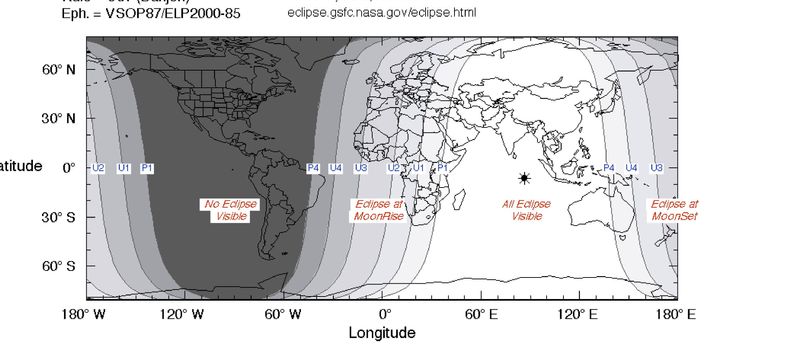
Unfortunately, the total lunar eclipse won’t be visible in Florida or the United States. You’ll have to wait until March 2, 2026, to see a blood moon in the U.S., according to Space.com.

The best view of the 2026 blood moon will be along the West Coast, from Alaska to California. Residents there will be able to see all stages of the eclipe.
Here’s what to know about September’s total lunar eclipse and full moon.
Total lunar eclipse happening Sept. 7, 2025
On Sept. 7, there will be a total lunar eclipse.
Will I be able to see the total lunar eclipse in Florida, US?
No. the lunar eclipse will not be visible in Florida or the United States.
Where can you see the total lunar eclipse this weekend?
The lunar eclipse will be visible in Europe, Africa, Asia and Australia, according to NASA.
See timing of September’s blood moon
Why is a total lunar eclipse called a blood moon?
As the Earth’s shadow falls across the surface of the moon, the moon turns a rusty red color.
The more dust or clouds in Earth’s atmosphere during the eclipse, the redder the moon appears, NASA said.
What is a lunar eclipse?
There are three types of lunar eclipses:
What type of eclipse will happen on Sept. 7, 2025?
At 2:12 p.m. ET on Sept. 7, 2025, a total lunar eclipse will peak.
Solar eclipse also happening in September 2025
On Sept. 21, there will be a partial solar eclipse.
Unfortunately, it also will not be visible in the U.S.
Areas where it will be visible include Australia, Antarctica, Pacific Ocean and the Atlantic Ocean, according to NASA.
The solar eclipse occurs one day before the fall equinox on Sept. 22, which marks the first day of astronomical fall. Meteorological fall began Sept. 1.
When is the next full moon?
The next full moon, known as the corn moon, will occur at 2:09 p.m. ET Sept. 7, according to astronomy.com.
The moon will be below the horizon at the time so watch for it after sunset, the Old Farmer’s Almanac suggested.
Why do we call September’s full moon the ‘corn moon’?
“This time of year — late summer into early fall — corresponds with the time of harvesting corn in much of the northern United States,” according to the Old Farmer’s Almanac.
“For this reason, a number of Native American peoples traditionally used some variation of the name “corn moon” to refer to the moon of either August or September.”
Fun moon fact: An eclipse never comes alone
A solar eclipse always occurs about two weeks before or after a lunar eclipse, according to timeanddate.com.
The Sept. 7 total lunar eclipse will be followed by a partial solar eclipse Sept. 21.
This article originally appeared on Treasure Coast Newspapers: Blood moon coming this weekend. Will it be visible in Florida?
Reporting by Cheryl McCloud, USA TODAY NETWORK – Florida / Treasure Coast Newspapers
USA TODAY Network via Reuters Connect