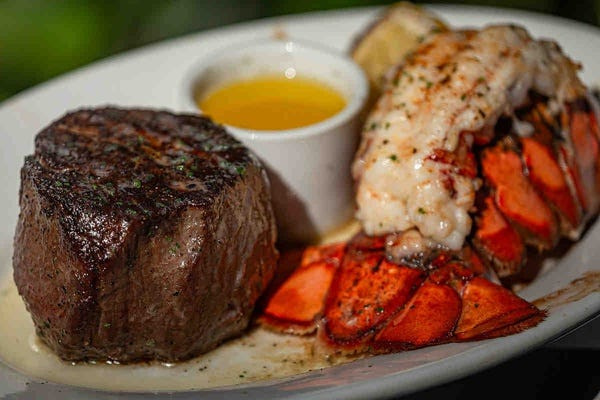
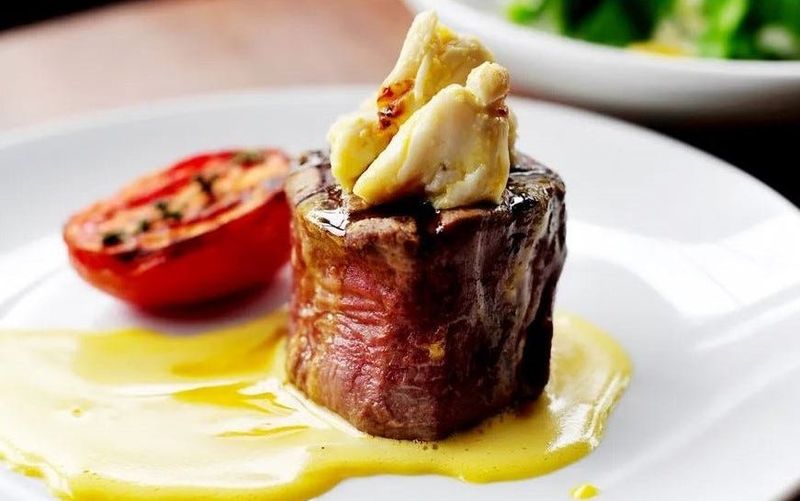
If you’re planning a fancy date to a restaurant in Jacksonville soon, you might want to know what “MKT” means before ordering.
A viral video — racking up 21.8 million views on Instagram and 3.6 million on TikTok — shows the shocked reaction of three young women after getting their bill. They had ordered two steaks marked “MKT” (market price), assuming they’d be around $20 each. Instead, each steak was $52. Add in a kid’s grilled cheese for $10, a baby kale Caesar salad for $28, a 3% credit card fee, and tax, and the total came to $159.14.

Aribella Menold, 20, told USA TODAY that she and two younger relatives were dining separately from the rest of their family while vacationing in North Carolina. “We don’t go to fancy restaurants that often,” she said. “We probably just read the menu wrong.”
The clip sparked plenty of debate in the comments — some people said the price was fair, others thought it was outrageous. A common question: Who’s responsible for knowing the cost when it’s not listed?
In Jacksonville, you can find “MKT” or “MP” pricing on select menu items at restaurants ranging from fine dining to upscale casual to seafood shacks, according to a sampling of menus. When in doubt, ask your server for clarification to avoid any unexpected charges.
What is MKT or MP price?
MKT stands for market price, and MKT or MP are often a standard way to express that on a food menu, said David Ortega, a food economist and professor at Michigan State University.
“It signals that the cost of the item changes regularly based on current supply and demand conditions, rather than being listed as a fixed dollar amount. It’s most often used for items whose wholesale prices fluctuate frequently, like fresh seafood, premium cuts of meat, or seasonal ingredients,” Ortega told USA TODAY.
“This approach gives restaurants flexibility for items whose costs can vary. Instead of constantly reprinting menus, they list the item as market price and adjust based on what they paid to source it. This means the final price consumers pay may change from one visit to the next, depending on what is happening in the market for that product.”
Ortega said he has also seen “seasonal pricing” on menus, especially for items like oysters or lobster that tend to be more seasonal depending on the location.
How or why does the MKT price change for a particular food?
Market prices fluctuate due to supply, demand, seasonality, and other factors, especially for items whose wholesale costs can vary daily, like seafood or steak, said Katie Thomas, who leads the Kearney Consumer Institute, an internal think tank at global management consulting firm Kearney.
“Restaurants use MKT pricing to adjust with the real-time cost and maintain profitability,” Thomas told USA TODAY.
Prices can change due to shifts in supply and demand, Ortega said.
“For example, ocean temperature fluctuations can reduce lobster availability, pushing prices up. For beef, the impact of drought and herd reductions has been tightening supply, driving up costs. Increased demand for certain items, like lobster in the summer, can also drive up prices,” he said.
What are some restaurants in Jacksonville that have MKT or MP in their menus?
MKT or MP are used interchangeably and both mean market price, which can fluctuate based on availability and demand of the goods used to make the dish, whether it be fish, steak or any kind of meat.
Here are some restaurants in Jacksonville that use Market Price values in their menus:
What foods or other menu itemsare most likely to be listed as MKT price?
Dishes most likely to be listed as MKT or MP are those with the most variable and seasonal ingredient costs, such as fresh seafood (like lobster, oysters, or fish), certain steaks, or specialty produce, Thomas said. These items depend on real-time market rates for freshness and availability, she said.
Additionally, Ortega said, market pricing can be on items with highly variable sourcing costs or limited supply, such as seafood, premium meats (like dry-aged or high-end steaks), specialty imports (like truffles and caviar), and in some cases, seasonal produce. Chef’s specials or dishes built around highly seasonal ingredients may also be listed as market price, he said.
Specialty vegetables and greens, “think truffles, both white and black,” are also often listed as market price, Kafarakis said. “Traditionally, when in a high-end restaurant, there is a high likelihood you will see market price and perhaps a tasting menu of items that have been bundled for one meal cost,” he said.
What should you do when you see MKT?
Consumers should always ask for the current price before ordering an MKT item, Thomas said. “While the practice allows restaurants to offer fresh, high-quality dishes, diners should not assume these dishes are affordable. Sometimes they are significantly higher than the average menu item.”
It is a completely normal and fair question to ask your server if you see MKT or MP on the menu, said Ortega.
“That way, there are no surprises when you get the bill. In some cases, the cost can exceed expectations, so it’s important to ask,” he said. “Some servers may offer that information upfront, but that’s not always the case.”
Ortega also adds: “If something is listed as ‘market price’, it doesn’t necessarily mean it’s overpriced. In some cases, when there is plenty of supply, you might actually get a deal.”
This article originally appeared on Florida Times-Union: What does ‘MKT’ mean on the menu? What to know next time you dine out in Jacksonville
Reporting by Doris Alvarez Cea and Betty Lin-Fisher, Jacksonville Florida Times-Union / Florida Times-Union
USA TODAY Network via Reuters Connect