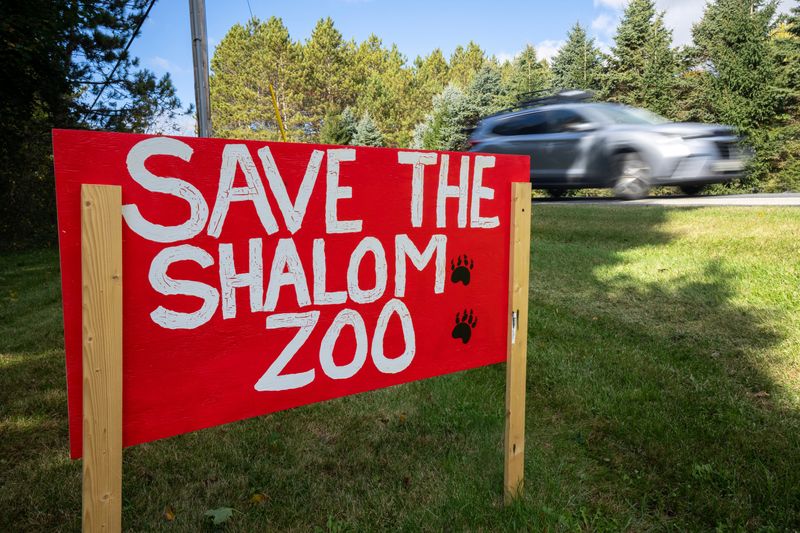
Thousands of supporters rallied behind Shalom Wildlife Zoo after neighbors filed a lawsuit arguing its operations weren’t allowed on land meant for agriculture.
Now, the Town of Farmington has changed its rules to say otherwise. On Dec. 9, the town board unanimously approved updates that allow exotic animals and “zoological activities” on certain agricultural land, which includes Shalom’s 100-acre property.

Owned by David and Lana Fechter, Shalom is home to over 80 species, including a white tiger and her cubs. Here’s what to know about the zoning changes and what they mean for the family-run zoo.
What are Farmington’s new zoning rules?
Shalom Wildlife Zoo sits on land zoned for agricultural use. Before the rules were amended, exotic animals weren’t allowed on such land. Neither were event venues, which Shalom asked for permission to construct.
But after the board approved a new permitted use for agricultural land, called “zoological activities,” those operations can continue.
According to the town’s ordinance, zoological activities cover zoos and sanctuaries that care for, display or breed animals and offer educational programs on 100 acres or more.
Allowable uses now include:
The new regulations also permit new exhibits, visitor amenities and expansion onto neighboring agricultural land.
What does it mean now that zoos are permitted?
Shalom Wildlife Zoo previously operated under a conditional use permit, originally approved in 1995. Conditional use permits are for exceptions only granted after local officials decide they’re appropriate. They also require a public hearing where residents can share their opinions.
Permitted uses, on the other hand, are allowed by right. As long as the project meets basic standards, it doesn’t need special approval.
Under the town’s updated rules, the zoo’s activities now qualify as permitted use on agricultural land. That means Shalom’s activities are now authorized without special approval.
What’s next for the lawsuit filed against Farmington and Shalom Wildlife Zoo?
The next hearing in the lawsuit against Shalom is scheduled for Feb. 2, 2026.
Attorneys for the residents did not respond to a request for comment. In an October statement on the plaintiffs’ behalf, they said the lawsuit is about safety, privacy and enforcing local rules tied to the zoo’s planned expansion.
“We will allow the legal process to address these issues and refrain from engaging in disputes through social media or any further public commentary,” the statement said.
Shalom shared an update with its over 400,000 Facebook followers after the board’s vote, saying the zoning change allows its operations to continue.
The post said that, under the new rules, the zoo no longer needs a conditional use permit, leaving the plaintiffs without grounds to challenge its ability to operate.
“There is still much work ahead of us in the lawsuit, but this was a big step forward,” the post said.
What other issues has this lawsuit raised?
The dispute between Shalom and its neighbors has renewed scrutiny of the zoo and private ownership of exotic animals in general.
Shalom is not accredited by any major zoo or sanctuary associations. These voluntary accreditations come with stricter animal welfare and conservation standards.
Some animal welfare experts have raised concerns about the quality of Shalom’s animal enclosures and its breeding of a white tiger, which is opposed by conservation organizations like the World Wildlife Fund.
Quinn Clark is a Public Investigator reporter for the Milwaukee Journal Sentinel. She can be emailed at QClark@gannett.com.
This article originally appeared on Milwaukee Journal Sentinel: Zoning change allows Shalom Wildlife Zoo to keep operating in Farmington
Reporting by Quinn Clark, Milwaukee Journal Sentinel / Milwaukee Journal Sentinel
USA TODAY Network via Reuters Connect