In 2018, an Ecuadorian man named Miguel Angel Rogel-Anchundia was cruising on a drug boat called “El Condor” 235 miles northeast of the Galapagos Islands in the Pacific Ocean, in international waters.
Then a U.S. Coast Guard crew spotted the boat, boarded and arrested Rogel-Anchundia and two other men. The crew recovered $17 million worth of cocaine, a complaint said, and federal agents brought Rogel-Anchundia to the U.S. to face drug trafficking charges.

He was convicted in a federal court in Tampa and sentenced to prison. He was not an immigrant, and he was not illegally in the U.S.
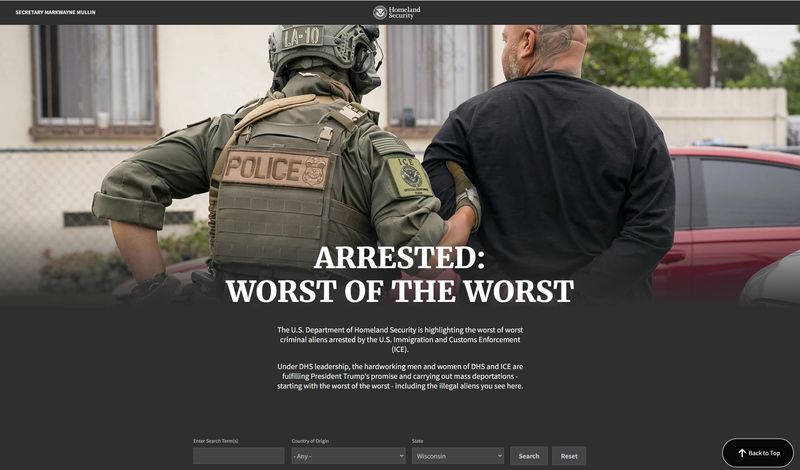
But the Department of Homeland Security featured him on a website listing the “worst of the worst” detainees arrested in Wisconsin by U.S. Immigration and Customs Enforcement.
A Milwaukee Journal Sentinel analysis of the court records and movements of dozens of the immigrants on the site shows Rogel-Anchundia’s case is one of many that contradict DHS’ message that it is taking hundreds of violent criminals off Wisconsin streets.
Of the 272 people described as the “worst of the worst” in Wisconsin, the majority were already serving prison time, often for convictions handed down long before the start of President Donald Trump’s second term. Like Rogel-Anchundia, many had no relation to Wisconsin. Others still had years left on their sentences.
Several were convicted of nonviolent offenses, such as illegal reentry and retail theft.
The Journal Sentinel also found listed criminal convictions that were incorrect and names and cities that were misspelled.
A DHS spokesperson did not answer Journal Sentinel questions about the findings but acknowledged the agency received the inquiry. It continually has touted its work to get criminals “off of our streets and out of our country,” and it has described its website as listing “public safety threats arrested in [Americans’] communities.”
Tim Muth, senior staff attorney at the American Civil Liberties Union of Wisconsin, characterized the list as propaganda.
“It pays little attention to the actual question of public safety in the state,” Muth said.
“If you were to create list of the ‘worst of the worst’ of U.S. citizens it would be pretty ugly too,” he added.
Most people on the list were already incarcerated
Most of the “worst of the worst” people DHS claims to have arrested appear to be state or federal prisoners who were already incarcerated.
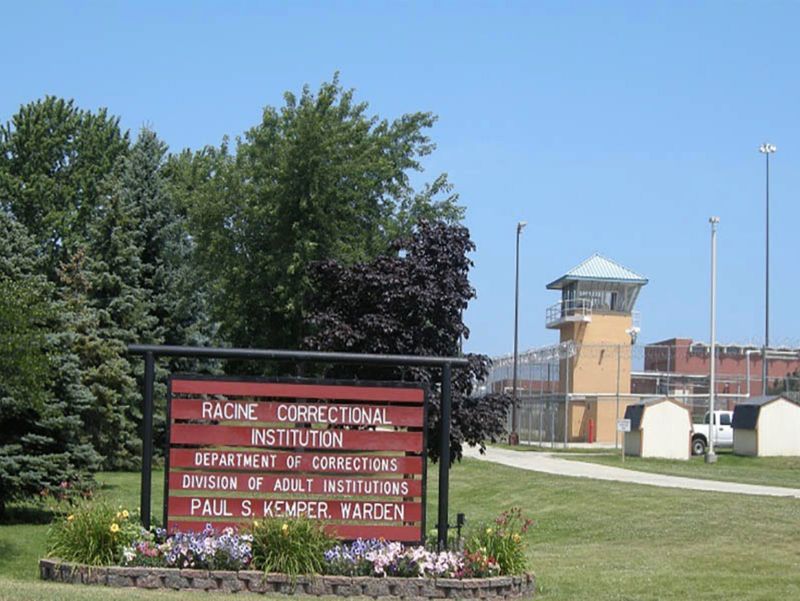
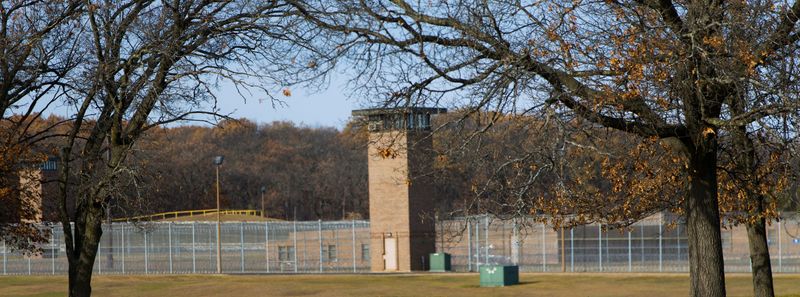
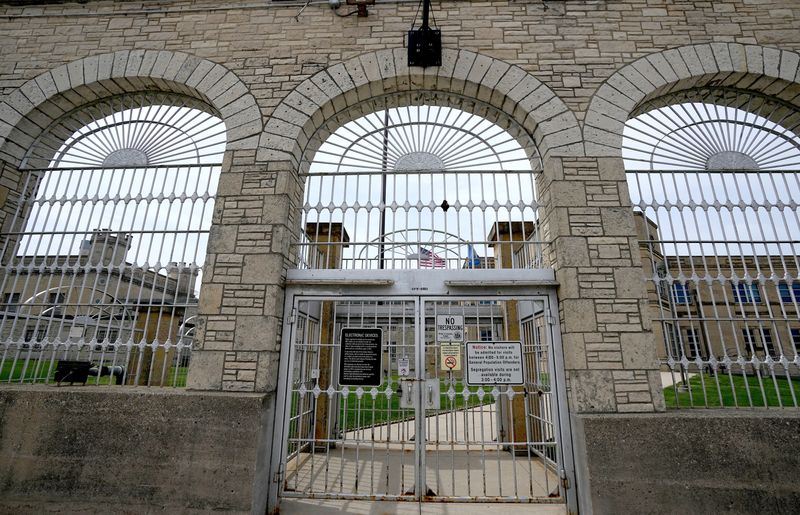
Almost two-thirds of the people on the list were arrested in small Wisconsin towns with state or federal prisons.
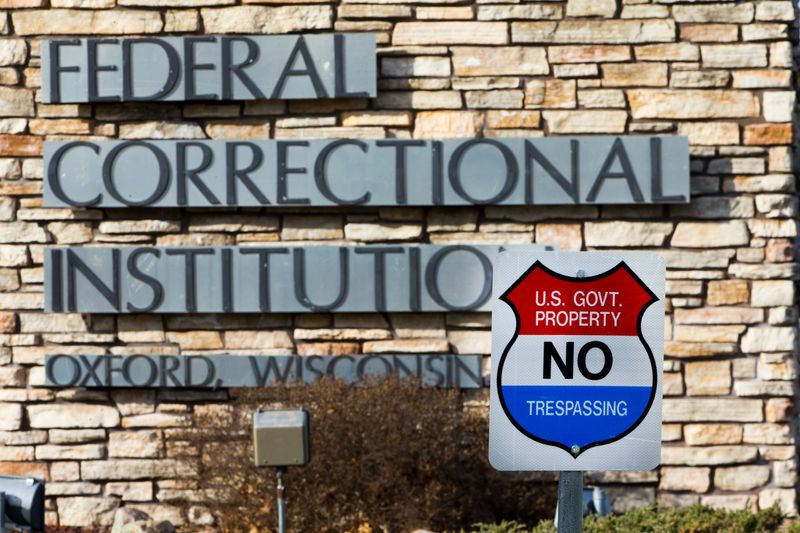
That includes over 100 inmates listed as being arrested in Oxford – a city with Wisconsin’s only federal prison – as well as dozens of detainees from state prisons in Sturtevant, Waupun, Stanley, Portage and Redgranite.
“I don’t think there’s been a giant crime wave” in those towns, Muth said. “These are people being picked up out of their respective prison facilities that are located there.”
It’s been a longstanding and common practice that immigrants convicted of serious crimes in the U.S. are deported after serving their prison terms.
In 2021 and 2022, ICE lodged about 700 requests for Wisconsin state prisons to hold prisoners after their release dates so that immigration agents could pick them up, according to data obtained by Muth.
Crimes that often trigger deportation proceedings include aggravated felonies – such as homicide, sexual assault, sex crimes involving children, drug trafficking – or crimes involving “moral turpitude,” such as theft, fraud or dishonesty.
DHS’ list includes several examples of people picked up by ICE after serving their sentences. For example:
Many people on the list had no connection to Wisconsin
The Journal Sentinel’s analysis also shows that all but a small handful of the federal prisoners on the list committed crimes that had no connection to Wisconsin, other than being incarcerated at the prison in Oxford.
Unlike state-level prisoners, federal prisoners can serve their sentences anywhere in the country and may be moved.
Most were also arrested and convicted prior to Trump’s current term. For example:
Some on the list, like Rogel-Anchundia of Ecuador, were not even arrested within the United States.
The Journal Sentinel found six Oxford inmates on DHS’ list who were drug boat drivers or passengers arrested by federal agents in international waters. As far as court records show, they were not immigrants and did not enter the U.S. except to serve prison time.
Emmanuel Tolentino-Lebron, of the British Virgin Islands, was found in 2022 on a drug trafficking boat 20 miles off the coast of the U.S. Virgin Islands in international waters with about 1,200 pounds of cocaine.
The DHS site also lists former professional Colombian soccer player Jhon Viafara Mina, who was extradited to the U.S. for conspiring to traffic cocaine into the U.S., prosecuted in Texas and sentenced in 2021. His only connection to Wisconsin is that he served time at the Oxford federal prison.
Some listed as ‘arrested’ have not yet been detained by ICE
The Journal Sentinel found several examples of people on the DHS list who are still incarcerated and are expected to continue serving their sentence for several more years.
That contradicts DHS’ description of the individuals on its website as “criminal aliens arrested by the U.S. Immigration and Customs Enforcement.” For example:
It’s possible ICE counts lodging a detainer – a request for local law enforcement to hold people in prison past their release date so immigration officers can pick them up – as an “arrest,” even if they have more time to serve.
However, in many cases, it was nearly impossible to verify whether the people on the list had actually been arrested or deported by federal agents.
ICE does not publish any information about a person’s detention or deportation history in its online database. The state Department of Corrections also does not consistently report if prisoners have been taken into custody or deported by ICE.
Severity of crimes varies widely despite site’s flashy name
The “worst of the worst” website may create the impression that people with criminal convictions are the primary focus of ICE arrests.
But federal data shows that 73% of immigrants currently detained by U.S. Immigration and Customs Enforcement do not have criminal records.
In Wisconsin, about a quarter of the 1,760 individuals ICE arrested between January 2025 and early March 2026 were ranked at the most serious criminal conviction level of an aggravated felony, according to new ICE arrest data obtained and published by the Deportation Data Project.
About half of the arrested individuals had no criminal convictions.
Of course, the DHS website does highlight many cases of violent crime, sex crimes, domestic violence and drug trafficking.
Drug-related crimes were the most common, making up about one-third of the cases listed on the site.
Of the 272 people on the list, four appear to have a homicide or attempted homicide conviction. About 18% of the crimes were violent crimes such as sexual assault, battery and robbery. Another 11% were property crimes such as vehicle theft, identity theft and burglary.
The “worst of the worst” list also includes misdemeanors and other offenses that resulted in minimal sentences, such as drunken driving.
One example is Erick Josue Ruiz-Espinoza, 24, a Nicaraguan national whose crime is described by ICE as “Assault, Crimes Against Person.”
According to a criminal complaint, Ruiz-Espinoza threatened an adult family member with a kitchen knife and stabbed the trim of a doorway during an argument. He was convicted of second-degree recklessly endangering safety and misdemeanor disorderly conduct. His sentence of 30 days in jail, with work release, was stayed.
CNN, in its own investigation of the “worst of the worst” website, found thousands of people listed there with nonviolent charges, including traffic offenses, marijuana possession and illegal reentry into the U.S.
DHS described the errors to CNN as a “glitch” it was working to fix.
Muth said with its inaccuracies, the list misleads the public about immigrants. He pointed out that studies have shown that undocumented immigrants are arrested for crimes at a lower rate than the U.S. citizens.
Beyond that, he said, it’s not possible to understand the full circumstances of a person’s case, given the website’s minimal list of charges paired with mugshots.
“I find it just an offensive way of attempting to propagandize off of individual stories without putting them in appropriate context,” Muth said.
Sophie Carson is a general assignment reporter who reports on religion and faith, immigrants and refugees and more. Contact her at scarson@gannett.com or 920-323-5758. Contact Kelli Arseneau at 920-213-3721 or karseneau@gannett.com. Follow her on X at @ArseneauKelli.
How we reported this story
Journal Sentinel reporters extracted all 272 Wisconsin entries from the DHS “worst of the worst” website, then searched the names in federal and state court databases, often trying multiple versions of the spellings of each name, to find and review available charging and sentencing information. They searched the Wisconsin Department of Corrections’ prisoner locator site, the federal Bureau of Prisons locator site and the ICE detainee locator site to piece together individuals’ movements.
In many cases, it was not possible to find the names on the DHS site in any database, or to verify whether someone had already been deported. The reporters were able track the movements and cases of more than half of the 272 detainees. The reporters spoke to immigration detention experts, state prison officials and the attorneys in several individuals’ criminal cases.
This article originally appeared on Milwaukee Journal Sentinel: Who are ICE’s ‘worst of the worst’ in Wisconsin? Most were already in prison
Reporting by Sophie Carson and Kelli Arseneau, Milwaukee Journal Sentinel / Milwaukee Journal Sentinel
USA TODAY Network via Reuters Connect