Metcalfe Park area residents are adapting to life without a full-service grocery store following the closure of the North 35th Street Pick ‘n Save in July. The shuttered store has left a huge hole in the neighborhood — literally and figuratively.
According to the U.S. Census Bureau’s American Community Survey, almost one-third of households in the Metcalfe Park area do not have access to a vehicle, making a local grocery store critical to fresh food access. Today, the nearest options are convenience stores and gas stations — places not designed to serve as primary food sources for an entire neighborhood.

Can neighborhood residents maintain a healthy diet shopping only from local convenience stores? To find out, the Milwaukee Journal Sentinel spoke with nutritionists, conducted a survey of Metcalfe Park convenience stores and analyzed findings against Pick ‘n Save offerings.
What a healthy diet includes
Sherry A. Tanumihardjo, a professor of nutritional sciences at the University of Wisconsin-Madison, said food deserts and food insecurity are common in low-income neighborhoods.
“They will need to make choices, especially towards the end of the month, when food money might run out,” Tanumihardjo said. “That’s when poor choices are made, like (buying) things that are shelf stable.”
This includes processed foods like pasta and canned foods other than vegetables.
National guidelines outline what’s missing in that equation. The Dietary Guidelines for Americans, a report published by the U.S. Department of Agriculture and the U.S. Department of Health and Human Services in 2020, recommends a diet rich in fruits, vegetables, lean proteins and whole grains while limiting saturated fats, sodium and added sugars.
The report recommends 4 to 6 cups of fruits and vegetables every day, whether they be fresh, frozen or canned. Frozen options are generally picked at peak ripeness, while canned produce can be a healthy choice if packed without added sugar or salt.
For protein, Tanumihardjo recommends canned beans or tuna, which are often available at convenience stores, along with peanut butter, a good source of both protein and healthy fats.
By contrast, ultra-processed frozen vegetables such as French fries — a common sight in corner stores — should be avoided. She suggests residents look for inexpensive staples that can be stretched over multiple meals, like regular potatoes.
What’s on the shelves of convenience stores in Metcalfe Park
To better understand the accessibility of recommended foods, the Journal Sentinel visited seven Metcalfe Park-area convenience stores, specialty stores and gas stations on Sept. 24.
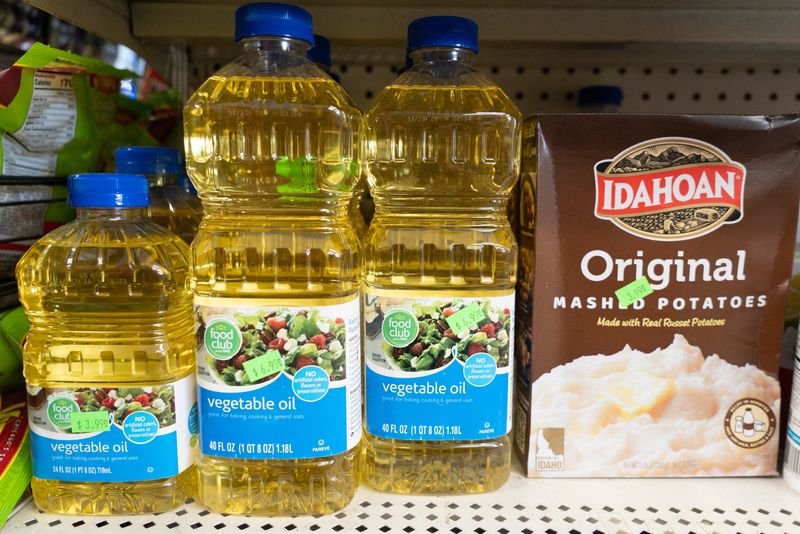
Using a list of recommended foods from the University of Wisconsin Extension’s Safe and Healthy Food Pantries Project, the Journal Sentinel surveyed each store for six items: a gallon of 2% reduced-fat milk, a dozen eggs, a 6-ounce can of tuna, a 14.5-ounce can of diced tomatoes, a 40-ounce container of cooking oil and one loaf of white bread. Prices for the same items were obtained on Sept. 30 from the Pick ‘n Save at 1100 E. Garfield Ave. in the Riverwest neighborhood for comparison.
The findings were mixed.
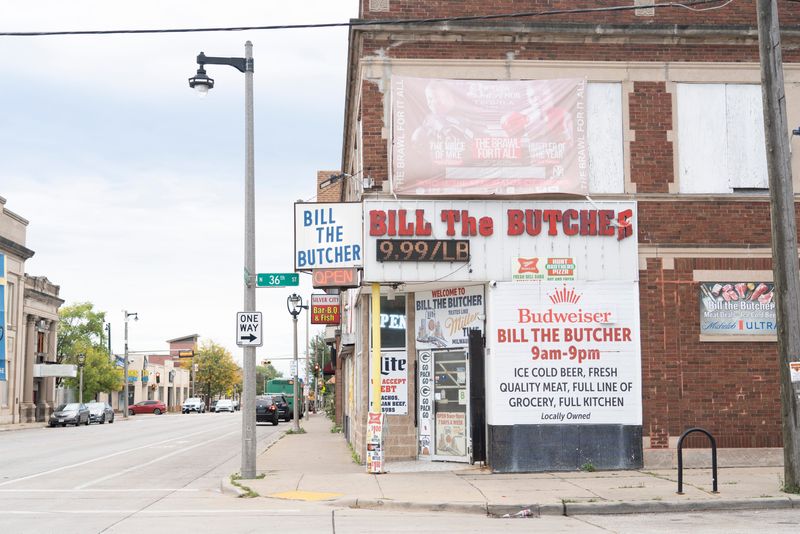
Two businesses, Bill the Butcher at 3533 W. North Ave. and Skyway Food Market at 2601 N. 35th St., stocked all six recommended items. Both stores also carried a small selection of fresh produce in addition to canned options.
Four businesses, Buy Rite at 2500 N. 35th St.; Omar Foods at 2803 N. 35th St.; Citgo at 3708 W. North Ave., and Clark at 2514 N. 27th St., stocked two to five of the six recommended staples.
One business carried one or none of the items.
Price comparisons – convenience stores vs. full-service grocery stores
Convenience comes with a tradeoff: higher prices.
An analysis of the surveyed stores showed that consumers would pay roughly 51% more on average to purchase the six items from their local convenience store than they would at the East Garfield Pick ‘n Save, which is located roughly four miles east of the closed North 35th Street store.
The average pretax total for all six items came to $23.22 at an area convenience store compared to $15.36 at a nearby Pick ‘n Save – about a $7.86 difference for the same set of items.
The stark price difference is not price gouging but a business structure issue. The convenience stores in Metcalfe Park operate on a much smaller scale than grocery conglomerates like Kroger, the parent company of Roundy’s Supermarket, which owns and operates Pick ‘n Save and Metro Market locations in Wisconsin.
A distributor’s cost to serve independent convenience stores is higher than their cost to serve chain stores.
“(Convenience stores) are not getting the economies of scale in terms of the best wholesale price because it’s harder to service those stores,” said Jeff Lenard, vice president of media and strategic communications for the National Association of Convenience Stores.
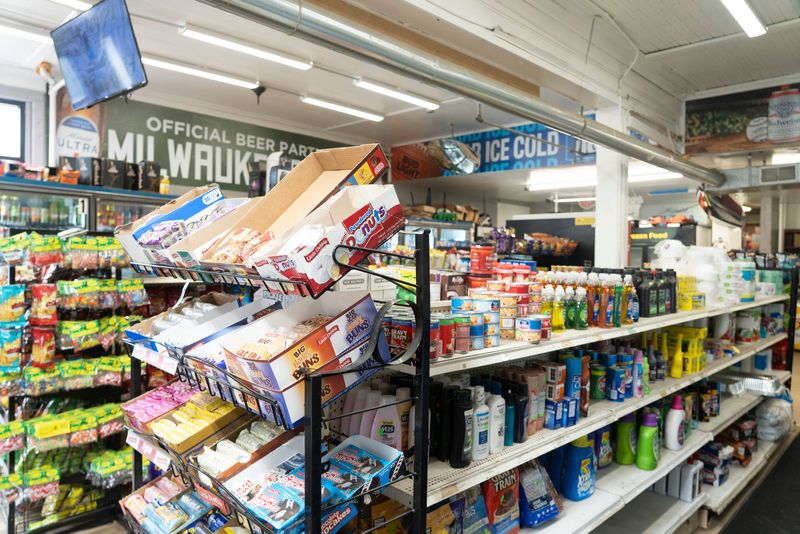
Despite their small footprint, convenience stores are everywhere. There are over 150,000 stores in the U.S., roughly equal to the combined total of every dollar store, drugstore, grocery store, McDonald’s and Starbucks, according to the association.
But limited space means operators have to prioritize what they know will sell. As a result, about 80% of sales come from “immediate consumption” items — single-serve drinks, snacks or prepared meals consumed within an hour of purchase and not multiple bags of pantry items for consumption over the week.
“It’s a balancing act for stores to see how they can maintain convenience, provide immediate consumption items and also, if appropriate, provide enough pantry items for everybody’s convenience needs,” Lenard said.
Signs of adaptation
Some neighborhood businesses are trying to fill the gap.
Varinder Singh, co-owner of Bill the Butcher, says the store has seen an increase in meat and grocery sales since the Pick ‘n Save across the street shut its doors.
To meet demand and accommodate residents’ busy schedules, Singh extended Bill the Butcher’s operating hours from 9 a.m. to 5 p.m. to 9 a.m. to 9 p.m. In addition to selling meat, the shop stocks fresh vegetables, canned goods, cleaning supplies and ethnic food items. Singh said the store is making a concerted effort to serve the neighborhood by accepting customer requests for items not in stock.
There is more to come: the store plans to continue to expand its current general product and produce selection, becoming a more reliable source for residents trying to cook balanced meals without traveling outside the neighborhood, Singh said.
Metcalfe Park residents are proving resourceful in the face of a shrinking food landscape, finding workarounds in a neighborhood where buying dinner now means navigating higher prices, limited options and long trips for fresh food. Some corner stores are expanding their offerings, and neighborhood organizers are partnering with local nonprofits to bring short-term solutions to the area.
But resilience has its limits.
Without sustained investment or the return of a full-service grocery store, maintaining a nutritious diet will continue to require extra time, money and sacrifice.
April Quevedo covers Metcalfe Park for the Journal Sentinel’s Neighborhood Dispatch. Reach her at aquevedo@gannett.com. As part of the newsroom, all April’s work and coverage decisions are overseen solely by Journal Sentinel editors.
Support for this effort comes from the Zilber Family Foundation, Journal Foundation, Bader Philanthropies, Northwestern Mutual Foundation, Greater Milwaukee Foundation and individual contributions to the Journal Sentinel Community-Funded Journalism Project. The project is administered by Local Media Foundation, tax ID #36‐4427750, a Section 501(c)(3) charitable trust affiliated with Local Media Association.
Learn more about our community-funded journalism and how to make a tax-deductible gift at jsonline.com/support. Checks can be addressed to Local Media Foundation with “JS Community Journalism” in the memo, then mailed to: Local Media Foundation, P.O. Box 85015, Chicago, IL 60689.
This article originally appeared on Milwaukee Journal Sentinel: What’s left to eat in Metcalfe Park? Survey shows higher prices, limited choices
Reporting by April Quevedo, Milwaukee Journal Sentinel / Milwaukee Journal Sentinel
USA TODAY Network via Reuters Connect