With scorching hot temperatures bearing down on Wisconsin, a quick thermometer check won’t tell you how hot it actually feels outside. But another measure, the heat index, could do just that.
In Milwaukee, the Nation Weather Service forecast for Tuesday, June 30 calls for a high near 95 degrees, with the heat index as high as 105 degrees.

Here’s what to know about the heat index as the first heat wave of summer arrives.
What is the heat index?
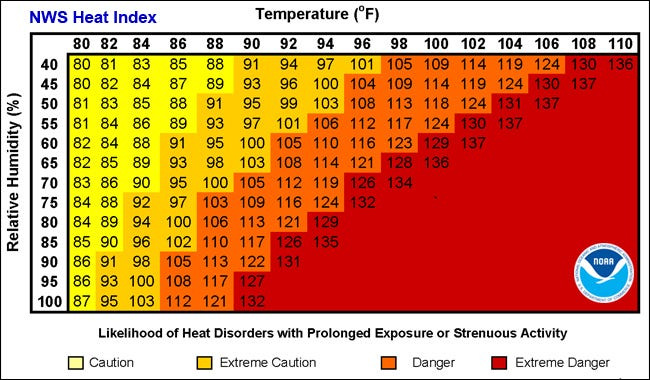
The heat index is a metric that combines humidity and air temperature. It measures why an 84 degree day with 100% humidity can feel so much hotter.
Humans sweat to cool down. But that sweat needs to evaporate, and if it can’t you won’t cool down, the National Weather Service explained in an online guide.
“Evaporation is a cooling process,” the weather service said. “When perspiration is evaporated off the body, it effectively reduces the body’s temperature.”
High humidity, or air with a lot of water vapor, means sweat evaporates less often. That’s why it feels hotter on humid days.
When does a high heat index become dangerous?
When the heat index climbs above 103 degrees, it can increase the risk of heat-related health issues, according to the National Weather Service. Here are heat index values and what they mean as it relates to health.
This article originally appeared on Milwaukee Journal Sentinel: What does heat index mean? Here’s how it affects your body
Reporting by Blaise Mesa, Milwaukee Journal Sentinel / Milwaukee Journal Sentinel
USA TODAY Network via Reuters Connect

By Blaise Mesa, Milwaukee Journal Sentinel | USA TODAY Network