Over 80% of Americans use some kind of AI-enabled product weekly. Widespread AI usage is not on the horizon, or somewhere off in the future – it is here, and it is growing.
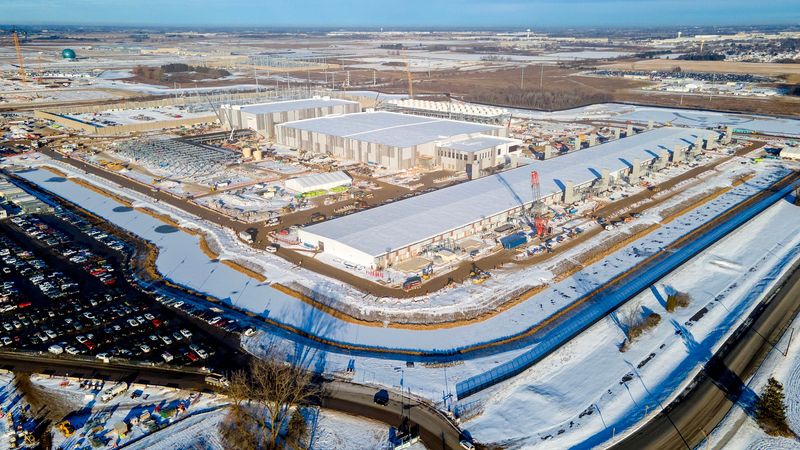
Data center development here in Wisconsin is also exploding, with investments in Mt. Pleasant, Kenosha, Port Washington, Beaver Dam, and Wisconsin Rapids, as tech companies race to expand their infrastructure and meet surging demand.

But the jobs, economic development, and technological progress associated with this growth could be at risk if new baseload electricity generation is not brought online, and soon.
Regulatory changes are causing baseload power generation sources like coal plants to retire and close. Power needs can often rise much more quickly than new generation can be brought online – data centers can be built in as little as two years, while siting, permitting, and building sufficient capacity to support them often takes a decade or more.
Making intelligent investments in the grid to plan ahead is one of the most urgent issues facing Wisconsin’s economy, to ensure there is enough slack in the system to accommodate new development.
Natural gas plants best bet for reliable power needs
While renewables are continuing to evolve, the future of reliable baseload power in Wisconsin will depend on natural gas. Natural gas is already the largest single fuel source in this country, accounting for roughly 43% of U.S. utility-scale generation last year, and about 27 gigawatts of new natural gas generation is expected to be built by 2030.
Unfortunately, approximately 79 gigawatts of baseload power is also likely to retire by 2034. In other words: we simply do not have enough power generation to meet the combined threat of expected retirements and growing demand. If we don’t act, coal plants will likely be kept online well past their planned closure dates, leading to higher emissions and leaving our grid stuck in the past.
Thankfully, states like Wisconsin are recognizing this looming problem and are taking steps to address it. The Wisconsin Public Service Commission recently gave unanimous approval to two new natural-gas-fired power plants as part of a $1.8 billion project from We Energies.
The project includes a new facility in Oak Creek to help replace the retiring coal-powered Oak Creek Power Plant, as well as a new gas plant in Kenosha County. It also adds liquefied natural gas storage and expanded pipeline infrastructure.
Ambitious climate goals often lead to higher electric bills
Crucially, this new generation capacity will be dispatchable, meaning it can be turned on when needed. That flexibility is essential to support critical industries, data centers, and advanced manufacturing, where consistent, around-the-clock power is not an option.
Consumers, businesses, and families in Wisconsin need reliable and affordable energy now. Natural gas costs have remained low or even fallen, while electricity prices continue to rise. In fact, states with more aggressive climate goals have often seen their electricity prices rise dramatically, while those powered by natural gas have simultaneously seen lower bills and falling emissions.
Wisconsin must not be caught flat-footed, and the future of the state’s economy depends on getting power generation right. That means approving and building new natural gas capacity now, not once power bills skyrocket and the lights start to flicker.
Mike Karbo is the Midwest region director for the American Petroleum Institute, which represents nearly 600 members that produce, process, and distribute the majority of the nation’s energy.
This article originally appeared on Milwaukee Journal Sentinel: We Energies natural gas plants will help power data centers driving job growth | Opinion
Reporting by Mike Karbo / Milwaukee Journal Sentinel
USA TODAY Network via Reuters Connect